
Remember the classic university or corporate computer lab? Rows upon rows of identical desktop towers, a symphony of whirring fans, an unmistakable aroma of ozone and stale coffee, and that one printer that always jammed right before a major deadline. It was the undisputed temple of digital learning for decades. But let’s be honest: walking into one today feels a bit like stepping into a computing museum.
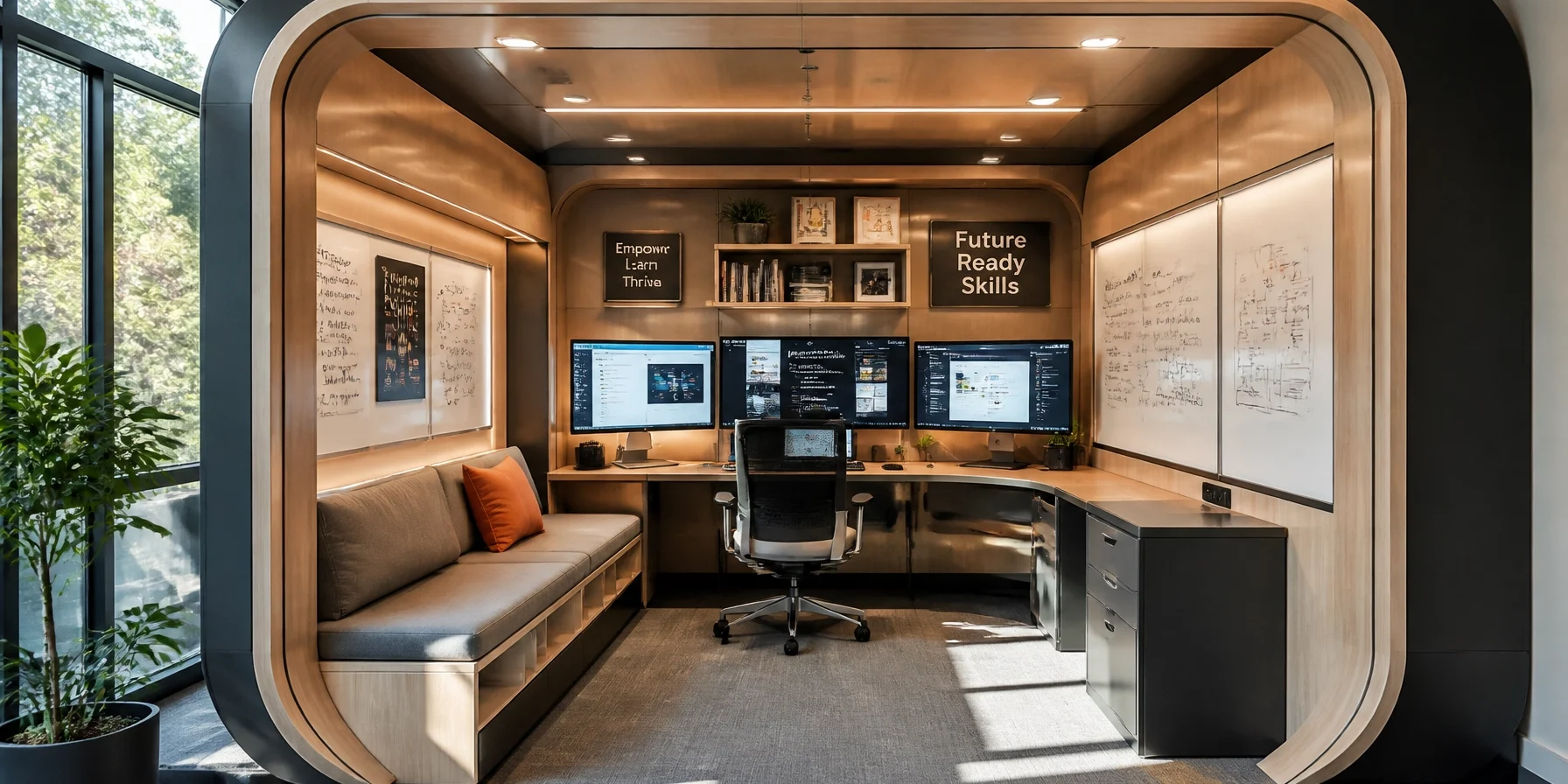
As technology shifts at lightning speed, our physical environments need to catch up. Enter the latest evolution in Physical Infrastructure: Pods. These modular, self-contained micro-environments are rapidly replacing traditional Computer Labs and completely revolutionizing Tech Education.
Whether you’re training the next generation of ethical hackers, supply chain wizards, or digital media moguls, pods are proving that when it comes to learning spaces, smaller, smarter, and more specialized is the way to go.
What is a Pod, Anyway? (And Why Should You Care?)
If a traditional computer lab is like a massive, open-plan cafeteria where everyone eats the exact same bland meal, a pod-based setup is a collection of high-end food trucks, each serving a distinct, expertly crafted cuisine.
In simple terms, a pod is a modular, integrated workspace that bundles compute power, specialized networking, tailored peripherals, and physical isolation into a single unit. Instead of trying to force a single, generic room to teach everything from basic word processing to advanced AI modeling and cybersecurity defense, institutions are deploying specialized pods.
The benefits over old-school computer labs are hard to ignore:
- Modularity: Need to upgrade from a rendering station to a secure networking sandbox? You swap or reconfigure an individual pod, not an entire building wing.
- Real-World Fidelity: Pods mimic actual industry environments: complete with multi-monitor arrays, specialized control interfaces, and acoustic isolation: rather than a generic browser window on a standard desktop.
- Built-In Security: Pods are designed as "sandboxes-in-a-box," keeping experiments, testing data, and simulated cyber threats safely contained.
For a deeper dive into how modern workplace and technology trends intersect, you can explore insights over at USA Entertainment Ventures Technology Insights.
Pods in Action: Powering High-Demand Career Pathways
The real magic of pod-based infrastructure isn't just that they look cool: it's how they directly bridge the gap between classroom theory and real-world employment. Let’s look at three high-growth sectors where pods are making waves.
1. Cybersecurity: The Live-Fire Cyber Range

Teaching cybersecurity in a standard computer lab is like teaching someone to defuse a bomb in the middle of a crowded shopping mall. One wrong click, and half the campus network goes down.
Cybersecurity pods solve this by creating fully isolated, air-gapped cyber ranges. Each pod acts as an independent network topology complete with virtual machines, attacker hosts, and defense tools. Students can run live-fire DDoS simulations, ethical hacking drills, and digital forensics without risking production systems. It’s hands-on, high-stakes training delivered in a foolproof sandbox.
2. Logistics: The Supply Chain Control Tower

Modern supply chains move fast, and logistics professionals don't manage global shipping lanes from a single laptop with a spreadsheet open. They operate in high-intensity control rooms.
Logistics pods replicate this exact environment. Equipped with multi-monitor data walls, live inventory tracking dashboards, and supply chain simulation software, these pods allow students to test routing algorithms, tackle warehouse bottlenecks, and simulate automated supply chain workflows as a collaborative team. It turns abstract economic theory into an active, adrenaline-pumping team sport.
3. Content Creation: The Pocket-Sized Production Studio

Whether someone is aiming to become a corporate communications director, a podcast host, or a digital marketing guru, professional media production skills are no longer optional. But building massive, permanent recording studios is expensive and inflexible.
Content creation pods offer a brilliant workaround. These sound-dampened, acoustically treated micro-studios come pre-loaded with broadcast-quality microphones, cameras, lighting arrays, and streaming hardware. Students can record voiceovers, edit video pipelines, and run live broadcasts without disturbing the rest of the facility. It scales up media capability without requiring a Hollywood-sized real estate budget.
The Future of Physical Learning Spaces
We are living in an era where agility is everything. Traditional computer labs were built for an era of standardization; pod-based infrastructure is built for an era of specialization.
By breaking monolithic computer rooms into modular, purpose-built pods, schools and organizations can adapt on the fly, keeping their training relevant, secure, and deeply engaging. After all, if we want to prepare people for the future of work, we have to stop trapping them in the past of education.
It’s time to step out of the beige-box computer lab and into the pod.





