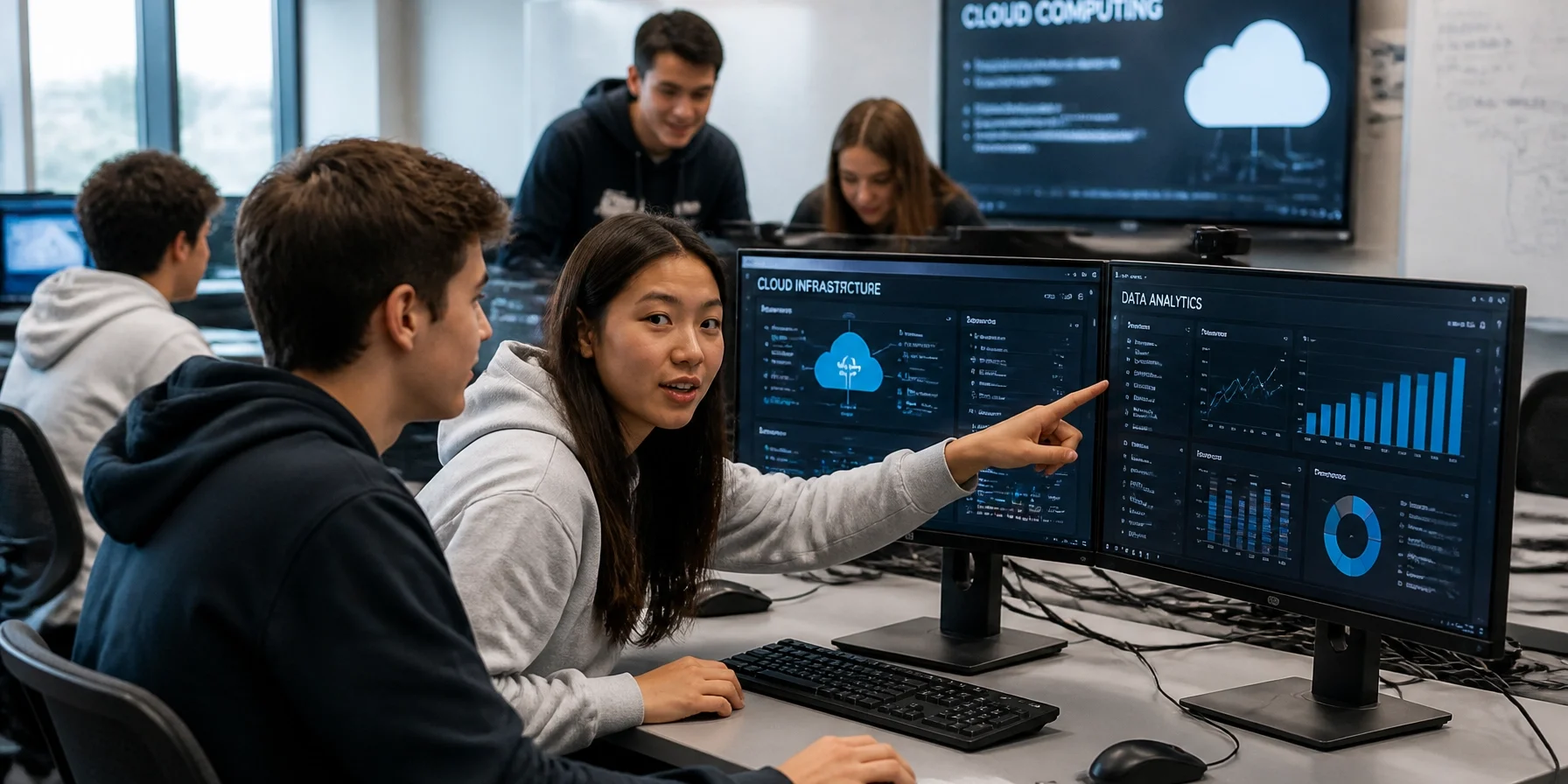
A student sitting in a high school classroom today may become tomorrow’s cloud engineer, data analyst, cybersecurity specialist, or artificial intelligence professional. However, organizations that wait until those students graduate from college are often entering the talent market after the most important relationship-building opportunities have passed.
The demand for technology skills continues to grow across nearly every industry. The U.S. Bureau of Labor Statistics projects strong growth across computer and information technology occupations, including software development, data science, and information security. At the same time, employers report difficulty finding people with the right combination of technical and workplace skills.
For business leaders and HR professionals, the conclusion is increasingly clear: the talent pipeline must begin earlier.
High school outreach is not a short-term recruiting tactic. It is a long-term workforce strategy that helps organizations build awareness, develop practical skills, and create trusted connections before students enter a highly competitive labor market.
The Risk of Waiting Until College or Graduation
Traditional recruiting often begins at the college level. Companies attend career fairs, post internships, and compete for graduating students with similar qualifications. That approach can still be useful, but it is no longer sufficient for fast-growing fields such as Cloud, AI, and Data Analytics.
Waiting too long creates several risks.
1. The strongest candidates may already have relationships elsewhere
Students begin forming opinions about industries and employers before they choose a college major. A company that does not engage during those formative years may be unknown when students begin searching for internships or entry-level positions.
By contrast, a consistent presence in schools can help students understand what technology careers actually involve. A cloud professional, for example, can explain how businesses store and protect information. A data analyst can show how numbers support decisions in healthcare, finance, sports, or Logistics.
2. Skills gaps become more expensive to address
The 2024 YouScience Workforce Report surveyed 500 HR professionals and business leaders. It found that 86% of employers said entry-level talent requires additional training to succeed. Nearly 40% said schools were not sufficiently preparing students for careers in their industries.
This does not mean schools are failing. It means the connection between education and work needs to be stronger.
When organizations wait until hiring begins, they inherit the full cost of closing those gaps. When they participate earlier, they can help students gain foundational experience before the first interview.
3. Employers compete for a smaller pool
A college-only strategy reaches students after many decisions have already been made. Some have selected different fields. Others have accepted internships, joined competing programs, or decided that technical careers are not accessible to them.
Early outreach expands the pool instead of simply competing for the same candidates. It also gives organizations time to identify students with potential who may not yet have polished résumés or formal credentials.
Why Early Talent Outreach Works
Early engagement is most effective when it is consistent, practical, and connected to real career pathways.
The YouScience report found that 90% of employers believe stronger partnerships with K–12 schools and postsecondary institutions would improve their long-term talent pipelines. It also found that 78% value work-based learning and industry certifications as ways to prepare new talent.
These findings support a practical principle: businesses should not wait for education systems to produce finished candidates. They should help create stronger bridges between learning and employment.

Early exposure builds career awareness
Many students understand that technology is important but do not know what technology professionals do each day. Outreach can make those careers more visible.
Cloud computing can be introduced through a simple discussion about how applications operate online. Data Analytics can begin with a project that examines local transportation patterns or school energy use. AI can be presented through responsible, age-appropriate exercises involving pattern recognition and decision-making.
The objective is not to turn every student into an engineer. The objective is to show students that technology careers are varied, practical, and attainable.
Hands-on learning improves readiness
Modern Tech Education should connect concepts with application. Students benefit when they can work on projects, solve problems, communicate results, and learn from mistakes.
This is where Computer Labs, virtual environments, and modular Pods can become valuable. A pod is a focused learning environment designed around a specific activity or career pathway. It may support cybersecurity exercises, data projects, cloud simulations, or digital production.
These environments give students a more accurate picture of professional work than a lecture alone. They also allow organizations to introduce important concepts such as security, collaboration, documentation, and responsible technology use.
Early partnerships support broader participation
Early outreach can also help organizations reach students who may not otherwise see themselves in technical careers. Students need access to role models, mentors, equipment, and clear information about available pathways.
This is especially important for students from communities with limited access to advanced technology programs. Supporting schools with equipment, training, or project-based instruction can help reduce barriers before those barriers affect college and career decisions.
How Technology Careers Connect Across Industries
Cloud, AI, and Data Analytics are not limited to technology companies. They support nearly every modern business function.
- Cybersecurity: Students can learn how organizations protect networks, detect unusual activity, and manage digital risk.
- Logistics: Data helps companies forecast demand, coordinate transportation, manage inventory, and improve delivery performance.
- Physical Infrastructure: Servers, networks, data centers, and connected equipment require professionals who understand both hardware and software environments.
- Content Creation: Video, audio, interactive media, and digital marketing increasingly depend on cloud platforms, automation, analytics, and AI-assisted tools.
- Pods and Computer Labs: Flexible learning environments can support practical instruction in all these areas without requiring a large, permanent facility.
This broader view matters because students may be interested in solving real-world problems without identifying with the word “technology.” A student drawn to transportation, media, public service, or design may still become an effective data, cloud, or cybersecurity professional.
A Practical Starting Plan for Business Leaders
High school outreach does not require a large department or a national program on day one. Organizations can begin with a focused pilot.
1. Define future workforce needs
Start with a five-year view. Which roles will be difficult to fill? Which skills will become more important? Consider cloud operations, data analysis, AI governance, cybersecurity, infrastructure management, logistics technology, and digital content.
Then identify the foundational skills students can begin developing now. These may include problem-solving, communication, basic programming, data literacy, teamwork, and ethical decision-making.
2. Identify the right education partners
Look for local high schools, Career and Technical Education programs, community colleges, STEM organizations, and workforce development groups. A strong partner does not need to have a perfect program already in place. The most important qualities are engaged educators, accessible leadership, and a willingness to build a practical plan.
Create regular communication with teachers, counselors, and administrators. The YouScience report specifically identifies ongoing communication with school representatives and career counselors as an important way to strengthen partnerships.
3. Offer a useful first experience
Begin with one activity that students can complete. Examples include:
- A cloud computing demonstration
- A beginner data analysis workshop
- A cybersecurity awareness challenge
- A logistics and supply chain simulation
- A content creation project using professional tools
- A tour of a data center or technology operation
- A mentorship session with employees in technical roles
The activity should be understandable, hands-on, and connected to a real business problem.

4. Improve learning environments
Organizations can support schools through equipment donations, software access, cloud credits, curriculum assistance, or instructor training. In some cases, a modernized Computer Lab may be the best solution. In others, a flexible pod or virtual environment may provide more value.
The goal is not to purchase technology for its own sake. The goal is to give students a safe place to practice the skills employers will need.
5. Create a progression from awareness to employment
A single career day is helpful, but a progression is stronger:
- Career awareness in the classroom
- Hands-on workshops or clubs
- Mentorship and job shadowing
- Industry projects or competitions
- Micro-internships and summer internships
- Apprenticeships, college pathways, or entry-level opportunities
This approach allows students to build confidence gradually. It also gives employers multiple opportunities to observe growth rather than making a hiring decision based only on an application.
Organizations can review models for structured technical talent development through groups such as Correlation One and can also explore related workforce strategies in USA Entertainment Ventures LLC’s next-generation talent funnel resources.
Measure the Pipeline Like a Business Asset
A talent outreach program should have clear measures. Useful indicators include:
- Number of students reached
- Participation in workshops, clubs, or mentorships
- Completion of technical projects
- Student interest in related courses or certifications
- Internship applications and placements
- Conversion into apprenticeships or entry-level roles
- Retention and performance of eventual hires
- Participation among underrepresented student groups
Measurement helps leaders determine which activities create meaningful engagement. It also keeps the program connected to business needs.
As HR Director Mindy Bates stated in the YouScience report, “As the demand for skilled talent grows and the traditional talent pipeline shows signs of strain, we must engage with students earlier, provide hands-on experience, and emphasize both technical and soft skills.”
That point deserves emphasis. Early outreach is not only about teaching technical skills. Students also need communication, reliability, teamwork, and the ability to explain their work. Employers that develop both categories of skills will be better positioned to hire adaptable professionals.
The Future of Talent Starts Earlier
The companies that build strong Cloud, AI, and Data Analytics teams in the future will not rely solely on last-minute recruiting. They will build relationships years before open positions become urgent.
High school outreach gives organizations time to educate, encourage, and prepare future talent. It also gives students a clearer view of career possibilities and the practical skills required to pursue them.
The most effective strategy is to begin with a manageable partnership, create a useful hands-on experience, and expand through measurable stages. Whether the focus is Physical Infrastructure, Pods, Computer Labs, Tech Education, Logistics, Cybersecurity, or Content Creation, the principle remains the same: future talent is developed through consistent engagement.
Organizations ready to strengthen their workforce strategy can begin by connecting with USA Entertainment Ventures LLC and exploring practical approaches to talent development, business management, and workforce partnerships. The earlier companies invest in these connections, the stronger and more resilient their talent funnels will become.