
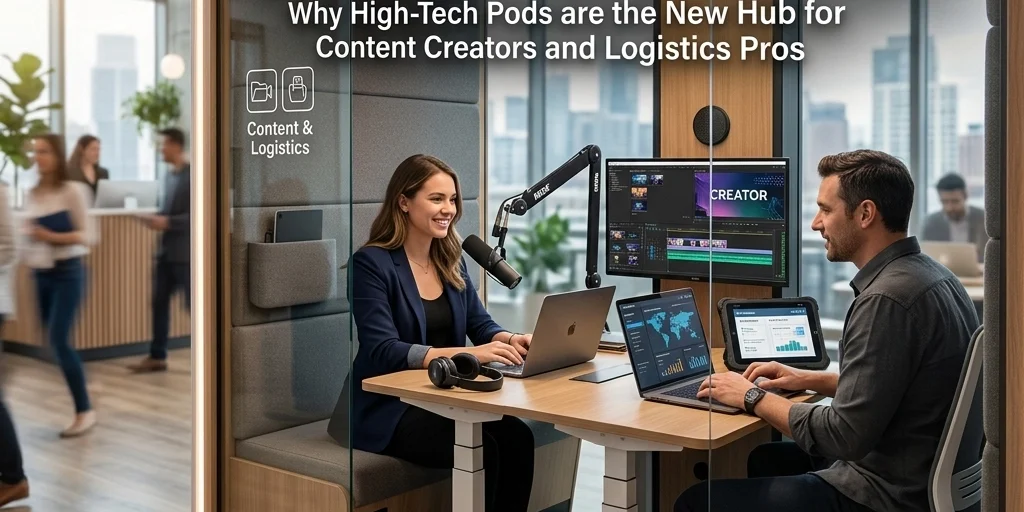
Walk into any university or corporate office today and you’ll notice a ghostly silence where the hum of cooling fans used to live. Remember the traditional computer lab? It was usually a windowless room filled with rows of beige monitors, clicking keyboards, and that distinct smell of static-charged dust. It was a place of isolation, where dividers kept you from seeing your neighbor and "No Food or Drink" signs were the law of the land.
In 2026, we have to ask the hard question: Are those labs officially dead?
The short answer is yes. But the long answer is far more exciting. While the "lab" as we knew it has passed on to the great silicon graveyard in the sky, a new species of infrastructure has emerged to take its place: the High-Tech Pod. These aren't just desks with better lighting; they are specialized hubs designed for the high-stakes worlds of content creation, cybersecurity, and global logistics.
The Death of the Beige Graveyard
The decline of the traditional computer lab wasn't a sudden murder; it was an evolution. For decades, the lab was a necessity because hardware was expensive and immobile. If you wanted to use high-end software like AutoCAD or early versions of the Creative Suite, you had to go to where the "Big Iron" lived.
Today, the landscape is unrecognizable. Thanks to the "Bring Your Own Device" (BYOD) revolution and the rise of cloud-based SaaS (Software as a Service) licensing, most people carry more computing power in their backpacks than entire university labs possessed in the early 2000s. When you can render 4K video on a laptop at a coffee shop, why would you hike across campus to sit in a cubicle that hasn't been cleaned since the last decade?
Data backs this up. Major institutions like the Illinois Institute of Technology have reportedly slashed their physical PC counts by nearly 50%. The financial burden of maintaining thousands of desktop units: which require hardware refreshes every three years: has become a liability rather than an asset. Combined with the reality of premium real estate, dedicated lab rooms sitting empty for 12 hours a day simply doesn't make sense anymore.
Enter the Pod: Infrastructure with Intent
If the traditional lab was about access to hardware, the modern High-Tech Pod is about environment and collaboration.
A "Pod" is a modular, high-density work environment tailored to specific professional outputs. Unlike the old-school lab, which tried to be everything to everyone (and ended up being mediocre for all), pods are purpose-built. They are the difference between a generic cafeteria and a chef’s kitchen.
At USA Entertainment Ventures LLC, we’ve observed that the shift toward pods is driven by a fundamental change in how we work. Modern careers are no longer about solitary data entry; they are about real-time collaboration, multi-stream data monitoring, and creative synergy.
The Content Creator’s Command Center
For content creators, the transition to pods has been a game-changer. Editing a feature film, managing a 24-hour streaming broadcast, or designing immersive VR environments requires more than just a fast CPU. It requires an ecosystem.
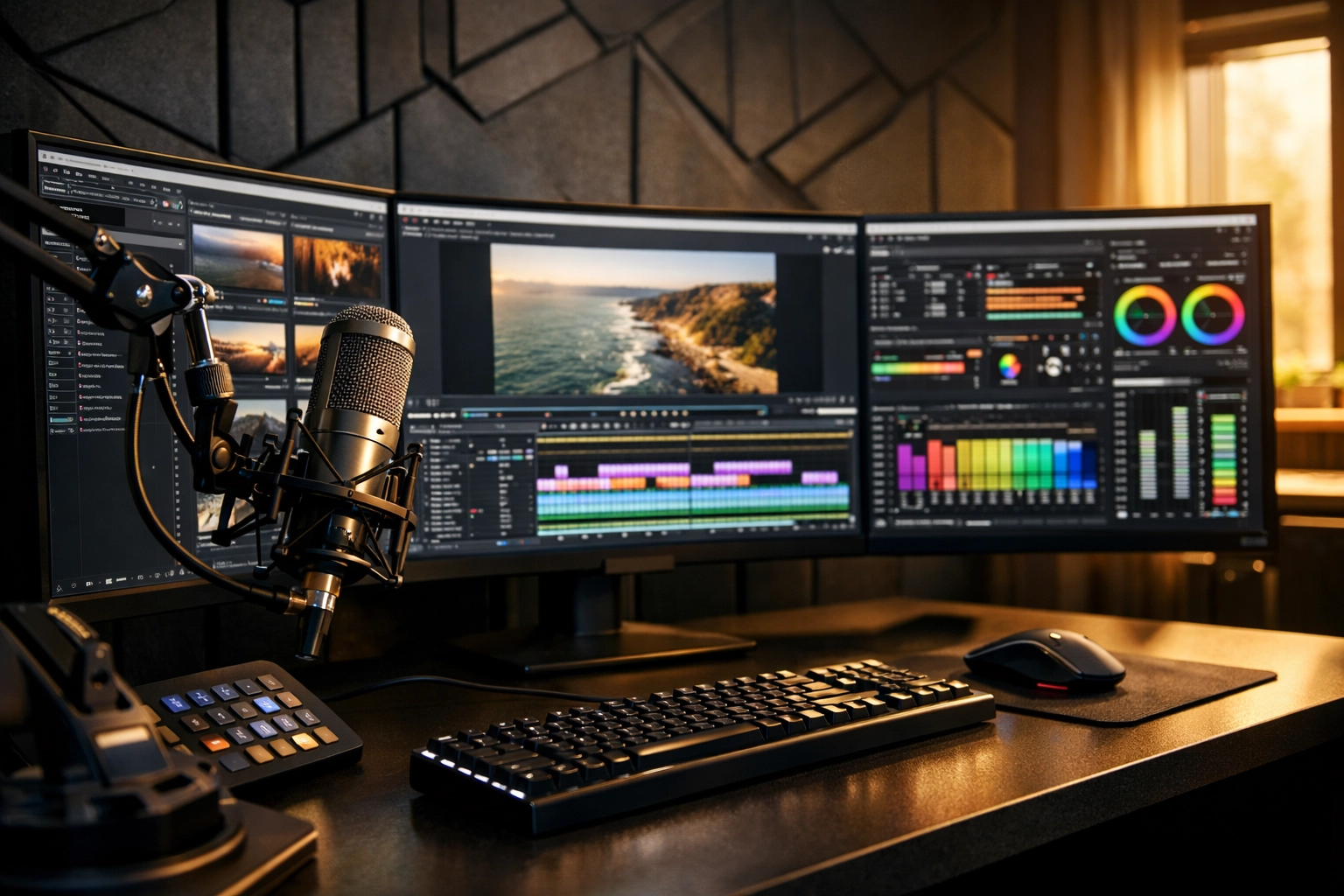
Modern creation pods are equipped with modular furniture that supports multiple 32-inch monitors, sound-dampening acoustic panels, and integrated lighting for video conferencing or live streaming. These spaces allow creators to move from solo "deep work" to collaborative "review mode" instantly.
In these environments, the infrastructure acts as a silent partner. It provides the high-bandwidth connectivity and ergonomic support needed for 10-hour editing sessions, while also offering the flexibility to swap out hardware as technology evolves. This is where the next generation of digital media is being forged, far away from the rigid rows of the past.
Logistics and the "God-View" Hub
If you think logistics is just about trucks and boxes, you haven't seen a modern logistics pod. In 2026, logistics is a high-speed game of data orchestration. Logistics professionals today act more like air traffic controllers, managing global supply chains through real-time GPS tracking, weather data, and AI-driven predictive analytics.
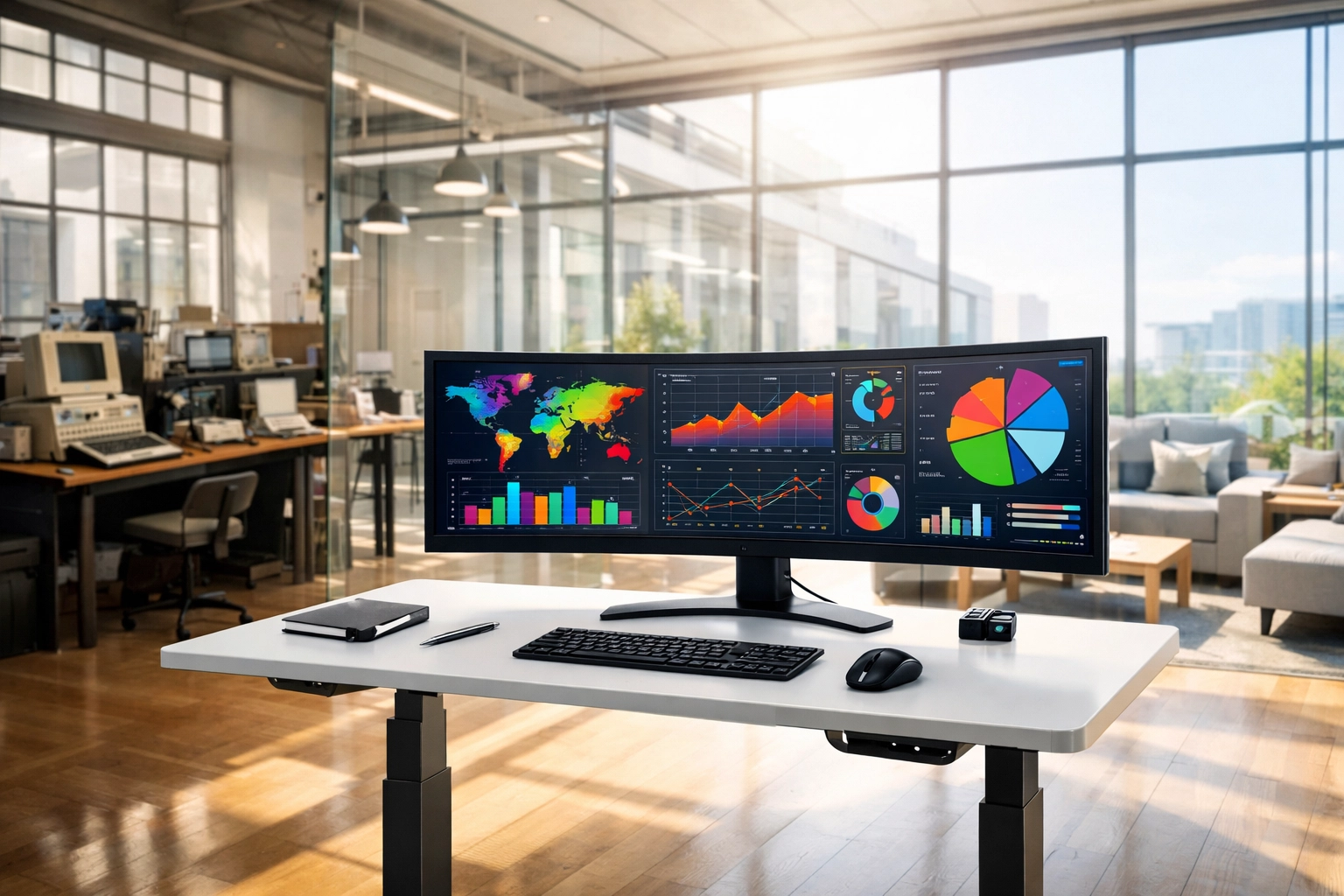
A logistics pod is designed for this "God-view" of the world. It often features curved, panoramic displays that allow a single operator to monitor multiple shipping lanes simultaneously. The environment is built for communication; pods are frequently grouped in clusters so that a dispatch team can share data and make split-second decisions without leaving their workstations.
This physical setup mimics the actual workflow of the industry. Logistics isn't a solo sport. It requires constant feedback loops. By replacing the isolated cubicle with a high-tech pod, companies are seeing a massive uptick in operational efficiency and a reduction in communication errors.
Cybersecurity and the "Cyber-Range"
Perhaps the most high-tech evolution of the lab is the "Cyber-Range." In the world of cybersecurity, training happens in "sandboxed" environments: isolated pods where students and professionals can simulate massive network attacks and defenses without risking the integrity of a real-world system.
Traditional labs were a nightmare for cybersecurity. They were too open, too connected, and too generic. A modern Cyber-Range pod provides the specialized hardware and network isolation required to run "Red Team vs. Blue Team" exercises. These pods are the frontline of digital defense training, offering a high-octane environment where the next generation of security experts learns to thwart global threats.

Why This Matters for Career Pathways
This shift in physical infrastructure is also a roadmap for career seekers. If you are looking to enter logistics, cybersecurity, or content creation, the environment you train in matters.
- Specialization is Key: The era of the "generalist" computer user is ending. Employers are looking for people who can navigate specialized hubs and utilize high-density data environments.
- Collaboration is the New Hard Skill: Working in a pod-based environment forces you to develop communication skills that you simply didn't need in an isolated lab.
- Adaptability: These pods are modular. Learning to work in a space that evolves with the project is a vital skill in the 2026 economy.
For more insights into how these trends are shaping the future of business, you can check out our latest updates on Zoomedia News.
The Business Case: ROI and Real Estate
For business owners and educational administrators, the move to pods isn't just about looking "cool" or "modern." It’s about the bottom line.
A traditional lab is a "sunk cost" room. It’s expensive to build, expensive to cool, and expensive to update. A pod-based infrastructure, however, is flexible. Because pods are modular, they can be reconfigured as the needs of the business change. If you need more logistics capacity this year but more content creation space next year, you don't need to knock down walls: you just reconfigure the pods.
Furthermore, pods maximize the utility of real estate. By creating high-density, high-utility hubs, organizations can often reduce their overall footprint while actually increasing the productivity of their staff or students. It’s about quality of space over quantity of square footage.
Final Thoughts: The Future is Modular
The computer lab isn't dead; it has simply shed its heavy, beige skin and emerged as something much more powerful. The High-Tech Pod is a reflection of our current world: fast-paced, highly specialized, and deeply collaborative.
Whether you are a student preparing for a career in cybersecurity or a CEO looking to optimize your logistics team, the message is clear: the environment determines the output. Investing in the right physical infrastructure is no longer an "extra": it is the foundation of modern professional success.
At USA Entertainment Ventures LLC, we believe that the future belongs to those who can master these high-tech environments. So, the next time you see an old-fashioned computer lab, take a moment to pay your respects. Then, turn around and find the nearest pod: that’s where the real work is happening.
For those interested in seeing how these infrastructures are being implemented across various industries, explore our portfolio at USA Entertainment Ventures Portfolio. The future is here, and it’s modular.





