
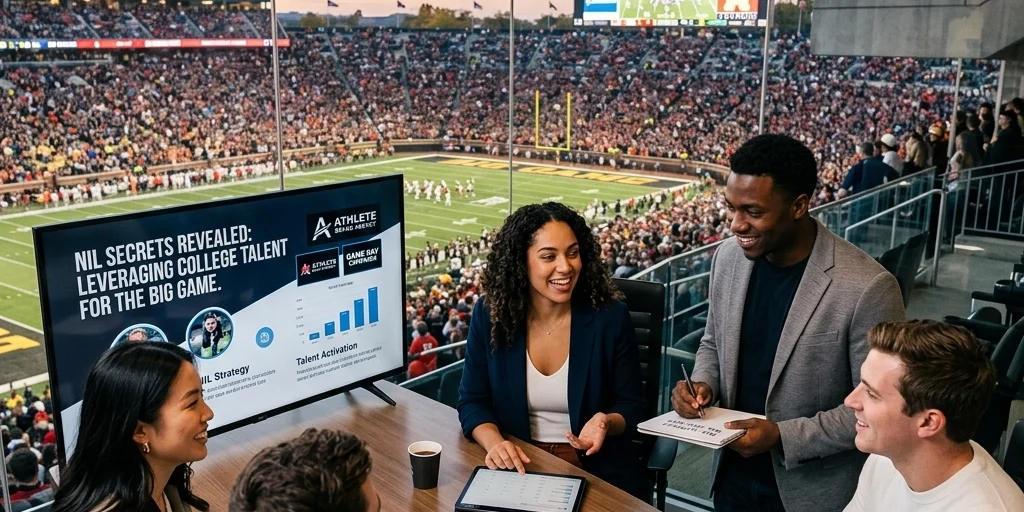
The landscape of sports marketing has undergone a seismic shift since the inception of Name, Image, and Likeness (NIL) rights. For decades, the "Big Game" was a playground reserved exclusively for the most elite professional athletes and the Fortune 100 brands with the capital to secure them. However, as we navigate through 2026, the barrier between collegiate stars and the world’s most prestigious advertising stage has effectively dissolved.
Today, top-tier brands are no longer waiting for players to turn pro before signing multi-million dollar contracts. Instead, they are leveraging the raw, authentic influence of college talent to bridge the gap between amateur sports and the high-stakes environment of Super Bowl Sunday. This strategy isn't just about finding a cheaper alternative to professional superstars; it is about capturing a demographic that is more engaged, more loyal, and more digitally native than ever before.
The Strategic Pivot: Why Fortune 100 Brands are Moving Early
The logic behind the NIL revolution is grounded in data. According to recent industry reports, college sports fans exhibit a higher level of brand loyalty compared to their professional counterparts. This loyalty often translates into a higher Return on Investment (ROI) for brands that establish relationships with athletes early in their careers.
By the time a player reaches the professional leagues, their "brand" is often polished to a point of sterility. In contrast, college athletes are still building their identities alongside their fans. For a global corporation, this provides a unique opportunity to be part of the athlete’s origin story. When a brand like Nike or Gatorade signs a standout like Shedeur Sanders or Arch Manning, they aren't just buying a face for a billboard; they are buying into a narrative that resonates deeply with Gen Z and Millennial consumers.
Bridging the Gap: The NIL Revolution at the Super Bowl
The integration of NIL talent into Big Game activations is a masterclass in cross-platform marketing. During the most recent championship cycle, we observed a significant uptick in brands using college athletes to anchor their digital and social media campaigns leading up to the main event. While a pro might star in the 30-second television spot, the college athlete is driving millions of impressions on TikTok and Instagram, providing the "behind-the-scenes" and "lifestyle" content that modern audiences crave.
Expert consultants at USA Entertainment Ventures LLC have noted that this "multi-tiered talent strategy" allows brands to dominate the conversation for weeks, rather than just minutes. By utilizing college talent, brands can tap into regional markets: such as the massive fanbases of the SEC or Big Ten: to create localized excitement that feeds into a national campaign.
Case Study: High-Impact NIL Partnerships
- The Multi-Brand Portfolio: Shedeur Sanders at Colorado has become a blueprint for this model. By partnering with Nike, Beats by Dre, and Mercedes-Benz simultaneously, he has created a high-fashion, high-performance persona that rivals any NFL veteran. For these brands, the association with Sanders during the college season provides a seamless transition into Super Bowl-themed promotions.
- Social Media Dominance: Livvy Dunne (LSU) has demonstrated that NIL success is not limited to traditional "ball sports." With over 13 million combined followers, her partnerships with brands like Nautica and American Eagle demonstrate how college talent can provide a massive reach that transcends the field of play.
- The Tech and Gaming Intersection: Arch Manning’s deal with EA Sports for the College Football 25 launch serves as a bridge between digital entertainment and real-world sports. This is a critical touchpoint for brands looking to enter the digital space.
The Video Narrative: Understanding the Shift
To truly grasp the scale of this revolution, one must look at how the visual language of sports advertising has changed. The following video illustrates the intensity and the professional-grade production now associated with NIL athletes:
https://www.youtube.com/watch?v=l6J-0zileKE
This level of production quality ensures that when a college athlete appears in a campaign for a Fortune 100 company, the transition is seamless. The viewer no longer perceives a "drop-off" in quality or prestige between the college star and the pro.
Timing, Authenticity, and Audience Alignment
The secret to a successful NIL campaign for the Big Game lies in three pillars: timing, authenticity, and audience alignment.
Timing
Brands are now treating the college football season as a "pre-season" for their Super Bowl campaigns. Early-season NIL deals allow brands to test messaging and build a rapport with the athlete’s audience. By the time February rolls around, the athlete is a familiar face for the brand, making their inclusion in Big Game festivities feel earned rather than forced.
Authenticity
Fortune 100 brands are increasingly moving away from scripted commercials in favor of "vlog-style" or documentary-style content. College athletes are naturally adept at this format. A partnership that highlights an athlete’s genuine pre-game rituals or their life on campus feels more authentic to a younger viewer than a traditional celebrity endorsement.
Audience Alignment
It is vital to match the athlete’s personal brand with the company’s values. As noted in our research category, data-driven selection processes are now the industry standard. Brands utilize AI and social listening tools to ensure that an athlete’s followers align with the brand’s target demographics.
Navigating the Complexity: The Role of Professional Consulting
While the opportunities are vast, the NIL landscape is fraught with regulatory and logistical hurdles. Each state has different laws, and the NCAA’s own guidelines are in a constant state of flux. This is where professional business consulting becomes indispensable.
For a Fortune 100 brand, a misstep in an NIL deal can lead to significant PR backlash or legal complications. Companies like USA Entertainment Ventures LLC specialize in navigating these complexities, ensuring that talent acquisition is not only effective but also compliant. This includes managing intellectual property rights, navigating university-specific restrictions, and overseeing the production of high-quality media assets.

Data-Driven ROI: The Future of Sports Advertising
The shift toward college talent is backed by hard numbers. Statistics from the 2025-2026 season indicate that NIL-anchored campaigns saw a 22% higher engagement rate on mobile platforms compared to campaigns featuring only professional athletes. Furthermore, the cost-per-impression (CPI) for college talent remains significantly lower than that of top-tier pro athletes, even as their influence continues to grow.
As we look toward the 2027 Big Game, we expect to see the first "NIL-exclusive" Super Bowl ad: a commercial where every featured athlete is a collegiate star. This will mark the final stage of the NIL revolution, where the "amateur" label is officially replaced by the "influencer-athlete" status.
Actionable Takeaways for Brands
- Start Early: Don't wait for the post-season to identify talent. Look for athletes who are building unique personal brands during the regular season.
- Focus on Storytelling: Use NIL talent to tell a longer, more personal story that spans several months, leading up to a climax at a major event like the Big Game.
- Leverage Regional Loyalty: Use the deep-seated collegiate allegiances to win over specific markets that may be harder to reach through national pro-sports advertising.
- Prioritize Digital Integration: Ensure that your NIL talent is integrated into your sports advertising across all digital channels, not just television.

Conclusion: A New Playbook for Success
The NIL revolution has rewritten the playbook for how top brands interact with sports talent. By bridging the gap between college stars and the Big Game, Fortune 100 companies are finding new ways to connect with audiences, drive engagement, and secure brand loyalty for the long term.
As the industry continues to evolve, the brands that succeed will be those that view NIL athletes not just as temporary spokespeople, but as vital components of a comprehensive, modern marketing strategy. The secrets are out: the future of the Big Game belongs to those who are willing to invest in the stars of tomorrow, today.
For brands looking to navigate this new frontier, the expertise of a dedicated consulting partner is the most valuable asset in their arsenal. Explore the possibilities of distribution and marketing excellence to ensure your brand stays ahead of the curve in this fast-paced environment.





