
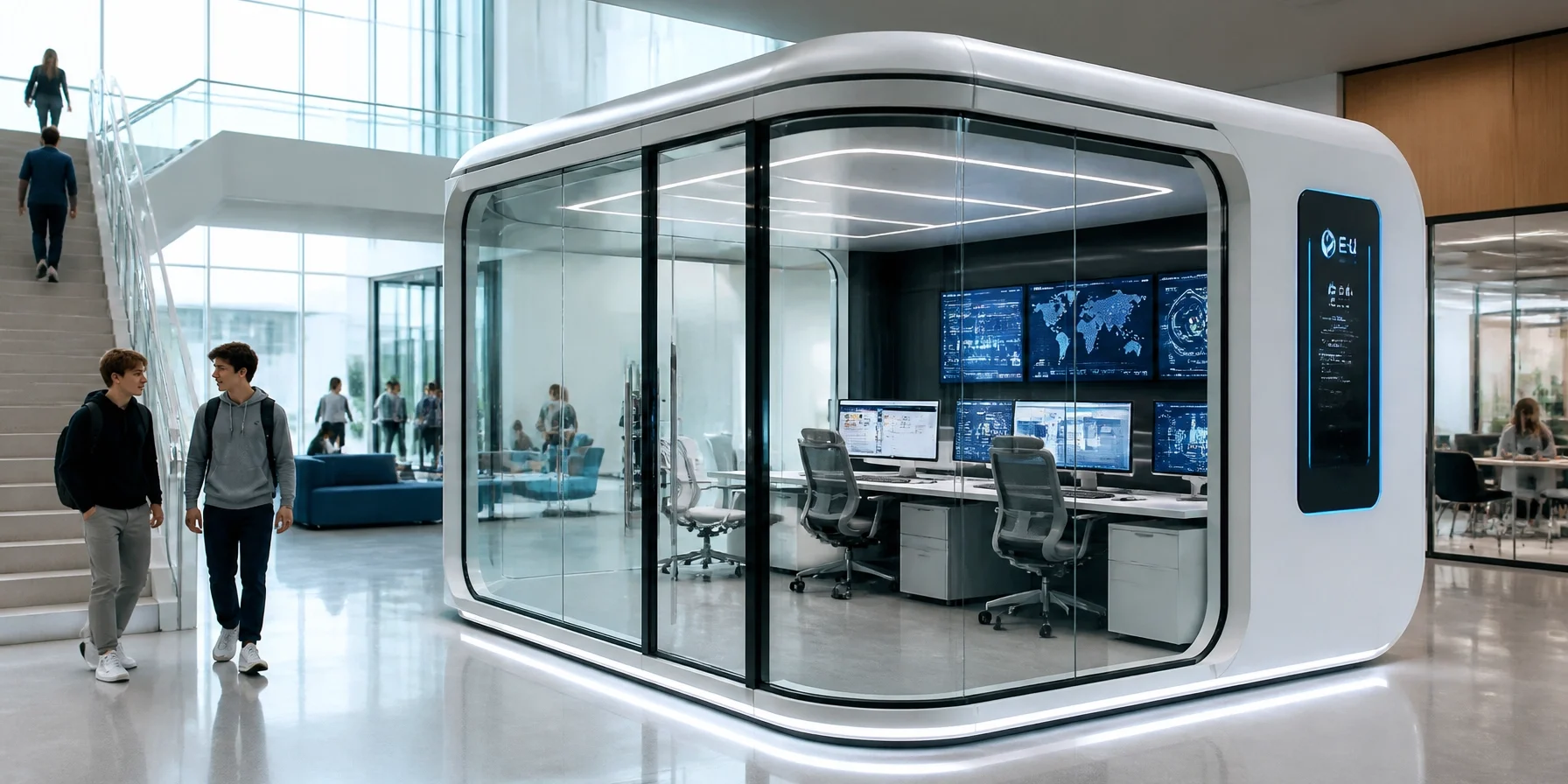
If you close your eyes and think of a "computer lab," what do you see? Probably a dimly lit room, the faint smell of ozone and old carpet, and rows of beige towers connected to monitors that hum at a frequency only a dog can hear. It was a place where you learned to type "The quick brown fox" and maybe, if you were lucky, played Oregon Trail until you inevitably died of dysentery.
Well, it’s time to pour one out for the old-school lab. The era of the generic "room full of PCs" is officially coming to an end.
In its place, we are seeing the rise of something much more targeted, much more efficient, and: let’s be honest: way cooler: Modular Pods. These aren't just desks with computers; they are specialized, high-fidelity environments designed to propel people directly into high-paying careers. At USA Entertainment Ventures LLC, we’re seeing this shift firsthand as the physical infrastructure of workforce development moves from "general education" to "mission-ready."
The Great Unbundling of the Computer Lab
Why are traditional labs dying? It’s simple: the world changed. Most students and professionals now carry a computer in their backpack that is more powerful than an entire 1990s lab. Between the "Bring Your Own Device" (BYOD) trend and the explosion of cloud-based software, the need for a central room to "go to the internet" has evaporated.
However, generic laptops can’t simulate a Global Operations Center or a high-stakes Cybersecurity War Room. That’s where the Pod comes in. A pod is a modular, purpose-built unit configured for a specific career vertical. Instead of one room trying to do everything (and doing none of it well), pods allow organizations to deploy "nodes" of high-intensity training anywhere: from a high school hallway to a corporate lobby.
1. The Logistics Pod: More Than Just Moving Boxes
When people hear "logistics," they often think of a guy in a brown truck. But modern logistics is actually a high-stakes game of data, IoT, and global coordination. It is the backbone of the global economy, and it requires a very specific set of skills.

A Logistics Pod functions as a miniature mission control. Equipped with multiple monitors, it allows a trainee to see the world through the lens of supply chain management.
- Real-time Tracking: Managing global shipping routes and local "last mile" delivery.
- IoT Integration: Understanding how sensors in a warehouse talk to the digital twin on your screen.
- Data Analytics: Predicting bottlenecks before they happen.
According to industry data, the logistics sector is facing a massive talent gap. By moving training into specialized pods, we can take a recruit and put them in the "pilot’s seat" of a supply chain operation on day one. This isn't just about learning software; it’s about mastering the workflow of the modern world.
2. The Cybersecurity Pod: Building the Digital Front Line
If logistics is the backbone, cybersecurity is the nervous system. As threats become more sophisticated, the "classroom" approach to security: reading about firewalls in a textbook: is about as useful as a screen door on a submarine.

A Cybersecurity Pod (often called a "Cyber Range") creates a sandbox environment where trainees can engage in Red Team (attacking) and Blue Team (defending) exercises without blowing up the actual company network.
- Hands-on Incident Response: Trainees learn how to react to a simulated breach in real-time.
- SOC Simulation: The pod mirrors a professional Security Operations Center (SOC), complete with threat dashboards and AI-assisted monitoring.
- Credentialing: These environments are perfect for earning high-level certifications that actually mean something to recruiters.
In a world where cybersecurity professionals are in desperate demand, these pods act as the ultimate career launchpad, turning theoretical knowledge into battle-tested skill sets.
3. The Content Creation Pod: Powering the Creator Economy
The third pillar of the new pod-based infrastructure is the Content Creation Pod. This is where the world of entertainment and business collide. Whether it's a corporate marketing team or an eSports athlete, the ability to produce high-quality digital content is no longer a "hobby": it's a critical business skill.

At USA Entertainment Ventures, we’ve specifically looked at the E-Sports Pod as a revolutionary way to bridge the gap between gaming and professional media production.
- Media Production: High-end cameras, microphones, and lighting are built-in, allowing for professional-grade streaming and video editing.
- Digital Storytelling: Trainees learn the software tools (like the Adobe suite or cloud-based AI editors) used by top-tier marketing agencies.
- Collaboration: Pods are designed for small, agile teams to storyboard, produce, and launch content in a fast-paced cycle.
The "creator economy" isn't just about YouTube stars; it's about every company needing to act like a media company to survive.
The Secret Sauce: The Talent Funnel
Here is the kicker: we aren't just building pods for the sake of cool furniture. We are building a talent funnel.
By placing these pods in strategic locations: schools, community centers, and military bases: we are creating a direct pathway for talent to flow into the workforce. This is particularly relevant for programs like the DOD Skill Bridge, where transitioning service members can use these high-tech hubs to pivot from military specialties into high-demand civilian roles in logistics or cybersecurity.

The goal is to move away from the "spray and pray" method of education. Instead of training 1,000 people in "general computer skills," we can use modular pods to train 10 people in high-intensity logistics, 10 in cybersecurity, and 10 in digital content. These people don't just leave with a certificate; they leave with the muscle memory of how to do the job.
Actionable Takeaways for the Future-Focused
If you are an educator, a business owner, or a workforce developer, it's time to stop thinking about "computer labs" and start thinking about "career hubs."
- Identify High-Fidelity Needs: Which departments in your organization need specialized hardware or isolated environments? Start there.
- Think Modular: You don't need to renovate an entire floor. A single modular pod can be deployed in an existing space to start a pilot program.
- Align with Pathways: Don't just buy technology; buy a career path. Ensure your pods are tied to specific job roles and certifications.
- Embrace the Hybrid Model: Use the pods for the high-intensity, hands-on work, and use the cloud for the rest.
Final Thoughts: The Future is Contained (In a Pod)
The traditional computer lab served us well for thirty years, but its time has passed. The future of training is specialized, modular, and focused on the real-world skills that move the needle.
Whether you’re looking to secure a network, manage a global supply chain, or produce the next viral marketing campaign, the "launchpad" for your career is no longer a room: it’s a Pod.
Ready to see where the next generation of talent is coming from? Check out our Showcase to see these concepts in action, or Contact Us to learn how we can help you build your own career launchpad.





