
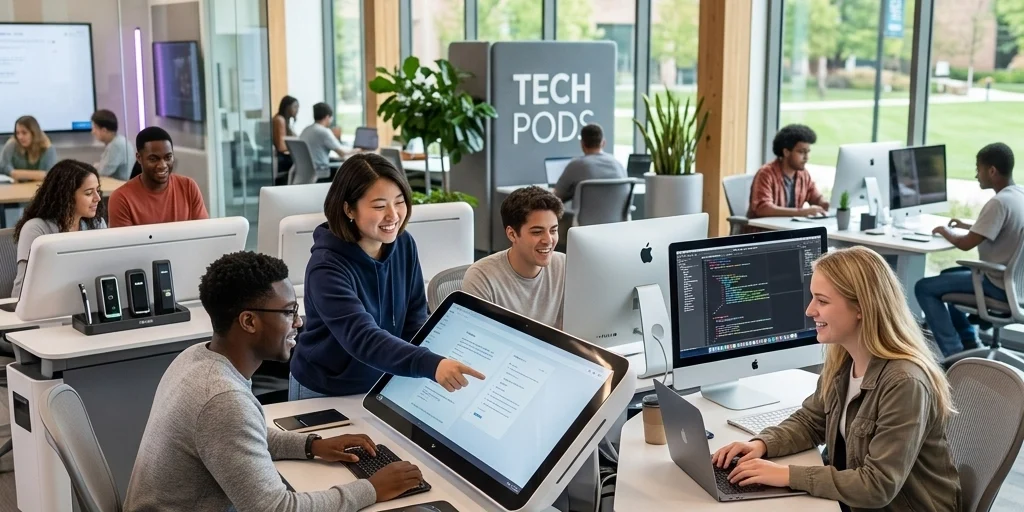
Remember the traditional computer lab? That windowless room smelling faintly of ozone and floor wax, filled with beige towers and monitors so heavy they could double as boat anchors? If you haven't visited one lately, don't bother bringing flowers. The traditional computer lab didn't just retire; it’s been effectively replaced by something much sleeker, more mobile, and infinitely more capable.
Welcome to the era of the "Pod." As of April 2026, the shift from static, desktop-heavy rooms to modular, high-tech launchpads is no longer a "future trend": it’s our current reality. At USA Entertainment Ventures LLC, we’ve seen the landscape of business consulting and physical infrastructure shift toward these versatile units. But why are they killing off the lab, and what does this mean for the next generation of professionals?
The Funeral for the Beige Box
Let’s be honest: the old-school computer lab was essentially a digital waiting room. You went there because you didn't have the software at home, or because the internet at your house was slower than a snail on a treadmill.
However, several things happened at once to pull the plug on the old lab model:
- BYOD (Bring Your Own Device): Most people now carry more computing power in their pockets than a 2010 desktop.
- The Cloud: Software that used to require a $5,000 workstation now runs in a browser window.
- The Great Remote Shift: The 2020s taught us that if you can't do it from a laptop on your couch, it’s probably not worth doing.
Institutions like the Illinois Institute of Technology have already seen the writing on the wall, reportedly slashing their physical PC counts significantly in favor of more flexible options. But while the "room full of PCs" is dying, the need for specialized high-tech space is actually growing.

Enter the Pod: The New High-Tech Launchpad
A "Pod" isn't just a smaller computer lab; it’s a philosophical shift. Instead of a room dedicated to "using a computer," a pod is a workspace designed for a specific output. Whether it’s an E-Sports Pod or a mobile content creation studio, these units represent the democratization of high-end infrastructure.
Unlike the static labs of the past, pods are:
- Modular: Need to move your operation? Pick up the pod and go.
- Purpose-Built: They aren't generic. They are optimized for specific career pathways.
- Collaborative: Instead of rows of isolated cubicles, pods are designed for team-based "sprints."
Pathway 1: Logistics: The Backbone of Everything
When we think of high-tech, we often think of "The Matrix" code scrolling down a screen. But the real high-tech revolution is happening in logistics. Modern logistics isn't just about driving trucks; it’s about AI-driven supply chains, drone fleet management, and real-time data visualization.
Pods serve as the perfect command centers for logistics training. Imagine a mobile unit deployed at a port or a warehouse, equipped with the processing power to run complex simulations. These aren't just desks; they are mission control centers. In a world where EV Across America is becoming the norm, the logistics of charging and routing require a new kind of tech-forward thinker.
Pathway 2: Cybersecurity: The Digital Frontier
If logistics is the backbone, cybersecurity is the immune system. We’ve moved past the era where one "IT guy" could protect a company. Today, we need specialized "security pods" where teams can engage in red-team/blue-team exercises (simulated cyberattacks).
Traditional computer labs were notoriously difficult to secure for these types of high-stakes training. Pods, however, can be isolated, "air-gapped," and customized with the specific hardware needed to simulate a power grid or a financial network. For a business consulting firm like USA Entertainment Ventures LLC, seeing this shift toward specialized security hubs is a clear indicator that the "one size fits all" lab is a relic of the past.

Pathway 3: Content Creation: The New Rockstars
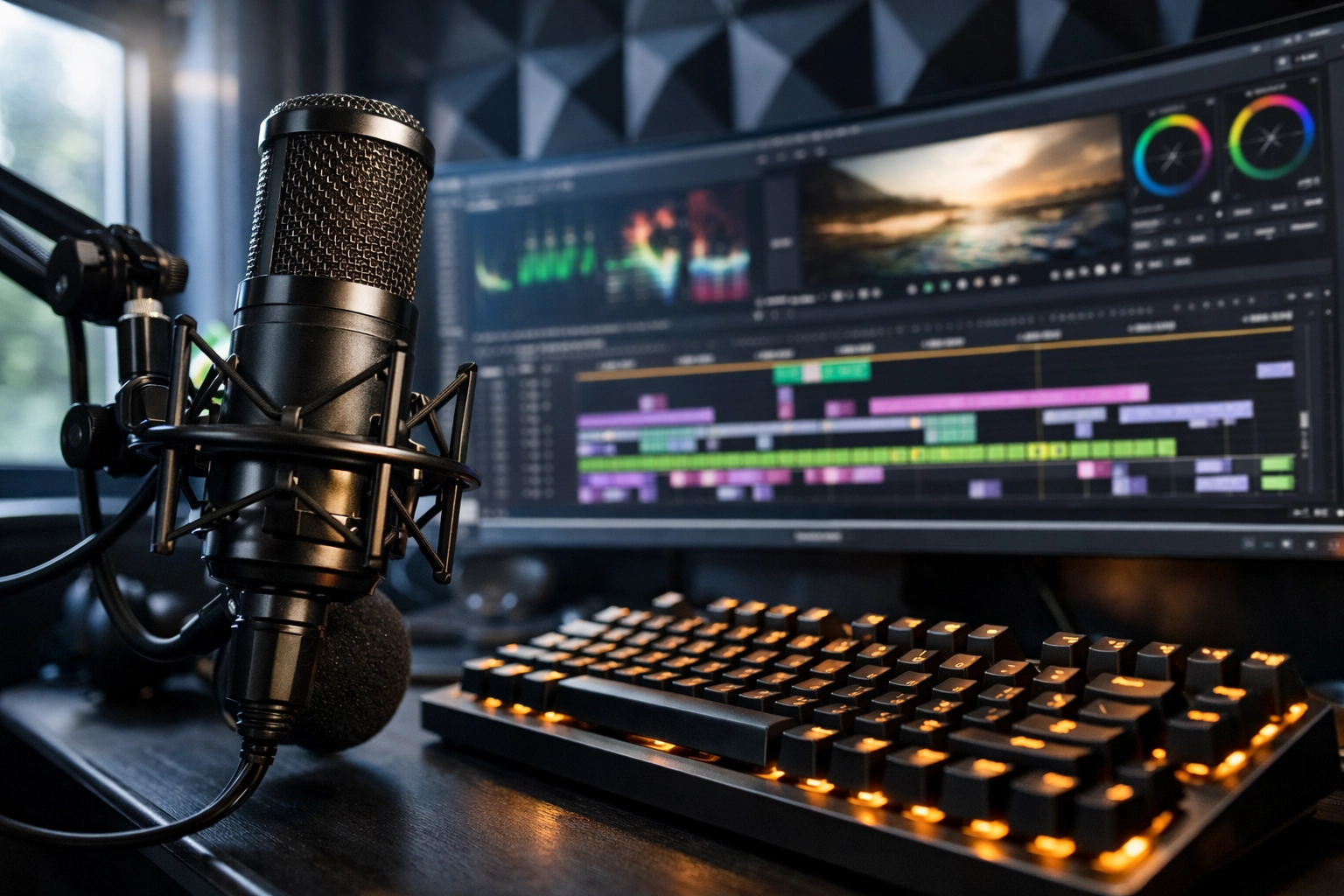
This is where pods really shine. The barrier to entry for professional content creation: be it podcasting, 8K video editing, or high-end streaming: is no longer just talent; it’s the environment. You can’t record a professional voiceover in a noisy computer lab, and you can’t render a feature film on a standard-issue office laptop.
Modern pods provide:
- Acoustic Treatment: Sound-proofed environments for pristine audio.
- Hardware Power: High-end GPUs for rendering and AI generation.
- Connectivity: Dedicated high-speed uplinks for live broadcasting.
Projects like Zoo Imagery and Buy Sports Media highlight the growing need for high-quality visual assets. A pod provides a "launchpad" where a creator can step in, plug in, and produce world-class content without the overhead of a multi-million dollar studio.
Why Physical Infrastructure Still Matters (The "Digital Divide" Problem)
You might ask: "If everyone has a laptop, why do we need pods at all?"
It’s a fair question, but it ignores two massive factors: The Digital Divide and The Power Gap.
Even in 2026, reliable high-speed internet and high-end hardware are not universal. A student or an entrepreneur might have a laptop, but they might not have the $4,000 setup required for VR development or the bandwidth required for massive data sets. Pods act as an equalizer. They provide "high-tech as a service."
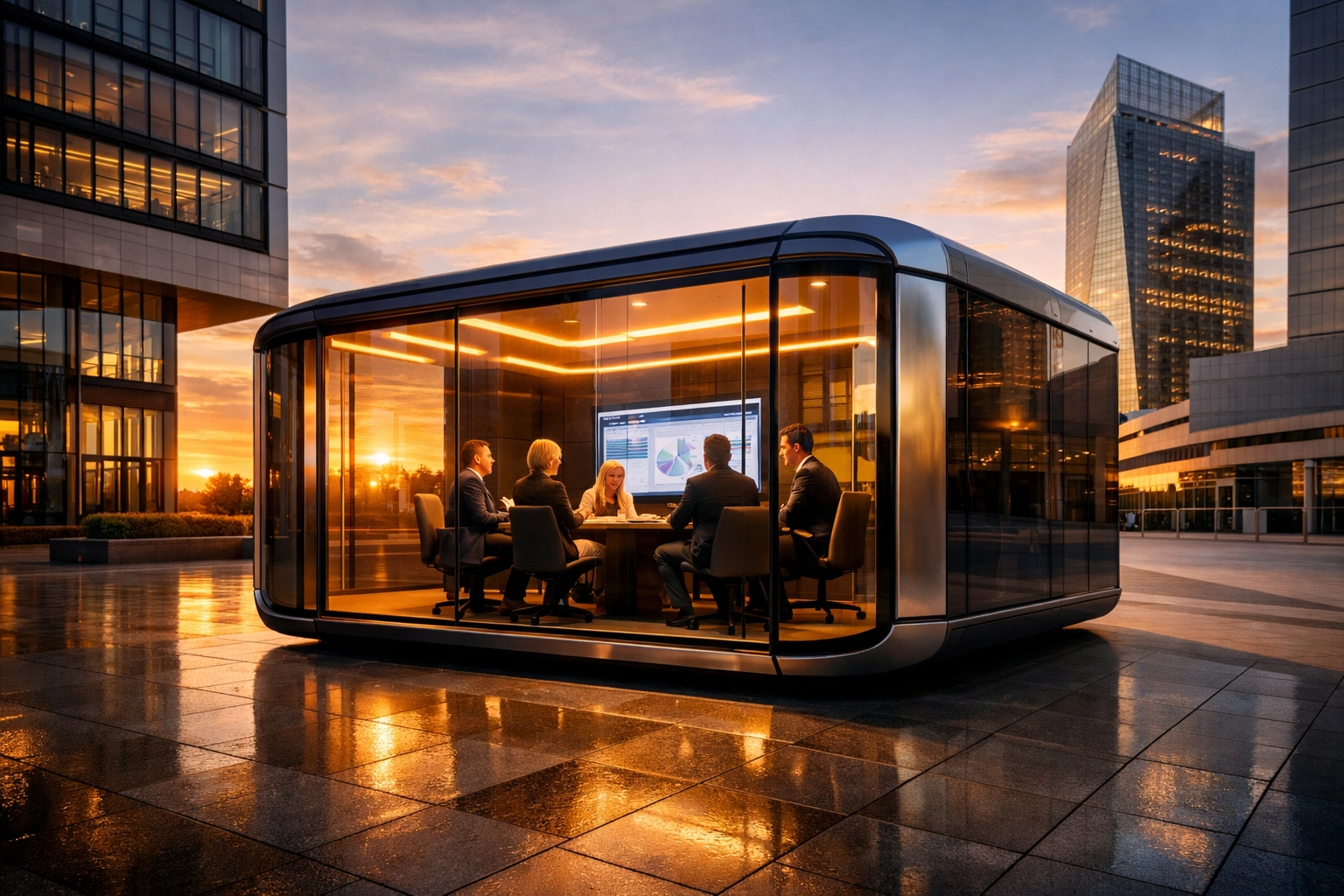
By placing pods in community centers, schools, or even corporate parking lots, we provide the physical infrastructure needed to bridge the gap between "having an idea" and "having the tools to build it." It’s a simple concept that drives massive societal impact.
The Future of Workspace: Scalability and Versatility
The most exciting part about the death of the computer lab is what replaces it in terms of scalability. If a company grows, they don't need to renovate a whole floor to build a new lab; they just add another pod. If a school needs to pivot from teaching coding to teaching Money Smart financial literacy, they can reconfigure the internal software and hardware of the pod in an afternoon.
This flexibility is essential for the modern economy. The jobs we are training people for today: like AI prompt engineers or drone logistics coordinators: might look completely different in three years. A static lab can't keep up. A pod can.
Final Thoughts: The Launchpad Awaits
So, are computer labs dead? The ones with the flickering fluorescent lights and the "No Food or Drink" signs certainly are. But their spirit is living on in a more evolved form.
The transition to pods is about more than just new furniture; it’s about recognizing that technology is now a modular, mobile, and collaborative part of our lives. Whether you are looking into Sportrons for digital engagement or setting up a new venture in the entertainment space, the infrastructure you choose will define your success.
The beige boxes are gone. The launchpads are here. The only question left is: where are you planning to fly?
For more insights into how modern infrastructure is reshaping the business world, check out our portfolio of projects and see how we’re helping lead the charge into this new, pod-based reality.





