
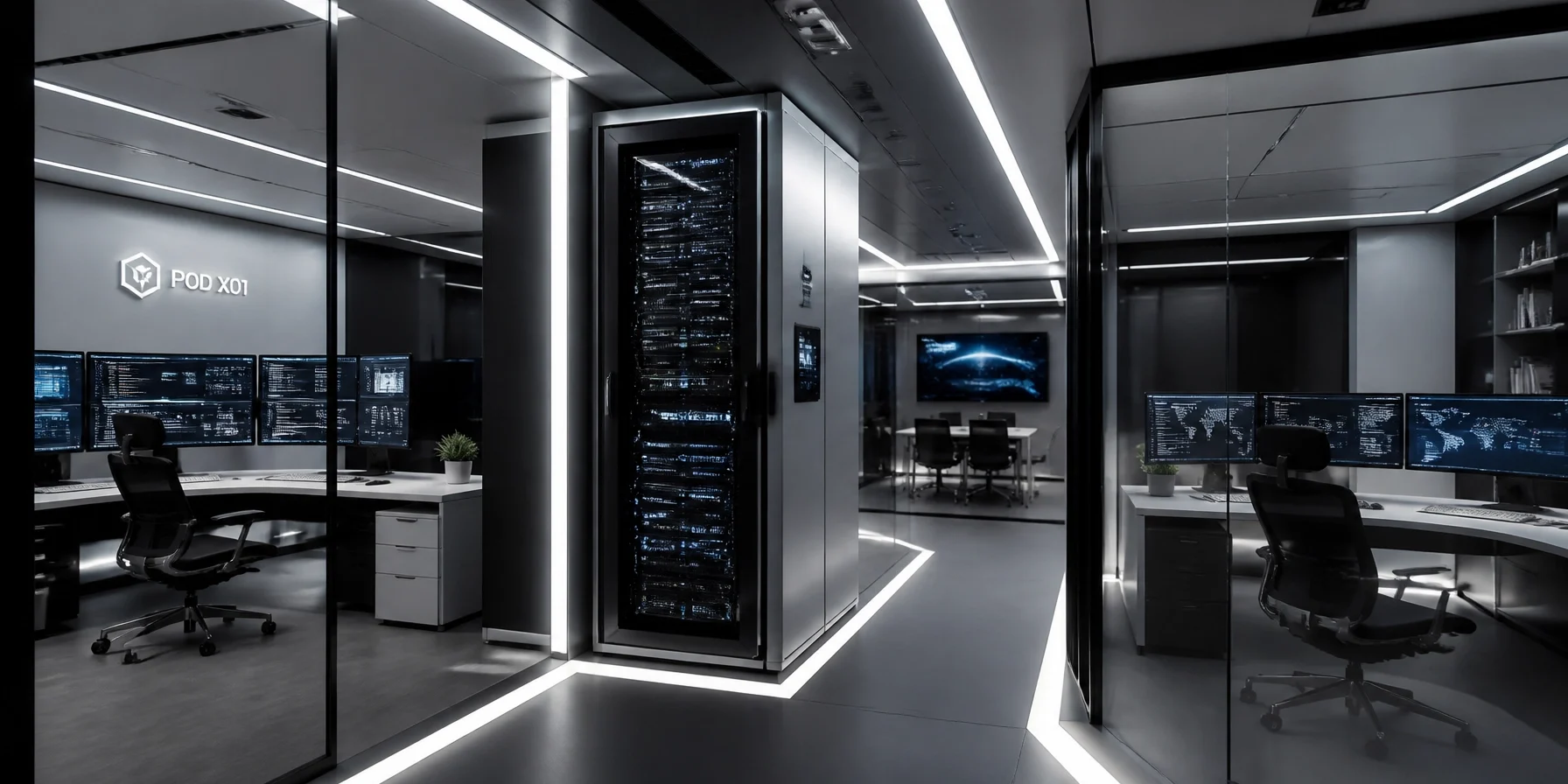
Remember the traditional computer lab? That windowless room filled with beige towers, humming fans, and the faint, lingering scent of ozone and disappointment? For decades, it was the epicenter of technical learning: a static, rigid environment where students and professionals alike sat in rows, tethered to aging infrastructure.
But the era of the "beige box" is officially over. As industries shift toward decentralized, high-speed operations, the physical spaces where we train and work are undergoing a radical transformation. Enter the High-Tech Pod: a modular, self-contained, and hyper-efficient environment designed to bridge the gap between education and the modern workforce.
Whether you are looking to secure a digital fortress, manage global supply chains, or produce the next viral media sensation, these pods are more than just fancy rooms: they are the launchpads for the next generation of high-growth careers.
The Anatomy of a Pod: Why Modular is the New Standard
At its core, a "Pod" is a pre-fabricated, integrated unit that houses everything a technical professional needs: power, networking, climate control, and ergonomic workspace. Unlike a traditional office or school computer lab, which often takes months to renovate and wire, a pod can be deployed and fully operational in as little as 15 minutes.
According to industry data from Expandable Trailers, these units range from 25 to 44 feet and are built to be reconfigured on the fly. This flexibility is the "secret sauce" of modern technical training. Instead of a one-size-fits-all room, a pod can be a cybersecurity range on Monday and a logistics operations center on Tuesday.
This isn't just about convenience; it's about mission-critical alignment. "Traditional shared networks struggle to support the high-risk practice environments required for modern tech education," notes a recent analysis on USA Entertainment Ventures. Modular pods solve this by providing "air-gapped" environments: isolated networks that allow for intense experimentation without putting the parent organization’s data at risk.
Career Path 1: Cybersecurity (The Digital Fortress)
If you have ever dreamt of being on the front lines of a digital war, the high-tech pod is your training ground. In the world of cybersecurity, the difference between theory and practice can be a multi-million-dollar breach.

Pods are increasingly being used as Security Operations Centers (SOC) in miniature. These environments allow trainees to:
- Simulate live breaches: Because the pod is self-contained, you can run actual malware and conduct "red-team" vs. "blue-team" exercises safely.
- Master multi-monitor workflows: Modern cyber roles require managing vast amounts of data simultaneously. Pods are built with dual and triple 4K monitor setups as standard.
- Experience "The Zone": The acoustic isolation of a high-tech pod mimics the focused environment of professional cyber ranges, helping learners develop the mental stamina required for real-world incidents.
The transition from a pod-based training environment to a role as an Information Security Analyst or Threat Hunter is significantly smoother because the "workplace" looks and feels exactly like the "training space." It is the difference between learning to fly on a paper airplane and training in a full-motion flight simulator.
Career Path 2: Logistics and Infrastructure (The Pulse of the Planet)
While everyone talks about the data inside the pods, the real-world movement of the pods themselves is a burgeoning career field in its own right. Logistics is no longer just about driving trucks; it is about the sophisticated orchestration of high-value, modular assets.

The rise of modular infrastructure has created a massive demand for:
- Operations Managers: Professionals who can coordinate the deployment of fleets of pods to high-need areas, such as military bases or underserved tech hubs.
- Field Service Technicians: High-tech facilities managers who ensure that power, HVAC, and server connectivity are maintained across a distributed network of pods.
- Logistics Data Analysts: Using data to predict where training infrastructure is needed most and how to move it there with the lowest carbon footprint.
"The growth of pod-based infrastructure is creating a second, often overlooked career pathway," says a report from industry leaders. It’s a career that sits at the intersection of construction, supply chain management, and high-tech facility operations. If you like solving puzzles that involve moving 30,000-pound pieces across the country, this is your field.
Career Path 3: Content Creation and Media (The Creator's Engine)
The modern economy is driven by content, but high-quality production usually requires expensive, permanent studio space. Pods are democratizing this by turning any parking lot or campus corner into a professional media house.

Inside a content creation pod, you’ll find:
- Sound-Dampened Environments: Perfect for podcasting, voiceover work, and high-fidelity audio production.
- Green Screen Integration: Allowing creators to transport themselves into any virtual environment.
- Real-Time Editing Suites: High-powered workstations capable of processing 8K video without breaking a sweat.
For someone looking to enter the media industry, a pod offers a low-barrier-to-entry way to access professional-grade gear. Careers in video editing, social media management, and digital broadcasting are no longer reserved for those in New York or Los Angeles. With a modular pod, the studio comes to you.
Fast-Tracking Your Career: The DOD SkillBridge Connection
One of the most exciting applications of pod-based training is in the realm of veteran transition. Programs like DOD SkillBridge are increasingly looking at modular training solutions to help service members move into civilian tech roles before their official discharge date.
Because pods can be deployed directly onto or near military bases, they provide a cost-effective and highly accessible way for veterans to gain certifications in cybersecurity or logistics. It removes the friction of relocation and allows for a focused, mission-driven learning environment that resonates with military training.
By choosing a career path that utilizes pod infrastructure, you aren't just learning a skill: you are adopting a mindset of agility and decentralization. You are moving away from the static, 9-to-5 cubicle farm and toward a future where "the office" is wherever the mission takes you.
Actionable Takeaways: How to Get Started
If you are tired of the "boring computer lab" and ready to level up, here is how you can pivot:
- Identify Your Path: Do you want to defend the network (Cybersecurity), move the world (Logistics), or tell the story (Content Creation)?
- Seek Modular Training: Look for training providers or employers who utilize high-tech pods or modular environments. These organizations are often on the cutting edge of their industries.
- Leverage Veteran Programs: If you are a service member, ask about DOD SkillBridge opportunities that involve modular tech training.
- Think Mobile: Familiarize yourself with mobile networking and decentralized infrastructure. This is a skill set that will only increase in value as we move toward 2030 and beyond.
The Future is Modular
The shift from the traditional computer lab to the high-tech pod is a reflection of a larger societal trend: the move toward flexibility, speed, and specialized environments. As we look to the future, the ability to rapidly deploy high-tech spaces will be the backbone of our economic and educational resilience.
In the words of many industry innovators, the goal is no longer to "bring the people to the classroom," but to "bring the classroom to the people." Whether you are a student, a veteran, or a professional looking for a change, trading the boring lab for a high-tech pod isn't just a change of scenery: it’s the fastest way to track your career into the future.





