
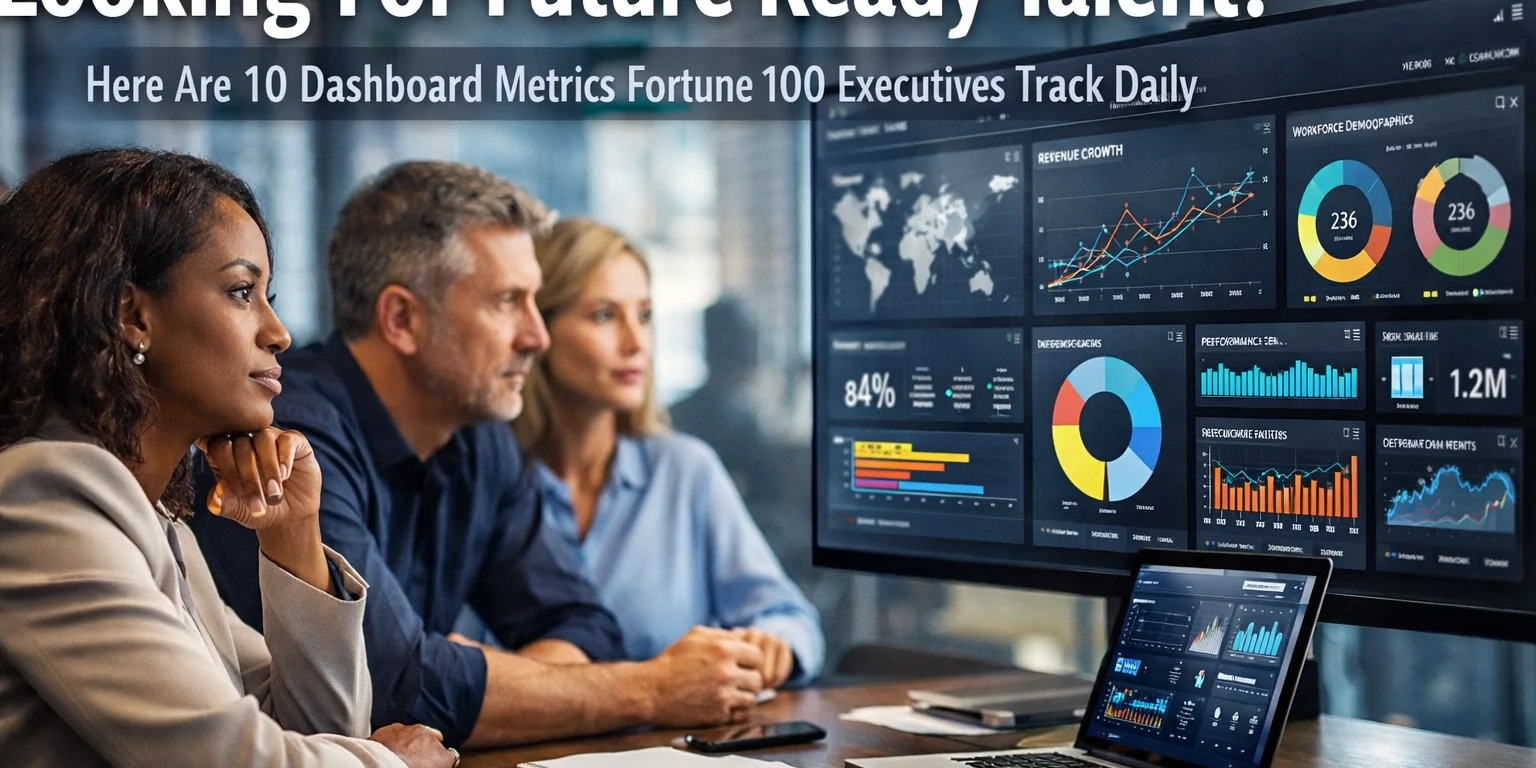
The talent landscape has fundamentally shifted. Fortune 100 executives no longer wait until graduation to identify high-potential candidates. Instead, they're monitoring real-time data streams that reveal which students are developing the skills, adaptability, and digital fluency required for tomorrow's workforce. These insights come from dashboard metrics that track educational outcomes in ways that traditional transcripts never could.
The intersection of education technology, media literacy programs, and data analytics has created an unprecedented opportunity to measure student readiness across dimensions that matter most to enterprise leaders. These metrics provide visibility into competencies that traditional academic assessments often miss: skills like digital content creation, data interpretation, collaborative problem-solving, and adaptive learning.

The Shift Toward Real-Time Talent Intelligence
Educational institutions are no longer isolated from workforce development. The most forward-thinking schools have become data-rich environments where student progress, skill acquisition, and career readiness are measured continuously rather than episodically. This transformation enables corporate executives to identify talent pipelines years before conventional recruitment cycles begin.
According to workforce development research, companies that engage with educational institutions through data-sharing partnerships reduce their time-to-productivity for new hires by an average of 35 percent. The reason is straightforward: executives gain early visibility into which students are not merely academically accomplished but demonstrably prepared for the complexity of modern enterprise environments.
Ten Dashboard Metrics That Matter
1. Student Engagement Velocity
This metric tracks the rate at which students initiate, participate in, and complete educational activities across digital platforms. Unlike simple attendance tracking, engagement velocity measures momentum: how quickly students move from passive consumption to active contribution. High engagement velocity correlates strongly with workplace initiative and self-directed learning capacity.
2. Skills Acquisition Rate
Rather than measuring what students know at a single point in time, this metric captures how rapidly they master new competencies. The rate of skill acquisition reveals learning agility, a characteristic that research consistently identifies as the strongest predictor of leadership potential. Executives monitor this metric to identify candidates who can keep pace with rapid technological change.
3. Media Literacy Competency Score
In an era where misinformation spreads faster than verified information, media literacy has become a core business requirement. This metric assesses students' ability to evaluate sources, identify bias, distinguish fact from opinion, and create credible content. Companies recognize that employees with strong media literacy skills protect brand reputation and make better-informed decisions.

4. NIL Education Completion Rates
Name, Image, and Likeness (NIL) education programs teach students to manage their personal brand, understand intellectual property rights, negotiate contracts, and navigate the business side of content creation. Completion rates for these programs signal entrepreneurial mindset and business acumen: traits that translate directly to corporate innovation roles.
5. Cross-Platform Content Performance
This metric evaluates how effectively students create, distribute, and optimize content across multiple digital channels. High performers demonstrate platform fluency, audience awareness, and analytical thinking. These capabilities are increasingly essential across marketing, communications, product development, and customer experience functions.
6. Digital Fluency Index
Digital fluency extends beyond basic technical skills to encompass how students leverage technology to solve complex problems, collaborate remotely, and adapt to new tools. The index aggregates performance across software applications, data visualization platforms, collaborative workspaces, and emerging technologies. Executives value this metric because digital fluency directly predicts workplace productivity.
7. Real-Time Project Collaboration Metrics
Modern work happens in distributed teams using asynchronous communication tools. This metric tracks how students contribute to group projects, respond to feedback, resolve conflicts, and maintain momentum across virtual environments. Strong collaboration metrics indicate candidates who will thrive in hybrid work settings without requiring extensive onboarding.

8. Data Interpretation Accuracy
Every function within Fortune 100 companies now requires some level of data literacy. This metric measures students' ability to extract insights from datasets, identify patterns, recognize limitations in data quality, and communicate findings to non-technical audiences. Data interpretation accuracy has become a universal screening criterion across industries.
9. Workforce Readiness Score
This composite metric combines professional communication skills, deadline adherence, quality of deliverables, response to constructive criticism, and demonstration of workplace norms. While less quantitative than other metrics, workforce readiness scores predict cultural fit and reduce early-career turnover. Executives monitor these scores to identify candidates who will integrate seamlessly into existing teams.
10. Innovation and Adaptability Quotient
Perhaps the most forward-looking metric, this measures how students respond when faced with ambiguous problems, changing requirements, or unexpected obstacles. The quotient considers multiple factors: willingness to experiment, recovery from setbacks, creative problem-solving approaches, and ability to pivot strategies. In volatile business environments, adaptability often matters more than domain expertise.
Building Future Ready Infrastructure
Educational institutions that implement comprehensive dashboard tracking position themselves as anchors for workforce development. These schools don't simply prepare students for employment: they provide corporate partners with actionable intelligence about talent pipelines. This value proposition transforms the traditional relationship between education and industry.
The infrastructure required to generate these metrics includes learning management systems with robust analytics capabilities, digital content creation platforms, collaboration tools that capture interaction data, and assessment frameworks aligned with industry competency standards. Schools that invest in this infrastructure differentiate themselves in competitive enrollment markets while simultaneously creating partnerships with employers seeking future-ready talent.

The Executive Perspective
For Fortune 100 executives, these dashboard metrics represent a competitive advantage in talent acquisition. Rather than competing for the same pool of graduates identified through traditional recruiting channels, data-driven approaches reveal high-potential candidates earlier in their educational journey. This early identification enables companies to build relationships, offer internships, and ultimately hire students whose capabilities have been validated through longitudinal performance data rather than single-point assessments.
Moreover, these metrics reduce bias in hiring decisions. By focusing on demonstrated competencies across multiple dimensions, organizations can identify talent from diverse backgrounds who might be overlooked by conventional credentialing systems. The result is both more equitable and more effective talent selection.
Implementation Considerations
Organizations considering partnerships with educational institutions should evaluate whether schools have the technical infrastructure and analytical capacity to generate reliable dashboard metrics. Key questions include: How frequently is data refreshed? What validation processes ensure measurement accuracy? How are privacy and consent managed? What benchmarks exist for comparative analysis?
The most successful partnerships involve shared investment in infrastructure, collaborative definition of relevant competencies, and ongoing refinement of measurement approaches. These relationships evolve from transactional recruitment to strategic workforce development.
Looking Forward
As artificial intelligence and automation reshape occupational requirements, the ability to identify adaptable, digitally fluent, analytically capable talent becomes increasingly critical. Traditional indicators: degrees, grades, test scores: capture only a fraction of what predicts success in rapidly evolving work environments.
Dashboard metrics that provide real-time visibility into skill development, engagement patterns, and adaptive capacity offer a more complete picture. Fortune 100 executives who leverage these insights gain first-mover advantages in securing the talent that will drive innovation, maintain competitiveness, and lead organizations through ongoing transformation.
The future of talent identification is already here. It's measured daily, refined continuously, and accessible to organizations willing to partner with educational institutions committed to becoming truly future ready.





