
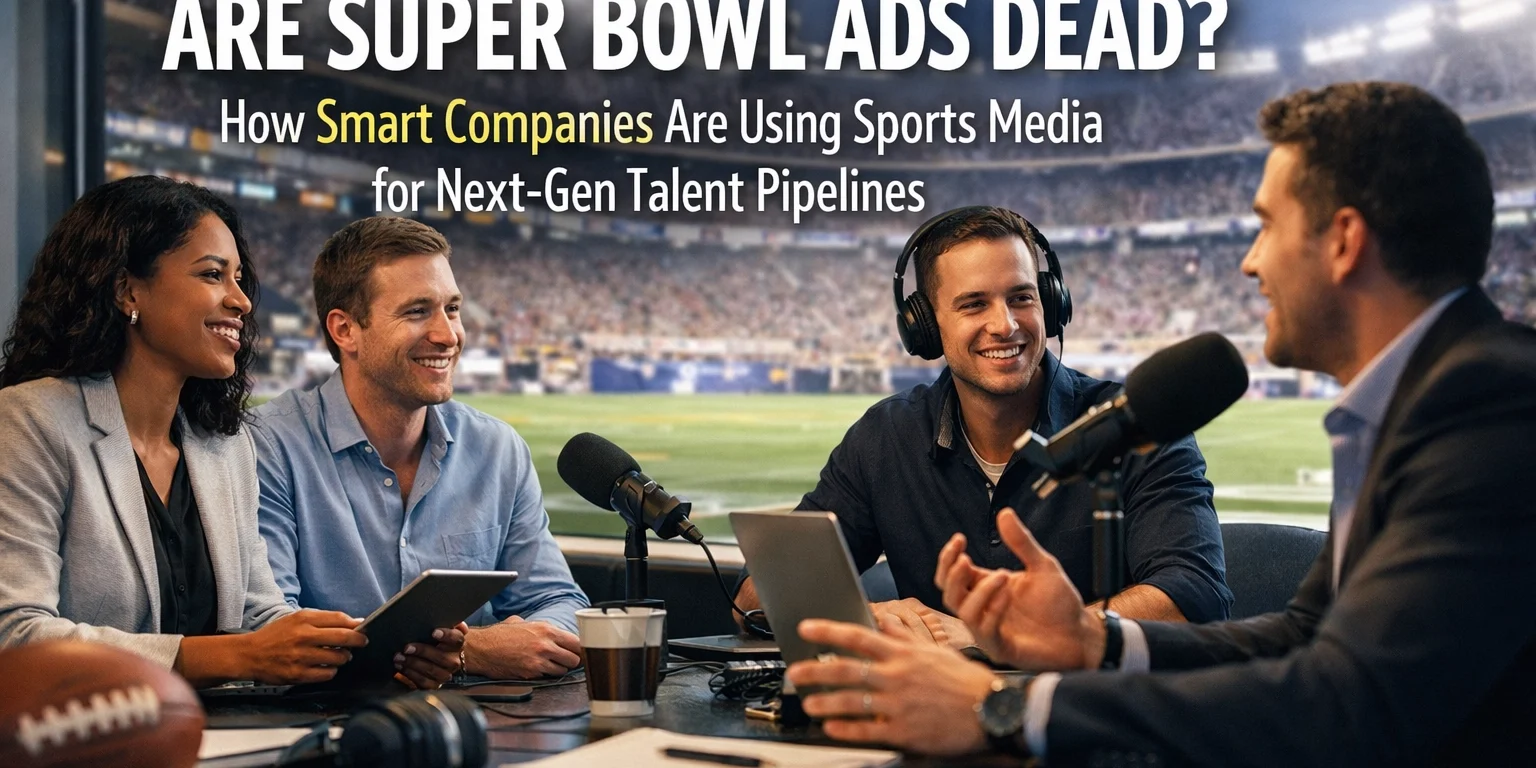

The question circulating boardrooms across Fortune 500 companies isn't whether Super Bowl ads still work: it's whether they're being used for the right purpose. At approximately $8 million for a 30-second spot during the 2026 Super Bowl, the traditional return-on-investment calculus that focused purely on product awareness and immediate sales conversions no longer tells the complete story.
Recent analysis reveals that Super Bowl advertising has entered a transformative phase. Rather than becoming obsolete, these high-visibility platforms are evolving into strategic assets for an entirely different corporate objective: building next-generation talent pipelines. Companies that recognize this shift are redirecting their sports media investments from pure consumer marketing toward employer brand development and workforce attraction strategies.
The Multi-Channel Reality of Modern Sports Advertising
The conventional wisdom that a single television commercial during a major sporting event would generate sufficient brand lift has been replaced by a more sophisticated understanding. According to 2026 performance data, successful Super Bowl campaigns now require integrated digital ecosystems that extend far beyond the initial broadcast moment.

The most effective approach combines the mass-reach impact of television spots with targeted social media campaigns, influencer partnerships, and sustained digital engagement across multiple platforms. When viewers watch a Super Bowl commercial, their immediate behavioral pattern involves turning to YouTube, TikTok, Instagram, and other social channels to share reactions, search for extended content, and engage with brand narratives in real-time.
This multi-channel reality creates an opportunity that forward-thinking organizations are exploiting: using sports media visibility not merely to sell products, but to position themselves as desirable employers to the demographic cohorts they need to recruit.
The Talent Pipeline Nobody's Talking About
While marketing departments have traditionally controlled Super Bowl advertising budgets, human resources and talent acquisition teams are beginning to recognize the untapped potential of these platforms. The same audience that watches the Super Bowl: particularly the younger demographics that dominate social media engagement around the event: represents the talent pool companies will compete for throughout the next decade.
Consider the mathematics: a campaign that reaches 100 million viewers includes millions of current and prospective employees, industry professionals, and career-stage individuals evaluating future opportunities. The messaging that resonates during these high-visibility moments shapes perceptions not only about products but about organizational culture, values, and innovation capacity.
From Celebrity Endorsements to Human-Centric Narratives
A significant shift documented in 2026 involves the movement away from celebrity-driven content toward human-centric storytelling. The most successful Super Bowl advertisements now deliver emotional or humorous messaging while clearly communicating authentic organizational values and purpose.
Google's Gemini AI advertisement exemplified this trend by combining emotional storytelling with clear demonstrations of product utility and, by extension, the innovative culture required to develop such technology. Similarly, Pepsi's approach focused on genuine human connections rather than manufactured celebrity moments, achieving substantially higher engagement rates.

This evolution directly benefits talent attraction strategies. Prospective employees, particularly those in Gen Z and younger Millennial cohorts, prioritize organizational authenticity and cultural alignment over traditional corporate prestige markers. When companies use sports media platforms to demonstrate genuine values and human-centered innovation, they simultaneously market products and cultivate employer brand equity.
The Influencer Partnership Model for Talent Engagement
The integration of influencer partnerships into Super Bowl advertising strategies provides a template for ongoing talent pipeline development. Carl's Jr.'s collaboration with influencer Alix Earle, which achieved 91% follower growth and a 47% engagement rate through behind-the-scenes content sharing, demonstrates how authentic partnerships extend campaign impact far beyond the initial broadcast.
This model translates directly to recruitment strategies. Companies are beginning to partner with industry influencers, thought leaders, and employee advocates who share genuine workplace experiences across social platforms. Rather than limiting sports media investments to the game-day commercial, organizations are building year-round engagement campaigns that use major sporting events as anchor moments within broader talent attraction narratives.
The data supporting this approach is compelling. Influencer-driven content generates higher trust levels among younger audiences than traditional corporate messaging, and the behind-the-scenes access that performed exceptionally well in product marketing creates equivalent value when applied to workplace culture and career opportunity storytelling.
Strategic Workforce Infrastructure Through Sports Media
Organizations approaching sports media strategically recognize that the same infrastructure required for successful advertising campaigns: multi-channel content distribution, real-time social engagement, influencer partnerships, and data analytics capabilities: serves equally well for talent acquisition and employer branding initiatives.

The transition requires coordination between traditionally siloed departments. Marketing teams possess expertise in sports media buying, content production, and campaign execution. Human resources departments understand talent market dynamics, workforce needs, and employer value propositions. When these functions collaborate around shared sports media investments, organizations achieve dual objectives with single-budget allocations.
Several Fortune 100 companies have begun implementing this integrated approach for the 2026-2027 fiscal cycle. Rather than treating Super Bowl advertising as purely a marketing expense, these organizations structure campaigns to simultaneously accomplish consumer awareness goals and talent pipeline development objectives. The messaging strategy emphasizes innovation, workplace culture, career development opportunities, and organizational purpose: themes that resonate with both consumers and prospective employees.
The Measurement Framework That Changes Everything
Traditional Super Bowl advertising success metrics: brand recall, purchase intent, website traffic: provide incomplete pictures when campaigns serve dual purposes. Organizations using sports media for talent pipeline development are implementing expanded measurement frameworks that track both consumer and talent market outcomes.
These enhanced metrics include career page traffic spikes following major sporting events, application volume and quality from target demographic segments, social media engagement from industry professionals and career-stage audiences, employer brand sentiment shifts measured through specialized surveys, and long-term talent acquisition cost reductions attributable to improved employer brand equity.
Early data from organizations implementing these measurement approaches indicates that sports media investments delivering moderate consumer marketing returns often generate substantial value through talent pipeline impacts that traditional metrics failed to capture. A company investing $8 million in a Super Bowl spot that produces $5 million in attributable product sales might appear to underperform. However, if the same campaign reduces talent acquisition costs by $4 million annually through improved employer brand strength and generates a higher-quality applicant pool, the total return on investment tells a dramatically different story.
Looking Forward: The 2027 Talent Competition
The shift toward using sports media for talent pipeline development gains urgency when viewed through workforce projection data. Labor market analysis indicates that competition for skilled professionals across technology, healthcare, engineering, and specialized service sectors will intensify throughout the remainder of this decade.
Organizations that establish strong employer brands and robust talent pipelines before this competition peaks will possess significant advantages. Sports media platforms, particularly events commanding massive simultaneous audiences like the Super Bowl, provide rare opportunities to shape employer brand perceptions at scale.
The companies succeeding in 2027 and beyond will be those that recognized this opportunity in 2026 and restructured their approach to high-visibility media investments accordingly. Rather than asking whether Super Bowl ads are dead, these organizations are asking how sports media platforms can be leveraged strategically across multiple corporate functions to achieve compounding returns.

The Practical Application for Business Leaders
For executives evaluating sports media investments, several practical considerations emerge from this analysis. First, integrate marketing and human resources leadership in campaign planning from initial conception through execution and measurement. The perspectives and objectives of both functions should shape messaging strategy, content development, and distribution approaches.
Second, design campaigns with dual-purpose messaging that communicates product value while simultaneously conveying organizational culture, innovation capacity, and employee experience. The most effective approach avoids explicitly recruitment-focused content during consumer-facing moments but ensures that campaign elements position the organization as an attractive employer.
Third, build year-round engagement infrastructure that uses major sporting events as amplification moments rather than isolated campaigns. Talent pipeline development requires sustained engagement, with Super Bowl advertising serving as high-visibility anchors within broader ongoing initiatives.
Fourth, implement comprehensive measurement frameworks that capture both traditional marketing metrics and talent acquisition outcomes. This expanded view provides accurate return-on-investment calculations and enables optimization of future campaigns.
Finally, recognize that the strategic value of sports media for talent pipeline development will likely increase rather than diminish throughout the coming years. As traditional recruitment channels become saturated and competition for skilled professionals intensifies, the organizations that established employer brand equity through high-visibility platforms will possess sustainable competitive advantages.
The question isn't whether Super Bowl ads are dead. The question is whether your organization is using them strategically enough. For companies that understand sports media's potential beyond immediate product sales, these platforms represent investments in the workforce infrastructure that will determine competitive positioning throughout the next decade.
The future belongs to organizations that recognize advertising as employer branding and understand that every consumer touchpoint is simultaneously a talent attraction opportunity. In this context, Super Bowl advertising isn't dying; it's evolving into something far more valuable.





