
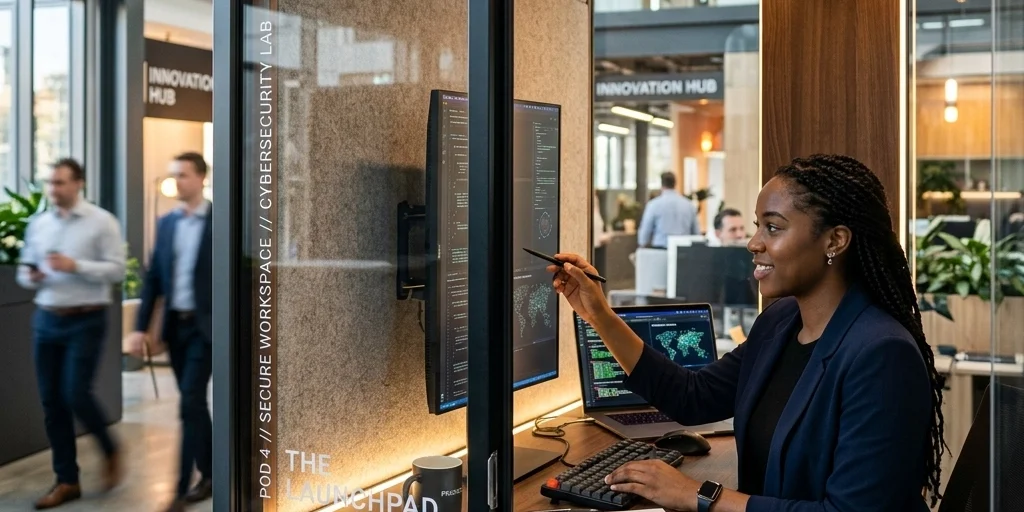
Remember the old computer labs from high school? The ones with the flickering fluorescent lights, the smell of stale ozone, and those beige towers that took five minutes just to boot up Minesweeper? If you’re nodding along, I have some news for you: those days are dead. Or at least, they should be. In the modern era, where data is the new oil and hackers are the new pirates, the physical space where we learn and work needs a serious upgrade.
At USA Entertainment Ventures LLC, we spend a lot of time thinking about how businesses evolve. As Dan Kost, our CEO, often says, you can’t run a Formula 1 race in a golf cart. You need the right machine, and you need the right garage. In the world of tech, that "garage" is the Pod.
Pods are the new evolution of the computer lab. They aren’t just rooms with desks; they are high-octane, modular command centers designed to launch the next generation of cybersecurity pros, logistics wizards, and content creators.
The Physicality Paradox: Why Space Still Matters in a Digital World
We’ve been told for a decade that the "office is dead" and everything is in the cloud. But here’s the reality: while the data might be in the cloud, the human being protecting it is sitting in a chair, staring at a screen, and drinking way too much coffee.
Physical infrastructure matters because it dictates how we interact with technology. A generic laptop on a kitchen table is fine for checking emails, but it’s a disaster for a cybersecurity professional trying to simulate a massive DDoS attack or a logistics expert managing a global supply chain in real-time.
Cybersecurity pods provide a specialized physical environment: a miniature command center: that offers the infrastructure, collaboration, and isolation necessary for high-stakes work. Think of it as the difference between playing a flight simulator on your phone and sitting in a full-motion cockpit. One is a game; the other is training.
The Cybersecurity Launchpad: The Sandbox and the SOC
If you’re looking to break into cybersecurity, the Pod is your best friend. Why? Because it’s built for the job. Traditional labs often have restricted permissions and generic networking that make it impossible to actually do security work. You can’t exactly "stress test" a network if the IT department has locked down every port.
The Sandbox Advantage
Cybersecurity pods offer isolated "sandboxes." This is a fancy way of saying you have a safe place to break things. You can run malware, test exploits, and practice defensive maneuvers without the risk of accidentally taking down the local hospital’s server. It’s a controlled environment for digital chaos.
Simulating the SOC
In the real world, security pros work in a Security Operations Center (SOC). These are high-pressure environments with walls of monitors and constant data feeds. Pods simulate this reality. With multi-monitor setups and dedicated servers, you aren’t just learning the theory; you’re developing the "muscle memory" of a professional defender.

Beyond the Firewall: Logistics and Content Creation
While cybersecurity is the headliner, Pods are actually the ultimate multi-tool for other high-growth career pathways.
1. The Logistics Link
Logistics isn't just about moving boxes; it’s about moving data. Modern logistics professionals need to monitor global shipping lanes, weather patterns, and inventory levels simultaneously. A Pod setup allows for the kind of "God-view" visualization required to manage complex supply chains. When you have four screens showing real-time GPS data, warehouse stats, and communication channels, you’re not just a dispatcher: you’re a conductor.
2. The Content Creation Hub
Let’s talk about the creator economy. High-end video editing, 3D rendering, and live streaming require massive computing power and specific ergonomic layouts. A Pod can be quickly reconfigured from a hacking den into a state-of-the-art production studio. For companies looking to expand their brand: much like we do at USA Entertainment Ventures: having a dedicated space for content production is a game-changer.
Collaboration: The "War Room" Concept
The biggest flaw of the traditional computer lab was the "rows of desks" layout. It encouraged heads-down, isolated work. But tech today is a team sport. Whether you’re a Red Team (the attackers) or a Blue Team (the defenders), you need to talk to your teammates.
Pods are designed with collaboration in mind. They feature shared whiteboarding areas and "War Room" configurations where screens can be mirrored and shared instantly. In a cyber breach, communication is just as important as code. If you can’t look your teammate in the eye and point to a specific anomaly on a shared screen, you’re going to lose.

Why Businesses are Switching to Modular Pods
From a business consulting perspective, the move to Pods is just smart math. Traditional infrastructure is "heavy." If you want to upgrade a traditional computer lab, you’re looking at weeks of construction, rewiring, and downtime.
Pods are modular. They are self-contained units that can be moved, upgraded, and reconfigured in a weekend. As technology evolves: and it evolves fast: your physical space needs to keep up. If a new type of server becomes the industry standard, you don’t need a sledgehammer; you just need to swap a component in the Pod.
This modularity also allows for rapid scaling. If a company needs to train 20 new cybersecurity recruits, they don't need a new building; they just need to deploy more Pods. It’s "Infrastructure as a Service," but in the physical world.
Career Pathways: Where the Pod Takes You
We often see people asking, "What can I actually do with this?" The answer is: quite a bit. The skills developed in a Pod environment translate directly to high-paying, high-demand roles.
- Cybersecurity Analyst: Monitoring networks for threats (using that SOC-style training).
- Incident Responder: The "firefighters" of the internet who jump in when a breach happens.
- Logistics Manager: Overseeing the flow of goods and information in a globalized economy.
- Technical Content Lead: Creating the high-end media that drives modern business marketing.
At USA Entertainment Ventures LLC, we’ve seen how these roles are merging. A logistics pro needs to understand cybersecurity to protect the supply chain. A content creator needs to understand logistics to manage assets. The Pod is the common denominator where these skills converge.
The USA Entertainment Ventures Perspective
We’ve always been about the intersection of entertainment, business, and technology. Whether it's through our work with Mobile Highway Ads or our consulting services, we understand that the future belongs to those who have the best tools.
Creating these "launchpads" isn't just about buying fancy computers. It’s about creating an ecosystem where talent can flourish. It’s about taking a student or a career-changer and giving them the keys to a professional-grade environment on day one.
Final Thoughts: Don't Get Left in the Beige Age
The digital world is moving at light speed, but our physical environments are often stuck in the 90s. If you’re serious about a career in cybersecurity, logistics, or content creation, you need to look beyond the screen and look at the room you’re sitting in.
Pods represent a shift in how we think about human potential. By providing the right physical infrastructure, we aren't just giving people a place to work; we’re giving them a place to excel.
As we look toward the future of business consulting and tech education, one thing is clear: the Pod is the launchpad. And the countdown has already started.
If you’re interested in how your organization can transition into the modern age of infrastructure, or if you want to learn more about the sectors we're currently disrupting, check out our portfolio or dive into our latest news at ZooMedia.
The beige age is over. It’s time to step into the Pod.





