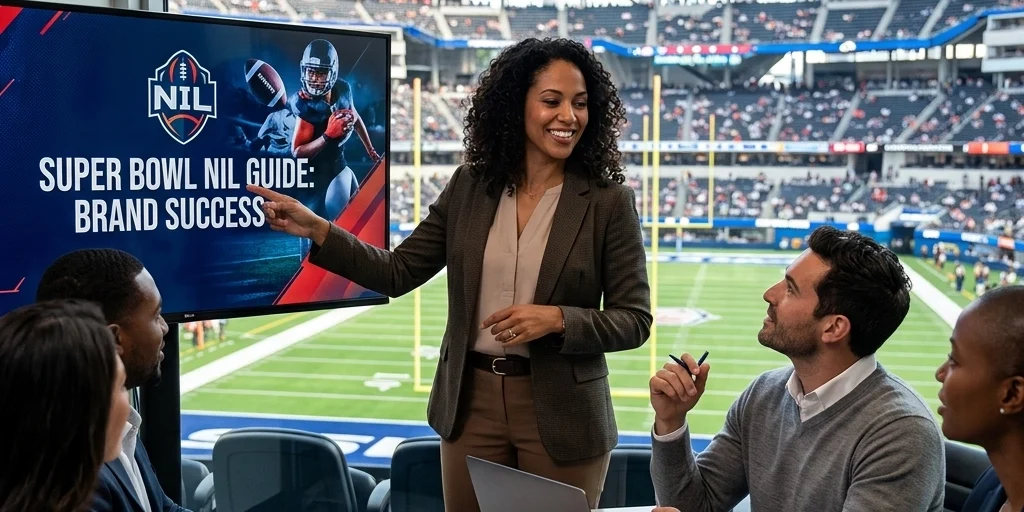
The landscape of sports marketing underwent a seismic shift in early 2026. As the dust settled on the most recent Super Bowl, one thing became abundantly clear to Fortune 100 brands and marketing executives: the traditional 30-second television spot, while still prestigious, is no longer the sole monarch of the "Big Game." We are now living in the era of the NIL (Name, Image, and Likeness) Revolution.
At USA Entertainment Ventures LLC, we have watched this evolution closely. For years, the barrier to entry for Super Bowl visibility was a $7 million to $10 million price tag for a single commercial slot. Today, that same investment: or even a fraction of it: can be deployed across a roster of hundreds of athletes, creating a 360-degree brand ecosystem that lives on the screens consumers actually look at: their smartphones.
The Gap in Modern Sports Marketing
Despite the massive viewership numbers for the Super Bowl, there has historically been a significant "engagement gap." While a brand might capture 100 million sets of eyes for thirty seconds, the connection often ends when the whistle blows for the next play.
Research indicates that over 70% of Super Bowl viewers engage with a second screen during the broadcast. Whether they are checking stats, scrolling social media for real-time reactions, or participating in digital fan groups, their attention is fragmented. This is where the NIL strategy bridges the gap. By partnering with athletes who already possess the trust and attention of these "second-screen" viewers, brands can maintain a continuous presence throughout the entire game-day experience.

The Three-Phase NIL Strategy for Brands
To succeed in the modern Super Bowl environment, a brand must move away from the idea of a "one-day event" and embrace a three-phase approach: The Pre-Game Build, The Game Day Activation, and The Post-Game Saturation.
1. The Pre-Game Build: Creating the Narrative
Success at the Super Bowl doesn't happen on Sunday; it starts months in advance. For Fortune 100 brands, the "Road to the Championship" provides a narrative framework that NIL athletes can inhabit.
During this phase, brands should recruit their NIL roster: ranging from high-profile stars to influential "micro-influencer" college athletes: to create a "warm" audience. This involves content such as training camp highlights, "day-in-the-life" vlogs, and behind-the-scenes preparations for the big game. By the time the Super Bowl arrives, the audience isn't just seeing a brand for the first time; they are seeing a partner that has been part of an athlete's journey.

2. Game Day Activation: Second-Screen Dominance
On game day, the goal is real-time relevance. Traditional commercials are static; they cannot react to a missed field goal, a controversial call, or an underdog’s sudden touchdown. NIL athletes, however, can.
By empowering a "content blitz" across a diverse roster, brands can react to viral moments within seconds. This creates what we call "Second-Screen Dominance." While the TV is showing the replay, the consumer’s phone is showing their favorite athlete’s reaction: integrated seamlessly with your brand’s messaging. This level of agility is what separates modern marketing leaders from the pack.
3. Post-Game Saturation: Extending the ROI
One of the greatest weaknesses of traditional Super Bowl ads is their lack of a "long tail." Once the game is over, the ad's relevance drops precipitously. NIL partnerships extend this lifecycle.
In the week following the game, NIL partners can share recap content, "best of" reels, and direct-to-consumer offers. Using tracked links and athlete-specific promo codes, brands can transition from "top-of-funnel" awareness to "bottom-of-funnel" conversion. This makes the Super Bowl not just a branding exercise, but a measurable sales driver.
Why NIL Outperforms the Traditional 30-Second Spot
When analyzing the ROI of NIL versus traditional broadcast advertising, the data is compelling. A $10 million investment in a single TV spot buys you 30 seconds of high-exposure, low-engagement awareness. That same $10 million in an NIL-driven campaign can buy:
- Thousands of individual pieces of content across TikTok, Instagram, and X (formerly Twitter).
- Direct access to niche, hyper-targeted communities.
- Authentic endorsements from athletes who hold genuine influence over their followers' purchasing decisions.
- Advanced data tracking that provides real-time insights into consumer behavior.
For a deep dive into how this transition is happening on the ground, watch our latest analysis on the NIL revolution:
https://www.youtube.com/watch?v=l6J-0zileKE
Technical Implementation: Integrating NIL into the Marketing Funnel
For Fortune 100 brands, NIL should not be a "siloed" tactic. It must be integrated into the primary marketing funnel. This requires a sophisticated approach to data and talent management.
Data-Driven Selection: Brands must look beyond follower counts. True influence is measured by engagement rates, audience sentiment, and demographic alignment. At USA Entertainment Ventures LLC, we utilize proprietary analytics to ensure that every athlete on a brand's roster serves a specific strategic purpose.
Narrative Consistency: The messaging delivered by a roster of 50 athletes must feel cohesive while remaining authentic to each individual's voice. This is the "Consulting" aspect of our work: bridging the gap between corporate brand guidelines and the raw, unfiltered nature of social media.

Actionable Tactics for the Next Super Bowl Cycle
As we look toward the 2027 season, brands should begin implementing these practical, achievable innovations now:
- Switch to "Always-On" NIL: Move away from one-off event deals. The most successful brands in 2026 were those that had established multi-year partnerships with athletes, allowing the Super Bowl activation to feel like a natural climax rather than a forced intrusion.
- Leverage Local Partnerships: Not every NIL deal needs to be with a national superstar. Regional brands: and even national brands with regional focuses: can find massive value in partnering with athletes from the specific cities hosting the game or the cities represented by the competing teams.
- Adopt "Shoppable" Content: Ensure every piece of athlete content has a clear call to action. Whether it's a "Link in Bio" or a custom QR code on a live stream, the path from engagement to purchase must be frictionless.
The Future: A Factual Perspective
The 2026 Super Bowl served as a definitive proof of concept. The brands that won the "attention war" were not necessarily those with the flashiest TV ads, but those that successfully navigated the fragmented digital landscape.
The NIL revolution is not a temporary trend; it is a structural change in how human beings consume sports and entertainment. As consumer habits continue to shift toward personalized, mobile-first experiences, the value of Name, Image, and Likeness will only increase. Brands that fail to adapt to this reality risk becoming background noise in a world that is increasingly tuned into the individual athlete.

Conclusion: Partnering for Success
Navigating the complexities of NIL at the scale of a Fortune 100 company requires expertise, foresight, and a deep understanding of both the entertainment and business sectors. At USA Entertainment Ventures LLC, we specialize in business consulting that turns these emerging trends into sustainable competitive advantages.
The gap at the Super Bowl has been identified. The bridge has been built through NIL. The only question remains: will your brand be the one crossing it, or will you be left on the sidelines of the old era?
For more information on how to build your Super Bowl NIL strategy, visit our contact page to start the conversation. The road to 2027 starts today.