
Remember the classic computer lab of your youth? Picture it: rows upon identical rows of humming gray towers, monitors that weighed as much as a small boulder, and the unmistakable aroma of overheated plastic and institutional floor wax. You sat in rigid chairs facing the back of the person in front of you, forbidden from talking, while an instructor barked commands from a central projector.
Ah, progress.
Today, that archaic setup is going the way of the dial-up modem. Educational institutions, training centers, and corporate bootcamps are completely rethinking their Physical Infrastructure. Instead of vast halls of isolated desktop monoliths, they are pivoting to something far more dynamic, agile, and frankly, a lot less depressing: pods.
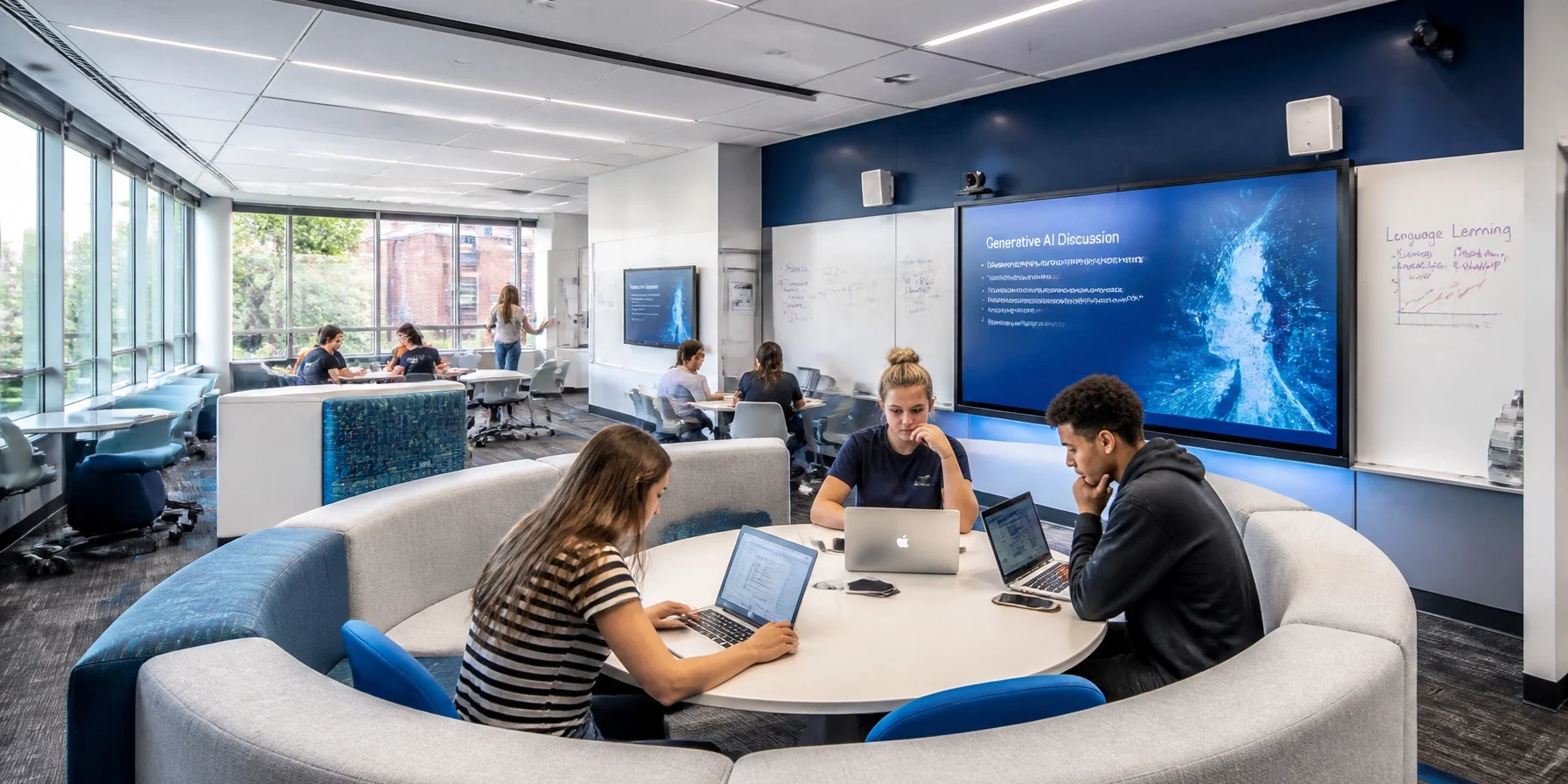
If you haven’t seen a modern tech pod in action, you might be picturing some kind of futuristic sleep capsule. In reality, a pod is a brilliantly designed, self-contained cluster of workstations: usually seating four to six learners: optimized for collaboration, shared displays, and hands-on problem-solving.
To see how schools are swapping out dusty desktop rows for agile pods, check out this deep dive on why modern schools are swapping rows of PCs for pods.
Let’s dive into why pods are taking over Tech Education and how they are powering careers in some of the fastest-growing industries today.
What Are Pods, and Why Are Old-School Labs Officially Retired?
Before we get ahead of ourselves, let’s define the beast. A pod-based layout replaces linear rows with decentralized huddle clusters. Each pod features integrated power management, high-speed wired and wireless connections, and central or personal displays that allow students to project, share, and collaborate in real time.

Why is this massive upgrade kicking traditional Computer Labs to the curb?
- Collaboration Over Isolation: Real-world tech jobs don't happen in solitary confinement. Software engineers pair program; cybersecurity analysts share intelligence; logistics planners coordinate across teams. Pods mirror modern workplaces by encouraging natural peer-to-peer interaction.
- Flexibility in Physical Infrastructure: Old labs were rigid: bolt the desks to the floor, run the cables through concrete channels, pray nobody trips. Modern pods are modular. They can be reconfigured, expanded, or updated without requiring a complete room overhaul.
- Optimized Space and Resources: Instead of maintaining 40 separate desktop machines that sit idle half the day, institutions can deploy flexible pod stations that handle everything from casual browsing to intensive media rendering and hardware emulation.
Pods in Action: Fueling High-Demand Career Pathways
The real magic of transitioning to pod-based learning spaces isn't just aesthetic; it’s functional. Different industries require vastly different workflows. Today’s adaptable Physical Infrastructure allows a single room to transform into a cybersecurity war room in the morning, a supply chain simulation center in the afternoon, and a digital production studio by night.
1. Cybersecurity: The Incident Response Cell
In cybersecurity training, students aren't just reading textbooks; they’re hunting threats, setting up honeypots, and simulating network attacks.

In a traditional lab layout, watching an instructor demonstrate firewall configuration meant craning your neck or staring at a tiny projector screen. In a secure cybersecurity pod, a team of four can cluster around a shared monitor:
- Analyst A monitors incoming traffic anomalies.
- Analyst B patches the vulnerability on a virtual sandbox.
- Analyst C and D document the incident response protocol.
This setup builds the exact muscle memory needed for real-world Security Operations Centers (SOCs).
2. Logistics: Modeling Global Supply Chains
Modern supply chain management and Logistics require handling massive streams of real-time data: inventory tracking, route optimization, automated warehouse robotics, and predictive analytics.
Trying to teach warehouse optimization in a static computer lab is like teaching swimming on a dry carpet. Pod environments allow future logistics coordinators to group up around multi-screen displays where one screen tracks live shipping data, another runs 3D warehouse simulations, and a third maps global freight bottlenecks. It turns abstract economic theories into tactile, interactive challenges.
3. Content Creation: The Creative Huddle
Whether you’re editing 4K video, mixing multi-track audio, or managing large-scale digital campaigns, Content Creation is inherently collaborative.
Old computer labs often struggled with resource-heavy multimedia apps, locking creative students into isolated bubbles. Pod setups, equipped with high-end rendering workstations and studio-grade peripherals, let creative teams pass assets back and forth instantly. One student works on color grading while another refines the audio track, dramatically speeding up project turnaround times and simulating agency workflows.
The Future of Physical Infrastructure
As Tech Education continues to evolve at breakneck speed, the spaces where we learn and train must keep pace. We are moving away from one-size-fits-all brick-and-mortar setups toward flexible ecosystems designed for human connection and specialized skill development.
Pods aren't just a trendy design choice: they are a fundamental shift in how we approach workspace engineering. By blending flexible layouts, robust networking, and multidisciplinary versatility, pods prove that where you learn is just as important as what you learn.
So, raise a glass (or a coffee mug) to the demise of the creaky desktop row. The future of training is modular, collaborative, and pod-powered!





