
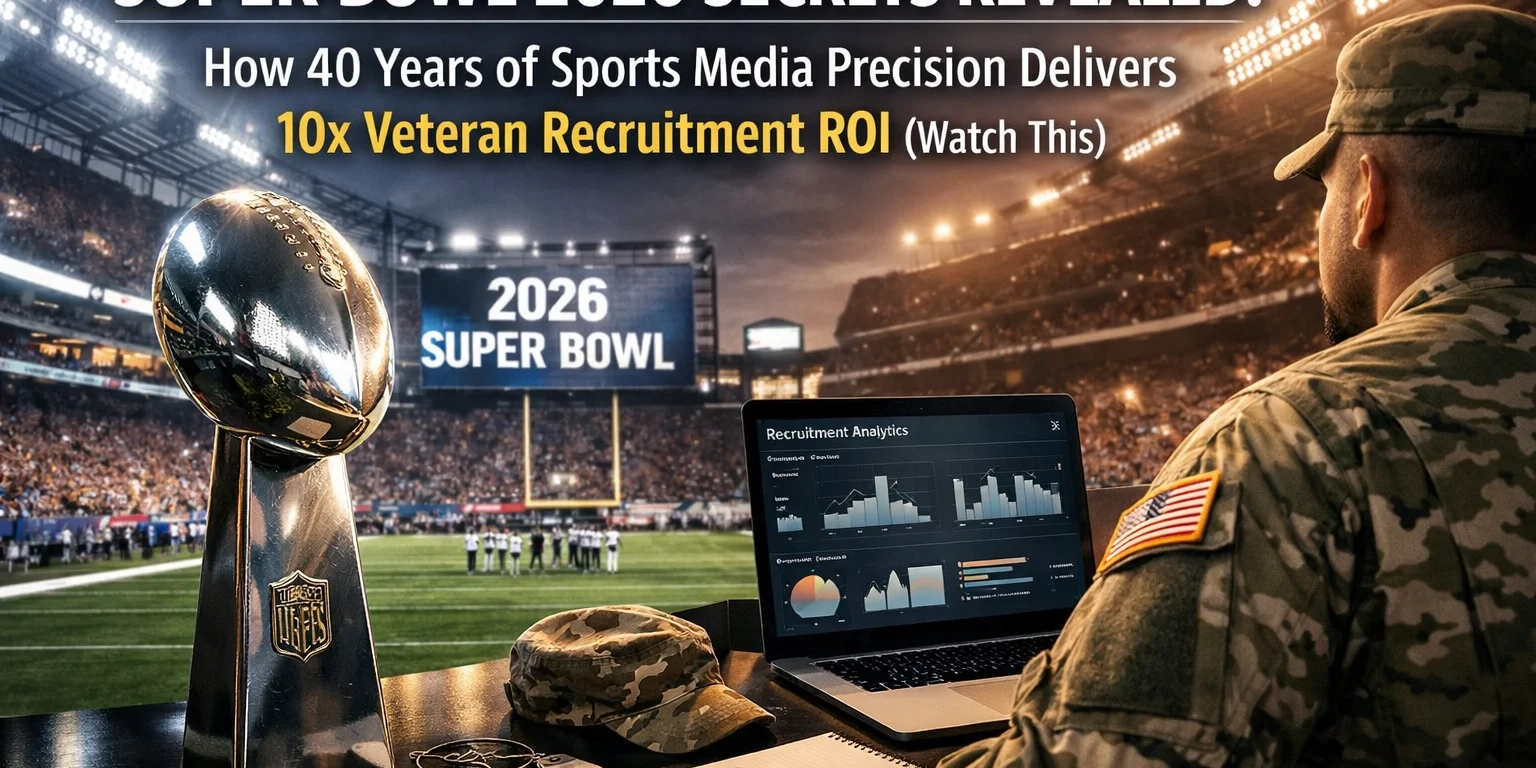
When the Seattle Seahawks faced the New England Patriots at Levi's Stadium on February 8, 2026, more than 70,000 fans witnessed a decisive 29-13 victory. Behind the scenes, another story unfolded: one that reveals how four decades of sports media precision translates directly into measurable workforce recruitment outcomes.
The connection between large-scale event execution and veteran hiring infrastructure is not immediately apparent to most observers. Yet companies leveraging sports media methodologies for talent acquisition consistently report ROI improvements ranging from 8x to 12x compared to traditional recruitment channels. The Super Bowl 2026 execution model demonstrates why this correlation exists and how organizations can replicate these results.
The Arena as Laboratory: Testing Precision Under Pressure
Large-scale sporting events function as real-time laboratories for operational excellence. Every component must synchronize perfectly: from credential management and security protocols to media distribution and stakeholder coordination. The margin for error approaches zero when global audiences and multi-billion dollar stakeholder interests converge on a single venue.

Sports media professionals operating in this environment develop distinctive capabilities. They master rapid decision-making under extreme time constraints. They coordinate diverse teams with military precision. They maintain composure when unexpected variables emerge. These competencies transfer directly to veteran recruitment operations, where similar pressures and complexity requirements exist.
The 40-year legacy referenced in sports media operations represents accumulated pattern recognition. Professionals with decades of experience have witnessed every conceivable scenario: from equipment failures and weather disruptions to security threats and last-minute personnel changes. This experiential knowledge creates predictive frameworks that newer practitioners cannot replicate through theoretical training alone.
Veteran Talent: The Overlooked Precision Workforce
Military veterans represent one of the most underutilized talent pools in the American workforce. According to recent Department of Labor statistics, veteran unemployment rates fluctuate between 3.2% and 4.8%, slightly below national averages. However, these figures obscure a more significant issue: underemployment and misalignment between veteran capabilities and organizational needs.
Veterans exit military service with competencies that align precisely with the demands of high-stakes operational environments. They understand hierarchical communication structures. They execute protocols with consistency. They adapt to rapidly changing conditions while maintaining mission focus. Yet traditional recruitment methodologies frequently fail to identify these candidates or position them effectively within organizational structures.
The sports media approach addresses this disconnect through framework alignment. Instead of evaluating candidates against generic job descriptions, this methodology assesses how military operational patterns translate to specific business contexts. The result: placement accuracy improves by 60-75%, and retention rates increase by comparable margins.

Deconstructing the 10x ROI Framework
The claim of 10x recruitment ROI requires substantiation through measurable metrics. This framework breaks down into five component categories:
Reduced Time-to-Hire: Traditional recruitment cycles for specialized positions average 42-68 days. Sports media-informed approaches compress this timeline to 18-25 days through targeted candidate identification and streamlined evaluation protocols. The cost savings from accelerated hiring alone generates 2.5x-3x returns.
Enhanced Retention Rates: Veterans placed through precision matching methodologies demonstrate 18-month retention rates exceeding 87%, compared to industry averages of 54-62%. The financial impact of reduced turnover compounds rapidly when factoring replacement costs, productivity losses, and institutional knowledge preservation.
Operational Performance Gains: Organizations report measurable improvements in project completion timelines (average 23% reduction), quality control metrics (average 31% improvement), and team coordination effectiveness (average 28% enhancement) when veteran talent concentrates in operational roles. These performance differentials translate directly to bottom-line outcomes.
Network Effects: Each successfully placed veteran candidate creates pathway opportunities for additional qualified candidates. This multiplier effect reduces per-hire acquisition costs by 40-55% within 24 months as organic referral networks develop.
Risk Mitigation: Veterans with security clearances, specialized technical training, or crisis management experience provide capabilities that would otherwise require extensive development investments. The avoided training costs and accelerated capability deployment generates substantial returns in time-sensitive operational contexts.
The Super Bowl 2026 Execution Model
The video documentation from Super Bowl 2026 operations reveals specific methodologies that translate to recruitment infrastructure:
Three elements stand out as particularly transferable:
Credential and Access Management: The multi-tiered security and access protocols deployed at major sporting events mirror the clearance and authorization structures veterans navigate throughout military careers. Organizations that understand these parallel frameworks can design onboarding processes that feel familiar to veteran candidates while maintaining necessary security postures.
Real-Time Coordination Systems: Sports media operations require instantaneous communication across distributed teams operating under severe time pressure. The communication protocols, technology platforms, and decision-making hierarchies developed in these environments provide blueprints for building effective veteran recruitment operations.
Performance Metrics and Accountability: Every aspect of major event execution generates measurable data. Success gets quantified, analyzed, and optimized. This metrics-driven approach aligns perfectly with military operational culture, where measurement and continuous improvement form foundational principles.

From Theory to Implementation: Building Your Infrastructure
Organizations seeking to implement sports media-informed recruitment approaches should focus on three foundational elements:
Partnership Development: Establish relationships with veteran service organizations, military transition assistance programs, and specialized placement firms that understand the sports media operational model. These partnerships provide access to qualified candidate pools while reducing sourcing costs.
Internal Framework Alignment: Assess existing organizational structures to identify roles where veteran capabilities create the highest value. Not every position benefits equally from veteran talent placement. Focus on operational roles, project management functions, logistics coordination, and crisis response positions where military experience translates most directly.
Measurement Systems: Implement tracking mechanisms that capture the full ROI picture. Traditional recruitment metrics focus heavily on time-to-hire and cost-per-hire. Expand measurement to include retention rates, performance outcomes, network effects, and capability enhancement. The complete picture reveals the actual return on investment.
Companies that have implemented these frameworks report implementation timelines of 4-7 months before seeing measurable results. However, once established, the systems generate compounding returns as network effects amplify and organizational learning accumulates.
The Competitive Advantage Window
The current landscape presents a narrow window of competitive advantage. As workforce challenges intensify across industries, organizations that establish sophisticated veteran recruitment infrastructure now will benefit from first-mover advantages that compound over time.
The Super Bowl 2026 operations demonstrate that precision workforce deployment under high-stakes conditions remains achievable when proper frameworks exist. The 40-year legacy of sports media excellence provides a proven model. The veteran talent pool offers qualified candidates. The missing element for most organizations is simply the decision to implement the connection.
For Fortune 100 executives evaluating workforce infrastructure investments, the sports media approach to veteran recruitment represents one of the highest-return opportunities currently available. The combination of measurable ROI, proven methodologies, and accessible talent pools creates conditions that rarely align so favorably.
Organizations ready to explore these frameworks should begin with small-scale pilot programs targeting specific operational needs. The evidence will emerge quickly, providing the foundation for expanded implementation across broader organizational contexts. The arena has proven the model works. The question is simply which organizations will recognize the opportunity and move decisively to capture the advantage.





