The competition for top talent has never been more intense. Fortune 100 companies are consolidating their recruiting efforts around a narrower set of elite universities, fighting over the same candidates from the same institutions. Recent surveys indicate that 26% of companies now recruit from a select list of schools, up from 17% just a few years ago. Most firms focus on approximately 30 colleges out of more than 4,000 universities nationwide.
This approach is reactive. It is expensive. And it is no longer sufficient.
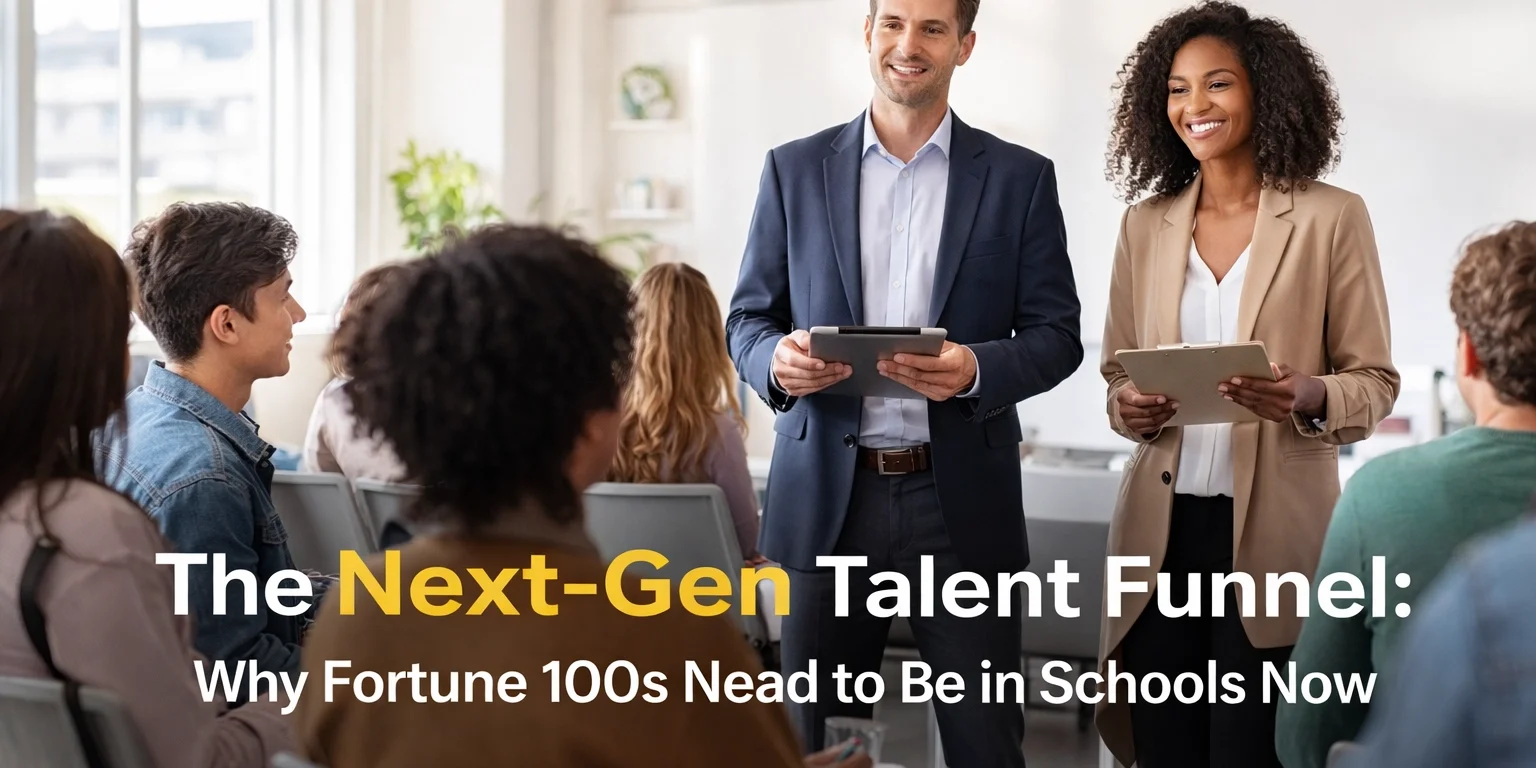
The companies that will dominate the next decade are not waiting for talent to graduate. They are building their workforce pipelines earlier, deeper, and smarter: directly inside U.S. high schools.
The Campus Recruiting Problem
University recruiting programs face significant budget restrictions, forcing talent acquisition leaders to make difficult decisions about school selection. The result is a concentrated approach: deeper engagement at fewer institutions rather than spreading resources thin across numerous schools.
Consider the numbers. Major consulting firms have reduced their target schools from 50 to as few as 15 or 20 institutions. They are competing with technology giants, financial services firms, and manufacturing leaders for the same limited pool of graduates.

This creates three critical problems for Fortune 100 companies:
Limited Pipeline Diversity. Recruiting from the same elite institutions produces homogeneous talent pools. When legislative and policy changes affect diversity initiatives, companies find themselves scrambling to identify new talent sources.
Late-Stage Brand Awareness. By the time a student reaches their junior year of college, they have already formed opinions about potential employers. Companies that arrive late to the conversation are playing catch-up.
Skill Gaps at Entry. New graduates often lack practical experience in cloud computing, data analytics, artificial intelligence, and content creation. Companies spend millions on training programs to bridge the gap between academic theory and workplace application.
The solution is not recruiting harder at the college level. The solution is starting earlier.
The High School Opportunity
High school students represent the largest untapped talent market in America. More than 15 million students attend U.S. high schools, and the vast majority have never interacted with a Fortune 100 brand in any meaningful educational capacity.
This represents an extraordinary opportunity for forward-thinking enterprises.
When a company establishes presence inside high schools, it accomplishes several strategic objectives simultaneously:
Pipeline Development. Students who engage with a brand during their formative years develop loyalty and familiarity. By the time they enter the workforce, they already understand the company's culture, tools, and career pathways.
Workforce Readiness. High school programs that incorporate cloud certifications, data analytics training, and AI literacy produce graduates who are job-ready. These students enter college: or the workforce directly: with practical skills that traditional education does not provide.
Brand Trust. Parents, educators, and community leaders develop positive associations with companies that invest in education. This trust translates into consumer loyalty, employee retention, and regulatory goodwill.
Data and Insights. Engagement with students generates valuable data about learning patterns, skill development, and career interests. This information helps companies refine their workforce planning and product development strategies.

Physical Infrastructure in a Digital World
Digital learning platforms are abundant. Online courses, virtual certifications, and remote training programs exist in every industry. Yet physical presence remains essential.
Students learn differently when they have access to dedicated, branded learning environments. A screen in a bedroom does not carry the same weight as a professional-grade workstation in a school facility. Physical infrastructure communicates permanence, investment, and seriousness.
This is where Esports and Cloud Learning Pods enter the conversation.
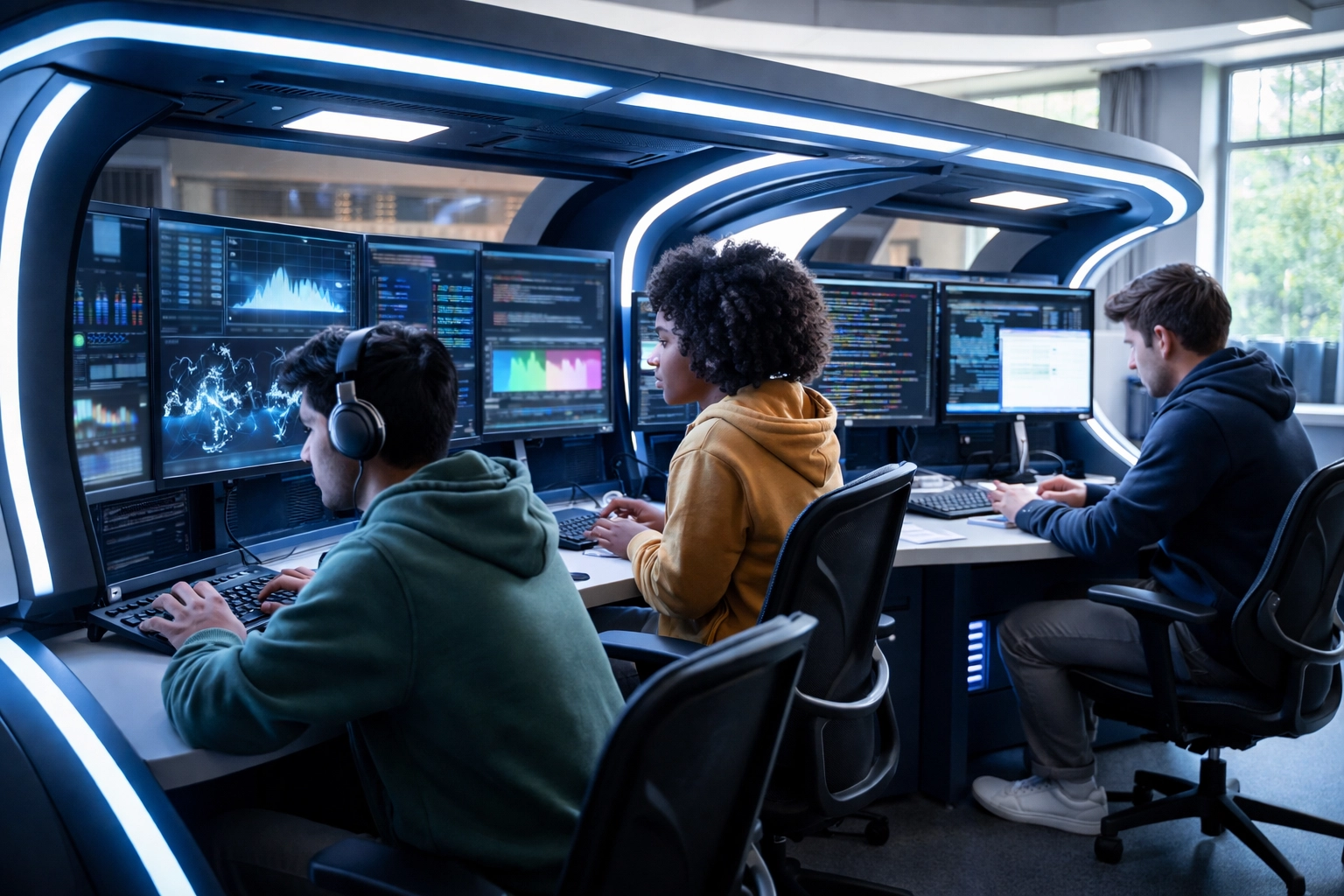
These pods are not gaming stations. They are multi-use education platforms that combine:
- Competitive esports that drive engagement and participation
- Cloud curriculum access aligned with industry certifications
- Streaming studio capabilities for content creation and media literacy
- Data analytics dashboards that teach real-world business intelligence
- Career pathway programming into cloud computing, AI, game development, marketing, logistics, and cybersecurity
The pods serve as physical distribution systems for digital skills. They give Fortune 100 companies a tangible presence inside schools: a branded learning environment that students interact with daily.
Why Esports Matters
Esports provides the permission structure for enterprise brands to enter education.
Schools are understandably cautious about corporate involvement in classrooms. Traditional sponsorship models raise concerns about commercialization and student privacy. Esports changes this dynamic.
Competitive gaming is already embedded in youth culture. More than 70% of high school students play video games regularly. Esports programs exist in thousands of schools, with formal leagues, scholarships, and career pathways.
When a Fortune 100 company powers an esports program, it gains access to students in a context they already embrace. The gaming engagement becomes a gateway to cloud computing education, data analytics training, and professional skill development.
This is not sponsorship for brand visibility. This is infrastructure investment for workforce development.
The Strategic Calculus for Fortune 100 Companies
Enterprise leaders evaluate investments based on return metrics. The high school education play delivers returns across multiple dimensions:
Talent Pipeline ROI. Companies that engage students early reduce their cost-per-hire for entry-level positions. Students who complete branded certification programs arrive job-ready, reducing onboarding and training expenses.
Cloud and Platform Adoption. Students trained on specific cloud platforms become advocates for those platforms throughout their careers. The skills they develop in high school influence the technology decisions they make as professionals.
Content and Media Amplification. Student-generated content: streams, videos, social posts: creates organic brand exposure. Schools that host branded learning environments become sources of authentic, community-driven marketing.
Public Sector Alignment. Education initiatives align with government priorities around workforce development, STEM education, and career readiness. This alignment opens doors for public-private partnerships and favorable regulatory relationships.
Consumer Brand Trust. Parents who see Fortune 100 companies investing in their children's education develop positive brand associations. This trust influences purchasing decisions across product categories.

From Sponsor to Anchor
The distinction matters.
Sponsors write checks and receive logo placement. They are passive participants in someone else's program.
Anchors own the narrative. They define the curriculum, shape the experience, and become synonymous with the outcome.
Fortune 100 companies have the opportunity to anchor the "Future Ready" movement in American education. By deploying physical learning infrastructure inside high schools, they become the brand associated with workforce preparation, career readiness, and next-generation skills.
This positioning is not available indefinitely. Schools are selecting partners now. The companies that move first will establish the relationships, build the brand equity, and capture the talent pipeline advantages.
Those that wait will find themselves competing for the same college graduates as everyone else.
The Path Forward
The workforce challenges facing Fortune 100 companies will not be solved by recruiting harder at elite universities. The talent pool is too small, the competition too intense, and the skill gaps too significant.
The companies that thrive in the coming decade will be those that build their workforce pipelines earlier and smarter. They will establish physical presence inside high schools. They will power esports and cloud learning programs that develop job-ready skills. They will become the brands that students, parents, and educators trust.
This is not a sponsorship opportunity. This is an infrastructure play: a chance to own the talent funnel from high school through employment.
The question is not whether Fortune 100 companies should be in schools. The question is which companies will move first and which will be left competing for the scraps.
For organizations ready to explore how Esports and Cloud Learning Pods can transform their workforce development strategy, USA Entertainment Ventures provides the infrastructure, curriculum alignment, and deployment expertise to make it happen.
The next generation of talent is waiting. The only question is who will reach them first.