
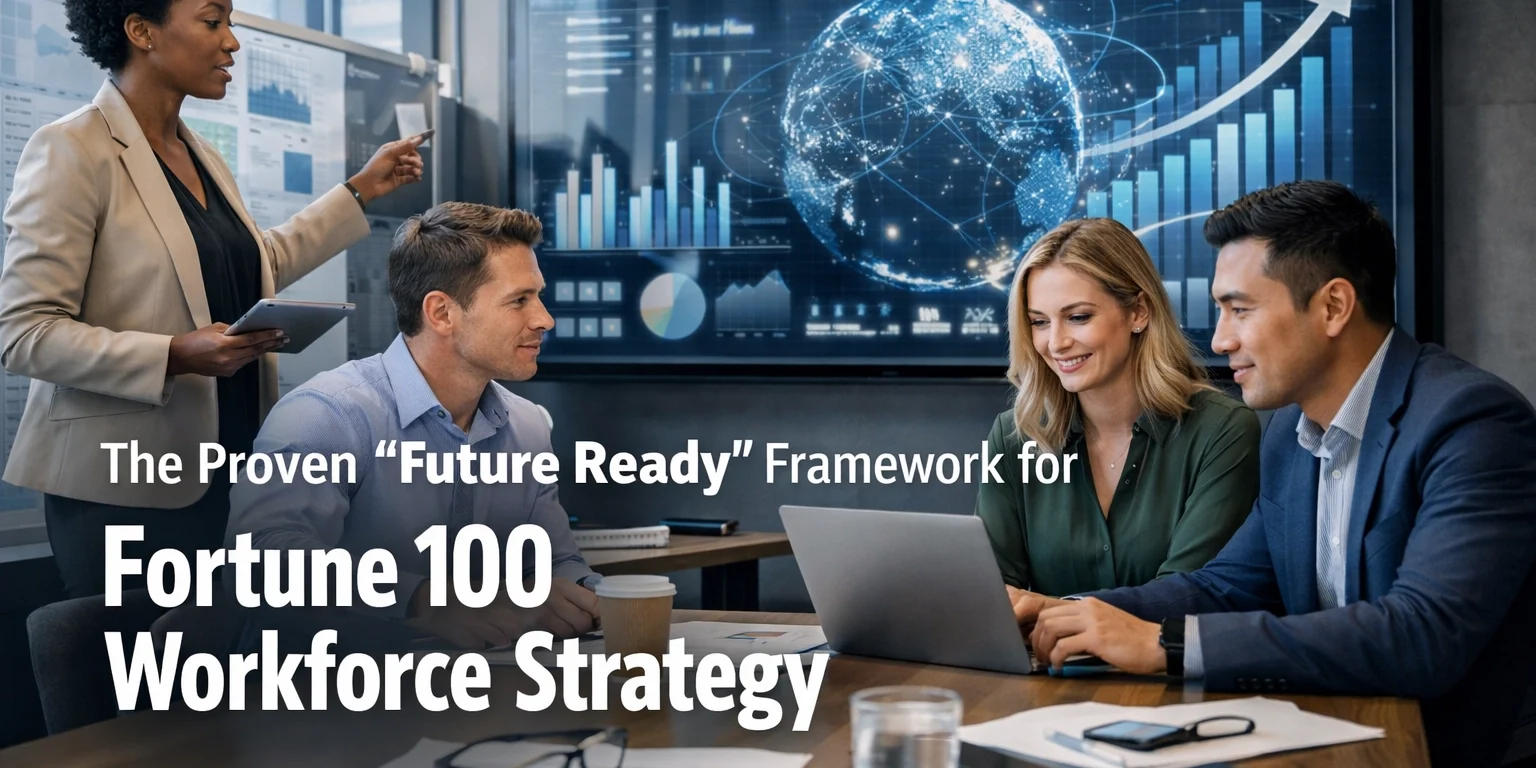
In the current economic landscape, Fortune 100 companies are facing a paradigm shift in how they identify, recruit, and retain talent. Traditional workforce strategies, often rooted in retrospective data and historical hiring patterns, are proving insufficient against the rapid acceleration of digital transformation. To remain competitive, executive leadership must pivot toward a "Future Ready" framework: a strategy that prioritizes data literacy, media competency, and real-time analytical agility.
This framework is not merely a theoretical concept; it is an operational necessity. As organizations navigate the complexities of a globalized, tech-driven market, the gap between traditional skill sets and modern competency requirements continues to widen. By focusing on "Future Ready" outcomes, businesses can bridge this gap, ensuring their workforce is prepared not just for the challenges of today, but for the evolving demands of the next decade.
The Evolution of Data Literacy in the Executive Suite
For years, data literacy was relegated to specialized IT departments or dedicated data science teams. In a modern Fortune 100 environment, this is no longer a viable structure. Data literacy has emerged as a foundational requirement across every business function, from human resources to supply chain management.
True data literacy goes beyond the ability to read a spreadsheet. It involves data storytelling: the capacity to translate complex datasets into actionable strategic narratives. Executives and their teams must be able to recognize analytical bias and understand the context behind the numbers. When a workforce is data-literate, decision-making becomes decentralized and accelerated. Employees are empowered to identify trends in real-time, reducing the reliance on top-down directives and allowing for more agile responses to market fluctuations.
Organizations that invest in these capabilities often find that their internal efficiency scales exponentially. By integrating advanced literacy programs, companies can ensure that their technical skills are backed by the critical thinking necessary to apply them effectively. For those looking to refine their organizational structure, exploring specialized business consulting services can provide the external perspective needed to identify hidden literacy gaps within a workforce.

Media Literacy and the New NIL Paradigm
One of the most significant shifts in the modern professional landscape is the integration of Name, Image, and Likeness (NIL) principles into the corporate world. While NIL was originally a concept confined to collegiate athletics, it has rapidly become a cornerstone of personal branding for professionals across all sectors.
In an era where every employee is a digital representative of the corporate brand, media literacy is no longer optional. A "Future Ready" professional must understand how to manage their digital footprint and leverage their personal brand in a way that aligns with corporate values. This media competency involves understanding the nuances of digital communication, recognizing the impact of social media on corporate reputation, and navigating the complexities of personal and professional identity in a public-facing environment.
By educating employees on NIL principles, Fortune 100 companies can turn their workforce into an army of brand ambassadors. This strategy does not just mitigate risk; it enhances the company’s reach and authenticity. When employees are trained to navigate the media landscape effectively, they contribute to a more robust, transparent, and trusted corporate image.
Real-Time Intelligence: The Power of Data Analytics Dashboards
The days of making strategic decisions based on last quarter’s reports are over. Fortune 100 companies are increasingly shifting toward living, breathing views of their workforce through advanced data analytics dashboards. These tools provide executives with a real-time pulse on organizational health, talent performance, and operational bottlenecks.
A real-time dashboard serves as a "single source of truth." It eliminates the silos that often exist between departments, allowing for a holistic view of how different variables: such as employee engagement, media literacy outcomes, and productivity metrics: interact. This level of transparency is critical for executive newsletters and internal reporting, providing stakeholders with clear, data-backed insights into the progress of workforce initiatives.
Moreover, these dashboards allow for predictive modeling. By analyzing current trends, executives can forecast future talent needs and adjust their recruitment strategies accordingly. This proactive approach ensures that the organization is never caught off guard by shifts in the labor market. Companies interested in implementing these high-level analytical tools often seek out digital strategic partnerships to build the infrastructure necessary for real-time intelligence.

Positioning as an Anchor for ‘Future Ready’ Schools
To secure the talent pipeline of the future, Fortune 100 companies must look beyond their own walls and engage with the educational institutions that are shaping the next generation. The concept of "Future Ready" schools is gaining traction as a gold standard for educational excellence. These are institutions that prioritize modern competencies: specifically data literacy, media literacy, and technological adaptability: over traditional, rote learning.
By positioning themselves as anchors for these schools, corporations can influence the curriculum to ensure it aligns with the needs of the modern workforce. This involves:
- Supporting educational initiatives that focus on modern competency pillars.
- Providing resources for media literacy and NIL education at the high school and collegiate levels.
- Offering internships and mentorship programs that bridge the gap between academic theory and corporate practice.
This long-term investment in the talent pipeline pre-optimizes the workforce. When students graduate from a "Future Ready" program, they enter the job market already equipped with the analytical and media skills that Fortune 100 companies crave. For organizations looking to expand their reach into these educational spheres, checking career opportunities and internships can be a great way to start building those vital community links.
Implementing the Framework: A Practical Strategy
Transitioning to a "Future Ready" framework requires a structured approach. It is not enough to simply state a commitment to data; the commitment must be reflected in the company’s daily operations and long-term strategy.
1. Invest in Literacy First
The most advanced technology in the world is useless if the workforce does not know how to use it. Companies should prioritize media and data literacy training as part of their standard professional development. This includes workshops on data storytelling, sessions on digital footprint management (NIL), and regular updates on emerging media trends.
2. Shift to Proactive Talent Acquisition
Instead of hiring for specific roles as they become vacant, Fortune 100 companies should focus on building a continuous talent pipeline. This involves targeting "Future Ready" schools and establishing long-term relationships with programs that emphasize modern competencies. By the time a position opens, the company should already have a pool of candidates who are familiar with the corporate culture and have the necessary skills.
3. Leverage Executive Reporting
Use daily or weekly executive newsletters to keep the leadership team informed. These communications should be driven by the insights generated from data analytics dashboards. By focusing on media literacy outcomes and real-time workforce data, leadership can make informed decisions that are grounded in the current reality of the organization, rather than historical assumptions.

The Long-Term Vision
The "Future Ready" framework represents a fundamental shift from traditional, skill-based hiring toward a comprehensive approach that combines analytical sophistication with digital-age competencies. As we look toward the future, the companies that succeed will be those that view their workforce not just as a collection of employees, but as a dynamic, data-driven ecosystem.
By fostering an environment of continuous learning and leveraging real-time insights, Fortune 100 companies can ensure they remain at the forefront of their industries. The integration of media literacy, NIL education, and advanced analytics is no longer a luxury: it is the blueprint for sustainable growth in an increasingly complex world.
For those ready to take the next step in optimizing their workforce strategy, our team at USA Entertainment Ventures LLC is dedicated to helping businesses navigate these transformations. Whether through specialized consulting or digital infrastructure development, we provide the tools necessary to become truly "Future Ready."
If you have questions about how to implement these strategies within your own organization, feel free to visit our Q&A section or reach out to us directly through our contact page. The future of work is here, and it belongs to those who are prepared to lead with data and media intelligence.





