
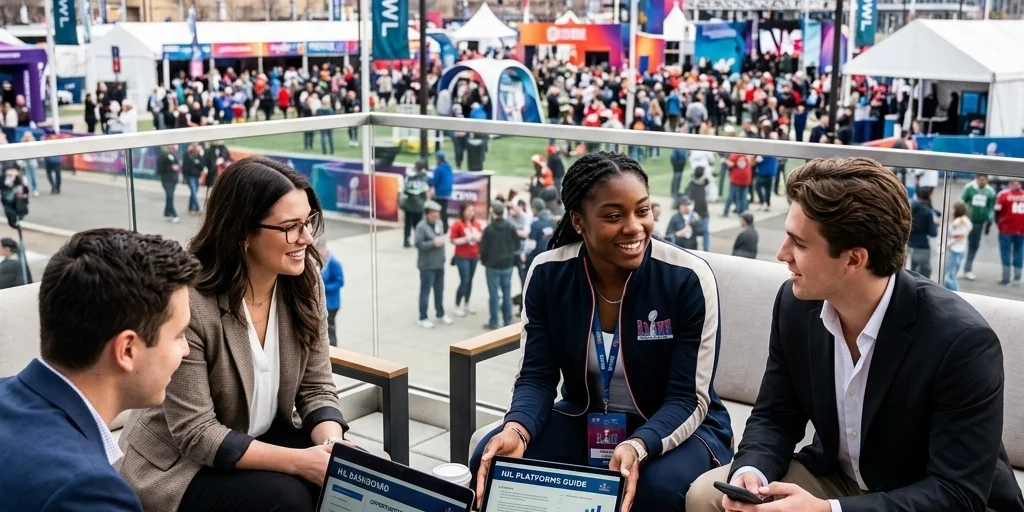
The landscape of sports marketing is undergoing its most significant transformation since the advent of the televised broadcast. For decades, the Super Bowl was defined by the thirty-second commercial: a high-stakes, multimillion-dollar gamble designed to capture the attention of over 100 million viewers. However, as we look toward the next era of brand engagement, the focus is shifting away from the television screen and toward the palm of the consumer's hand.
At USA Entertainment Ventures LLC, we have observed a fundamental pivot in how Fortune 100 brands approach the "Big Game." The Name, Image, and Likeness (NIL) revolution has moved beyond the collegiate level and into the mainstream professional marketing strategy. Today, succeeding at the Super Bowl isn't just about who has the biggest production budget; it’s about who has the most authentic connection with the audience through athlete-led storytelling.
The $7 Million Question: ROI in the Digital Age
In 2026, the cost of a traditional Super Bowl ad continues to hover around the $7 million mark for a mere 30 seconds of airtime. While the reach is undeniable, the engagement is often passive. Fortune 100 companies are increasingly questioning the long-term ROI of these "one-and-done" moments. In contrast, NIL platforms offer a decentralized approach to advertising that prioritizes sustained engagement over a single broadcast blip.
By leveraging NIL platforms, brands can distribute that $7 million budget across hundreds, or even thousands, of athletes. This creates a "surround-sound" marketing effect where the brand is present in the social feeds, stories, and live reactions of the fans’ favorite personalities before, during, and after the game.

Understanding the NIL Platform Ecosystem
Navigating the NIL space requires more than just a contact list; it requires sophisticated technology. Several platforms have emerged as leaders in helping brands bridge the gap between traditional corporate messaging and authentic athlete content.
1. MarketPryce: The Tool for Rapid Deployment
MarketPryce has established itself as an essential platform for high-pressure environments like the Super Bowl. In the weeks leading up to the game, the ability to pivot is crucial. MarketPryce enables brands to sign athletes and launch content within days, which is vital when responding to real-time events or late-season breakout stars. For a Fortune 100 brand, this agility ensures that the marketing message remains relevant to the current sports conversation.
2. Playbooked: Prioritizing Direct Engagement
Playbooked takes a mobile-first approach, focusing heavily on live appearances and real-time social engagement in the host city. During Super Bowl week, the host city becomes a hub of activity. Playbooked allows brands to coordinate on-the-ground activations with athletes who are physically present, ensuring that digital campaigns are backed by real-world visibility.
3. Name. Image. Likeness.: Scaling the Movement
For brands looking to create a "movement" rather than a campaign, the "Name. Image. Likeness." marketplace provides access to over 20,000 athletes. This scale allows for coordinated mass-market entries that can dominate the digital conversation. When hundreds of athletes post about a brand simultaneously, it creates a level of social proof that a single television commercial simply cannot match.
The Three-Tier Strategy for Super Bowl Success
Success in the NIL space isn't just about quantity; it’s about strategic layering. We recommend a three-tier model for Fortune 100 brands to ensure maximum reach and engagement:
- Top-Tier Athletes (The Anchors): These are the household names. Their role is to provide mass awareness and prestige. They serve as the "face" of the campaign on a national level.
- Mid-Tier Athletes (The Connectors): These athletes have highly engaged, niche followings. They are essential for driving specific brand sentiments and ensuring the message resonates with core sports enthusiasts.
- Micro-Influencers (The Ground Force): These are often local athletes or rising collegiate stars. While their individual reach is smaller, their engagement rates are typically the highest. They provide the local penetration and authenticity that makes a brand feel accessible.

The Video: Bridging the Gap
To truly understand how these elements converge, it is helpful to look at the broader perspective of the NIL revolution. The following video explores how bridging the gap between athletes and brands is reshaping the industry:
https://www.youtube.com/watch?v=l6J-0zileKE
As discussed in our consulting sessions at USA Entertainment Ventures, the integration of digital media and physical performance is the "new normal" for sports business consulting.
The Second-Screen Revolution: Real-Time Activation
One of the most compelling arguments for moving toward NIL platforms is the "second-screen" phenomenon. During the Super Bowl, a significant percentage of viewers are simultaneously scrolling through TikTok, Instagram, and X (formerly Twitter).
A one-month TikTok campaign powered by 50 NIL athletes often costs significantly less than a five-second broadcast "blip," yet it provides indefinite digital engagement. During the game, these NIL ambassadors provide live reactions, commentary, and behind-the-scenes content. This creates a parallel experience for the viewer, where the brand is not just an interloper during the commercials but a participant in the conversation.
Timeline for Success: The 120-Day Rule
Fortune 100 brands cannot afford to treat NIL as an afterthought. Research and industry data suggest that planning should begin at least 120 days before the Super Bowl.
- Day 120-90: Platform selection and athlete identification. The best athletes and activation spots are reserved early in the season.
- Day 90-60: Creative development. This is where brands must decide on the "Creative Authenticity" balance. It is vital to allow athletes creative freedom. Rigid corporate scripts often fail in the NIL space; athletes who are allowed to be themselves generate significantly higher engagement.
- Day 60-30: Logistics and legal. Ensuring all NIL contracts are compliant with evolving state and league regulations.
- The Final 30 Days: Execution and real-time adjustment.
Fostering Creative Authenticity
One of the most common mistakes large brands make is over-polishing NIL content. The power of an athlete’s endorsement lies in their relationship with their fans. When a Fortune 100 brand forces a professional athlete to read a sterile script, that relationship is compromised.
Data shows that content which feels "native" to the athlete’s channel performs up to 3x better than content that looks like a traditional advertisement. The goal is to provide the athlete with the brand's core values and objectives, then step back and let them translate those values into their own voice. This approach not only increases engagement but also builds a sense of trust between the brand and the consumer.

The Future of NIL and Major Sporting Events
As we look toward 2027 and beyond, the influence of NIL platforms will only grow. We are moving toward a world where "athlete networks" act as their own media houses. For business consultants and brand managers, the challenge is no longer about finding an audience; it’s about participating in the communities that athletes have already built.
At USA Entertainment Ventures LLC, we believe that the brands that win at the Super Bowl will be those that embrace this shift early. By moving away from the "broadcast-only" mindset and investing in the NIL ecosystem, Fortune 100 companies can ensure their message isn't just seen: it’s felt.
The Super Bowl remains the pinnacle of American culture and commerce. However, the path to the winner’s circle now runs through digital platforms and athlete partnerships. Those who master the NIL landscape today will be the ones defining the marketing standards of tomorrow.
For more information on how to navigate these platforms and optimize your sports marketing strategy, visit our portfolio or explore our latest news.





