
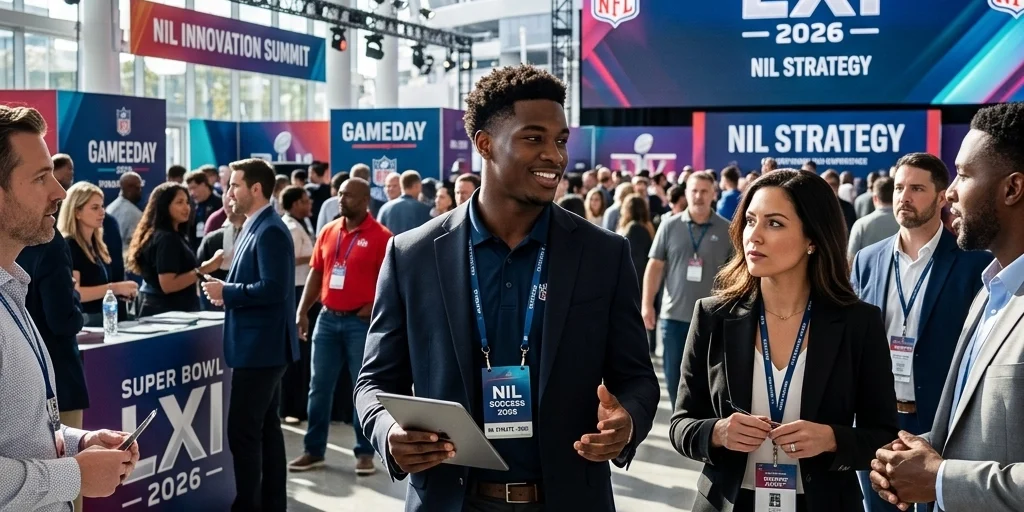
The dust has settled on Super Bowl LX. While the Seattle Seahawks were busy securing their 29-13 victory over the New England Patriots at Levi’s Stadium, a different kind of competition was unfolding in the palms of millions of viewers’ hands. For Fortune 100 brands, the 2026 Super Bowl wasn't just a game; it was a watershed moment for Name, Image, and Likeness (NIL) partnerships.
At USA Entertainment Ventures LLC, we’ve watched the landscape shift. Gone are the days when a $10 million, 30-second television spot was the only way to "win" the Super Bowl. In 2026, the real ROI lived in the digital ecosystem, fueled by collegiate and elite amateur creators who brought a level of authenticity that scripted commercials simply couldn't touch.
If you are looking to navigate the high-stakes world of sports marketing, you need a blueprint. This guide breaks down the "NIL Revolution" and explains how your brand can leverage these athletes to dominate the cultural conversation.
The Shift: Why Fortune 100 Brands are Pivoting to NIL
Traditional advertising is facing a crisis of attention. During Super Bowl LX, while broadcast ads commanded record-breaking prices reaching upwards of $10 million for premium inventory, the younger, more elusive demographic: Gen Z and Gen Alpha: were looking at their second screens.
As our CEO Dan Kost often says, "You don't just want to be seen; you want to be part of the vibe." That 'vibe' is exactly what NIL athletes provide. These aren't just players; they are digital-native creators with built-in, highly engaged communities.
The NIL Revolution – Bridging the Gap at the Super Bowl
To understand the gravity of this shift, watch this breakdown of how the NIL landscape has fundamentally changed the game for major advertisers:
https://www.youtube.com/watch?v=l6J-0zileKE

Selecting Your NIL Talent: The 2026 Selection Criteria
In 2026, talent selection isn't about who has the most followers; it's about who has the right influence. Fortune 100 brands are moving away from "vanity metrics" and toward "vibe-based IP potential." Here is how we evaluate talent today:
- Vibe-Based IP Potential: This is the intangible quality that makes an athlete a perfect fit for a brand’s identity. We use AI-powered discovery tools to measure how an athlete’s organic content resonates with specific target demographics. If the athlete’s personal brand doesn’t align with the product, the audience will sniff out the "paid" feel immediately.
- Audience Alignment: It is critical to look past the surface. Is the athlete’s audience actually your target consumer? For a Fortune 100 financial firm, a star quarterback with a following of aspiring entrepreneurs is more valuable than a wide receiver with ten times the followers but an audience mostly interested in gaming.
- Content Capability: Not every great athlete is a great creator. To succeed during the Super Bowl, athletes must have the "Content Capability" to handle high-pressure, high-production demands. We look at their existing library on TikTok, Instagram, and X (formerly Twitter) to ensure they can produce professional-grade content that feels personal.
For more insights on how we vet high-stakes partnerships, check out our Showcase.
The Three-Phase Campaign Structure
The most successful brands at Super Bowl LX didn't just show up on Sunday. They executed a three-phase strategy that built momentum weeks in advance and carried it long after the final whistle.
Phase 1: The Pre-Game Build
Starting in Q1, savvy brands used NIL athletes to drop "behind-the-scenes" looks and commercial sneak peeks. Data from 2026 shows that brands achieved up to a 70% increase in efficiency for click-through campaigns when they engaged influencer collaborations during these lower-competition periods. This phase is about building anticipation and conditioning the audience to associate the athlete with the brand before the game-day noise begins.
Phase 2: Game Day Amplification
On the day of the Super Bowl, the strategy shifts to real-time engagement. We call this the "Digital War Room." NIL athletes act as conduits for live community management. Whether it’s a reaction to a big play or a commentary on the halftime show, these athletes provide real-time edits that a pre-recorded television ad cannot.

Phase 3: The Post-Game Extension
The game ends, but the conversation doesn't. The week following the Super Bowl is a prime window for "reaction content" and "recap videos." By extending the campaign into the post-game phase, brands can capitalize on the residual dopamine of the event to drive conversions when the "hype" is still high but the advertising costs have dipped back to normal levels.
Platform-Specific Strategies for 2026
To win in the NIL space, you cannot use a "one-size-fits-all" approach. Each platform requires a specific content DNA.
- YouTube: This remains the home for long-form storytelling. In 2026, contextual targeting with skippable view campaigns around sports content: supplemented by "day in the life" athlete videos: proved highly effective for brand recall.
- TikTok & Meta: Here, authenticity reigns supreme. The most successful ads in 2026 looked like personal recommendations rather than corporate mandates. User-generated content (UGC) that feels raw and unpolished often achieves higher engagement rates and better cost-per-liked-click (CPLC) efficiency.
Our team at USA Entertainment Ventures LLC specializes in tailoring these strategies. You can learn more about our specific services here.
Measuring Success: Data Over Hype
One of the biggest advantages of NIL over traditional Super Bowl spots is the ability to measure performance in real-time. Fortune 100 brands are no longer satisfied with "estimated impressions." They want granular data.
Using platforms like MySportsMedia.com/NIL, brands can now track:
- Real-time Sentiment Analysis: How is the audience reacting to the athlete’s post within minutes?
- Direct Conversion Rates: Tracking athlete-specific links to see who is actually buying.
- Engagement Depth: Are people just scrolling past, or are they watching the full video and engaging in the comments?

Budgeting for Success: The Cost Advantage
While the $10 million TV spot is the "big splash," NIL offers a more flexible entry point. This doesn't mean it’s "cheap": high-level NIL deals for the Super Bowl can still reach six or seven figures: but it offers a level of scalability that broadcast television lacks.
By diversifying a marketing budget across several "vibe-aligned" athletes, a Fortune 100 brand can achieve a higher frequency of impressions and deeper engagement than a single, one-off TV commercial. This approach also mitigates risk; if one athlete doesn't resonate, the others in the campaign can still carry the weight.
The Future of High-Stakes Branding
As we look toward the rest of 2026 and into 2027, the trend is clear: the integration of sports, entertainment, and digital creators is the new standard. The "Ultimate Guide to High-Stakes Branding" is no longer about who can spend the most, but who can connect the most effectively.
For a deeper dive into these strategies, read our full report: The Ultimate Guide to High-Stakes Branding: Everything You Need to Succeed in 2026.
Conclusion: Making the Move
The NIL revolution isn't coming; it’s already here. Super Bowl LX was the proof of concept that Fortune 100 brands needed. By focusing on authenticity, leveraging real-time data, and selecting talent based on vibe-based IP, your brand can bridge the gap between traditional advertising and the future of consumer engagement.
At USA Entertainment Ventures LLC, we provide the consulting and expertise needed to navigate this complex landscape. Whether you’re looking to sign your first NIL athlete or you’re ready to overhaul your entire sports marketing strategy, we are here to help you lead the way.
Ready to start your NIL journey? Contact us today to discuss how we can elevate your brand.

Disclaimer: All statistics and insights are based on 2026 market data and internal analysis by USA Entertainment Ventures LLC.





