For decades, the “computer lab” was a static fixture of the educational and professional landscape. It was a room defined by rows of beige towers, tangled cables, and the distinctive, low-frequency hum of cooling fans. These spaces once served a vital purpose: providing basic access to the internet and word processing for a generation that did not yet carry a high-powered computer in their pocket.
However, as the digital landscape has evolved, the traditional lab has increasingly become a relic. With nearly every professional and student now utilizing high-powered personal devices, the need for a generic bank of PCs has evaporated. In its place, a new infrastructure is emerging: one that is modular, highly specialized, and focused on career-ready skills. These are the "Pods," and they are fundamentally changing how we prepare for the workforce.
At USA Entertainment Ventures LLC, we have observed that this shift isn't just about furniture; it's about the physical manifestation of industry-aligned learning. From logistics to cybersecurity and content creation, pods are providing the specialized environments that "Bring Your Own Device" (BYOD) cultures simply cannot replicate.
The Evolution: From Static Rows to Dynamic Cockpits
The primary criticism of the old-school lab was its inherent rigidity. In a world where collaboration is the primary currency of the modern office, a row of fixed monitors facing a wall is a structural obstacle. Research from institutions such as the University of New Mexico and Binghamton University indicates that campuses are increasingly moving away from these static workstations in favor of flexible learning spaces.
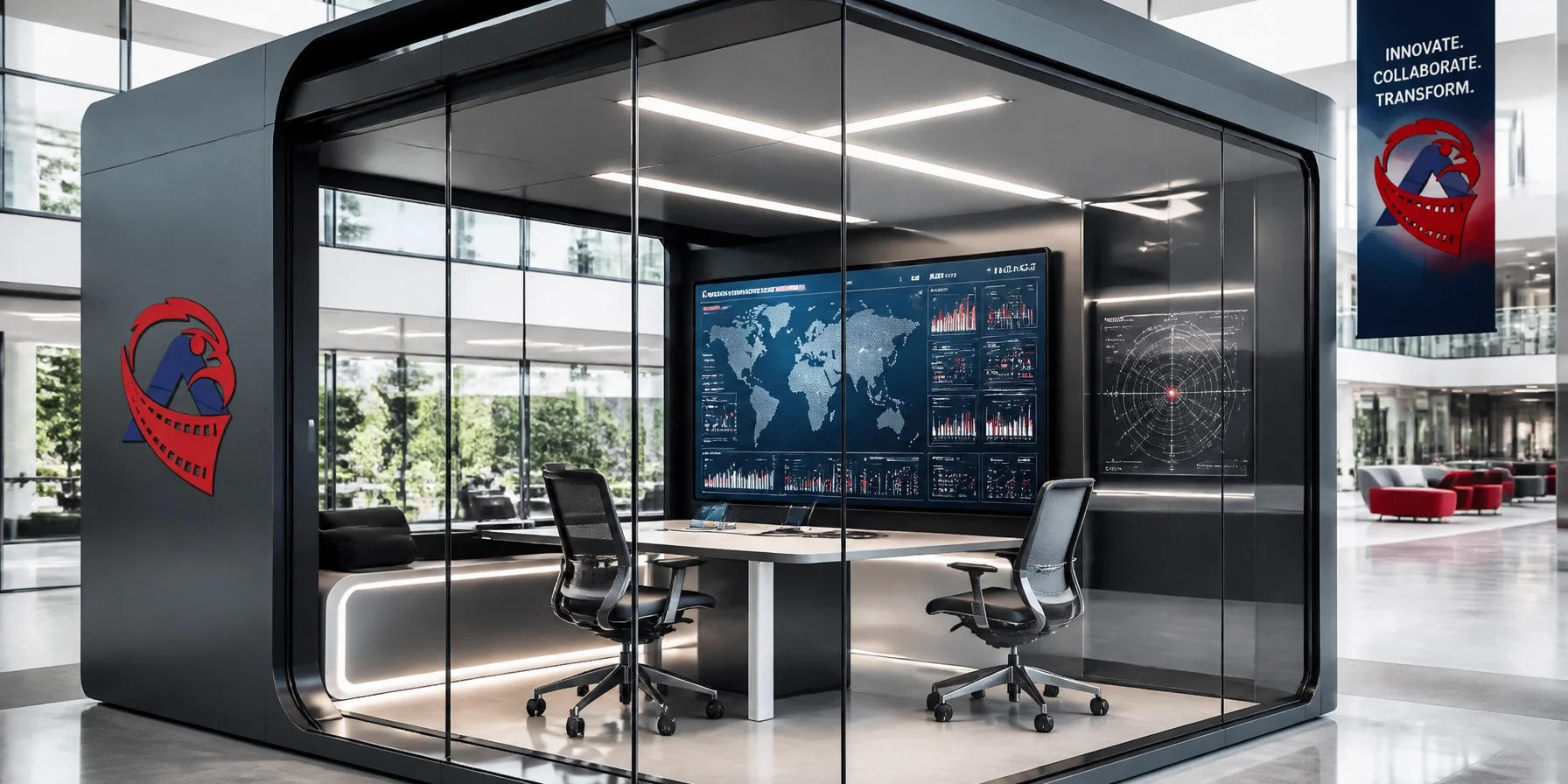
A "Pod" in this context is best described as a modular, integrated workspace designed for focused work, real-world simulation, and collaborative tech deployment. Industry experts often describe this shift as moving toward a "cockpit rather than a cubicle." It is an environment where the physical layout and the digital tools are perfectly synchronized to mimic a real-world professional setting. This evolution is particularly crucial for programs involving DOD SkillBridge recruitment, where the transition from military to civilian high-tech roles requires immersion in modern infrastructure.
Logistics: The Global Mission Control
One of the most significant transformations is occurring in the field of supply chain management and logistics. Gone are the days when logistics was considered a back-office function of warehouses and clipboards. Today, it is a data-heavy, real-time discipline involving global tracking, fleet coordination, and "digital twins."

In a specialized Logistics Pod, the environment is modeled after a corporate operations center. These spaces typically feature:
- Multi-screen configurations that visualize global supply chains in real-time.
- Access to industry-standard software that manages the movement of goods across oceans and continents.
- Collaborative "War Room" layouts where teams can solve simulated crises, such as a major canal blockage or a sudden shortage in the "last-mile" delivery network.
Instead of merely reading about logistics in a textbook, students and trainees are operating in a space that looks and feels like a real operations center. This makes the pod a direct bridge to career opportunities in logistics, ensuring that graduates are ready for the high-pressure environment of modern commerce from day one. As noted in recent industry discussions, colleges are realizing that they no longer need generic PC rooms, but modular, high-performance spaces built around specific careers.
Cybersecurity: Building the Digital Bunker
As cyber threats grow in complexity, the demand for skilled security professionals has skyrocketed. However, training an ethical hacker or a security analyst requires more than just a laptop and a Wi-Fi connection. It requires a safe, controlled environment where malware can be deployed, analyzed, and neutralized without threatening the institution's main production network.

Cybersecurity Pods are often designed as mini-SOCs (Security Operations Centers). These air-gapped environments are essential for technical training because they provide:
- Isolated networks that allow for "Red Team vs. Blue Team" exercises in total isolation from the public internet.
- Dedicated server racks and hardware firewalls that provide hands-on experience with the physical components of network security.
- Continuous monitoring configurations optimized for "Capture the Flag" (CTF) competitions and real-time threat detection exercises.
The "war room" feel of these pods encourages a level of team-based problem-solving that is difficult to replicate in a virtual or generic setting. For veterans transitioning through specialized recruitment programs, these pods serve as a familiar, mission-oriented environment that bridges the gap between service and the civilian tech sector. It shifts the trainee’s identity from a learner to a practitioner, a crucial psychological transition for those entering the high-stakes world of digital defense.
Content Creation: The Modern Creator Studio
The creator economy is no longer a niche hobby; it is a multi-billion dollar industry that demands professional-grade production values. While a modern laptop is capable of basic video editing, it often lacks the acoustic environment, high-end optics, and specialized peripherals required for professional output.

Media and Content Creation Pods function as micro-studios designed for the creator economy. These pods are equipped with:
- Acoustically treated walls to ensure clean audio for podcasting and voice-overs.
- 4K cameras on articulating arms and professional lighting rigs to facilitate high-quality video production.
- High-spec rendering workstations capable of handling 3D modeling, AR/VR content, and advanced motion graphics.
These spaces empower individuals to build professional portfolios, brands, and channels before they even enter the job market. In an era where a digital presence is often a prerequisite for marketing and media roles, these pods provide the competitive edge necessary to succeed. They represent the transition from simply "learning software" to producing professional-grade content that meets industry standards.
Why Pods Are Winning: The Strategic Advantage
The transition from labs to pods is driven by three primary factors that distinguish them from the "old-school" model. This change is not merely aesthetic; it is a strategic response to the needs of the modern economy.
1. Specialized Infrastructure vs. Generic Access
As technologies like Artificial Intelligence (AI) and blockchain become integrated into various industries, the hardware requirements for meaningful practice have increased. Pods provide access to high-end GPU power and specialized peripherals: such as VR headsets or specialized logistics consoles: that are too expensive or bulky for individual ownership. This specialized infrastructure is what sets modern training hubs apart from a local coffee shop with free Wi-Fi.
2. The Psychology of Professionalism
There is a profound psychological benefit to working in a space that reflects a professional environment. A generic computer lab signals "school," while a specialized pod signals "work." This environmental priming prepares trainees for the professional standards and collaborative norms of their chosen industry. At USA Entertainment Ventures LLC, we believe that the environment is just as important as the curriculum in shaping the professional mindset.
3. Modular Flexibility and Scalability
Unlike the static computer labs of the past, pods are inherently modular. This allows institutions to reconfigure their physical footprint based on shifting enrollment trends and industry needs. If there is a sudden surge in the demand for cybersecurity experts, a section of a facility can be quickly outfitted with the necessary pods without a massive, permanent structural renovation. This flexibility ensures that the physical infrastructure can keep pace with the speed of technological change.

A Future-Focused Infrastructure
As we look toward the future of business management and consulting, it is clear that the physical environment is a critical component of career readiness. The "Pod" is not just a replacement for the computer lab; it is an evolution. It represents a move away from general digital literacy toward hyper-specialized, industry-aligned competency.
For organizations focused on business development and specialized recruitment, these spaces are essential. They provide the training grounds where the next generation of logistics experts, cyber defenders, and creative leaders are forged.
The decline of the traditional computer lab should not be viewed as a loss of resources, but as an opportunity to innovate. By embracing the modular, specialized nature of pods, we can create environments that are as dynamic and innovative as the industries they serve. The future of work is not a desk in a row; it is a cockpit in a pod.
Key Takeaways for Decision Makers:
- Evaluate Underused Spaces: Audit current computer labs to determine if they are meeting the needs of today's BYOD-focused students and professionals.
- Align with Industry Demand: Prioritize the development of pods that target high-growth sectors such as logistics, cybersecurity, and digital media.
- Invest in Professional Grade Tools: Ensure that pods are equipped with the specific hardware and software configurations that cannot be easily replicated on a standard personal laptop.
For more information on our initiatives in business development and workforce management, explore our services or contact us today.