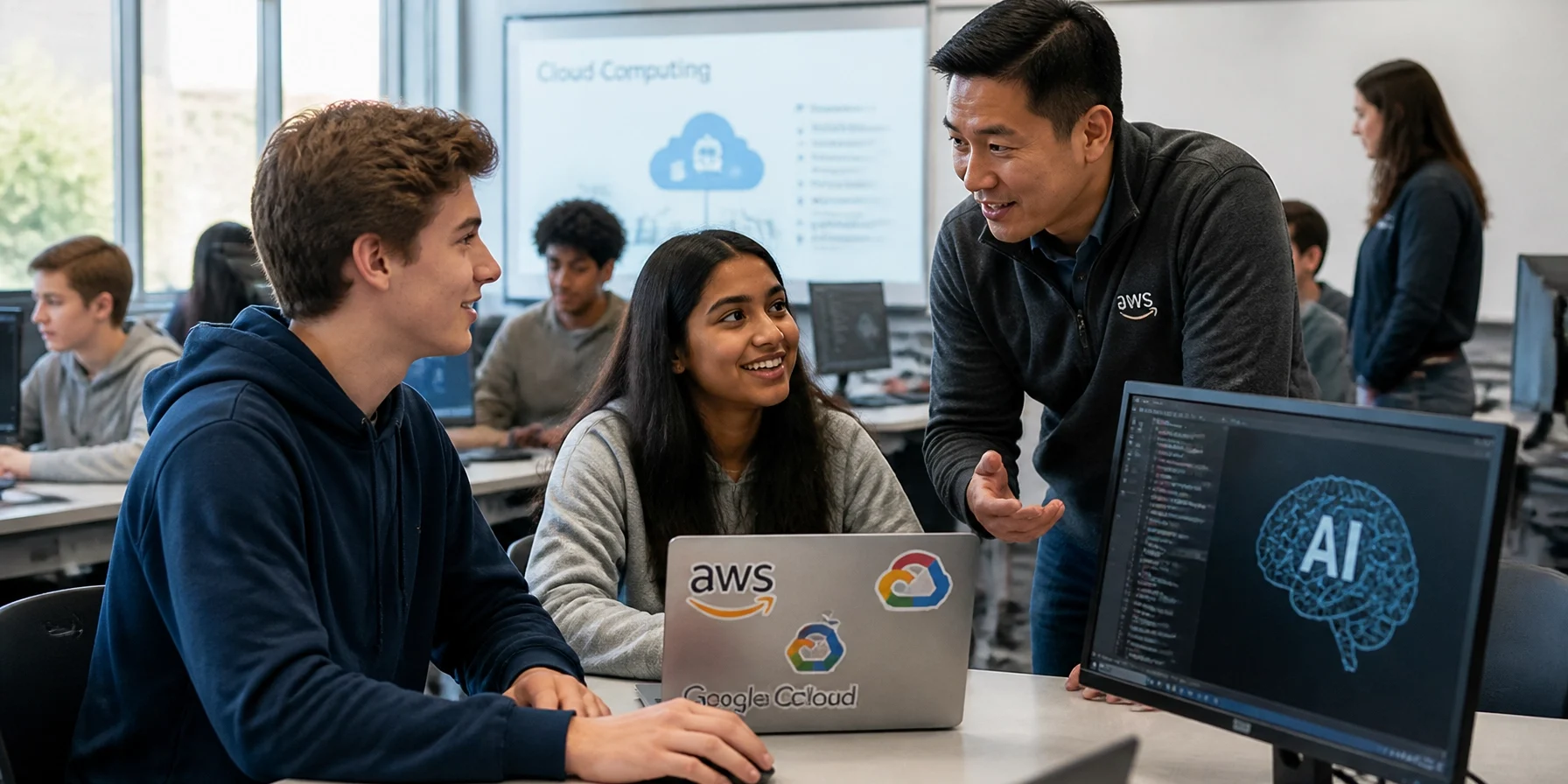
A student entering high school today may become a cloud administrator, data scientist, cybersecurity analyst, or AI systems specialist within the next decade. Yet many organizations will not meet that student until a college career fair: when employers are competing for the same limited group of graduates.
That approach is increasingly difficult to sustain.
Technology occupations are expanding faster than many education and hiring systems can respond. The U.S. Bureau of Labor Statistics projects that employment for data scientists will grow by 33.5% between 2024 and 2034, while information security analyst employment is projected to grow by 28.5%. These figures place both occupations among the fastest-growing in the country.
For business leaders and HR professionals, the implication is clear: the future talent pipeline must begin before college. Companies that engage high school students early can help develop foundational skills, build awareness of technical careers, and create relationships that mature over time.
The Cost of Waiting Too Long
Traditional recruiting often begins when students are already in college or approaching graduation. By that point, many have selected their majors, formed opinions about employers, and developed relationships with competing organizations.
This creates several risks.
First, employers are competing in a crowded market. The same computer science, engineering, and data analytics students are approached by technology companies, government contractors, consulting firms, financial institutions, and startups. Organizations that wait until graduation may need to compete primarily through compensation.
Second, late-stage recruiting provides limited time to build practical skills. A graduate may understand programming concepts but have little experience applying them to logistics, cybersecurity, business operations, or content creation. Employers then face longer onboarding periods and additional training costs.
Third, students who do not see a clear connection between school and work may never consider technical careers. High school exposure can influence whether students take computer science courses, pursue technical education, or select a related college major.
Research from the Brookings Institution supports this point. Researchers found that exposure to high school computer science coursework increased the likelihood of earning a bachelor’s degree in computer science by approximately five percentage points. They also found that high schools offering high-quality computer science courses increased employment and early-career earnings.
The researchers summarized their central finding this way: “Exposure to high school CS coursework raises CS BA receipt and improves early-career labor market outcomes.” For employers, early exposure is not simply an education initiative. It can influence the size and readiness of the future workforce.
The Pipeline Is Growing, but Access Remains Uneven
The United States has made progress in expanding computer science education. According to the Computer Science Teachers Association’s summary of the 2024 State of Computer Science Education report, 82% of U.S. high school students now have access to computer science classes at their schools.
However, access does not always result in participation. Only about 6.4% of high school students take computer science annually. Participation also varies by geography, school size, gender, race, socioeconomic status, and access to qualified instructors.
This gap creates an important opportunity for business involvement. Employers can help schools move from basic access to meaningful participation by providing:
- Industry mentors
- Current curriculum guidance
- Hands-on projects
- Equipment and software
- Career presentations
- Work-based learning opportunities
- Exposure to technical professionals from varied backgrounds
Career and Technical Education, or CTE, provides a practical structure for this work. CTE programs connect academic learning with specific career pathways, including information technology, engineering, digital media, and business operations.
The Association for Career and Technical Education reports that the average graduation rate for CTE concentrators is 96%, compared with an overall national rate of approximately 85% in the cited data. The organization also reports that 74% of employers see a persistent mismatch between the skills they need and the skills available in the workforce.
These statistics reinforce the value of engaging students earlier. CTE programs are already designed to connect education with employment. Employers can strengthen that connection by helping define what “job ready” means in their industry.
From General Computer Labs to Career-Aligned Learning Spaces
A standard computer lab can introduce students to basic software and coding. However, next-generation technology careers require more specialized experiences.
Modern Physical Infrastructure can help schools create learning environments that reflect real workplace conditions. Modular Pods, for example, can function as focused workspaces for cybersecurity, logistics, content production, networking, or data analysis.
A pod does not need to replace every traditional computer lab. Instead, it can add a specialized environment where students practice specific tasks using relevant tools and workflows.

A logistics pod might allow students to study inventory levels, shipment delays, route planning, and supply chain disruptions. A cybersecurity pod could provide an isolated environment for simulated incident response and network defense. A content creation pod could introduce students to audio recording, video production, editing, and digital publishing.
These environments make technical work easier to understand. Students do not only hear that data supports business decisions; they use data to solve a problem. They do not only learn that cybersecurity protects organizations; they investigate a simulated threat. They do not only discuss content creation; they produce a professional project.
This type of applied learning also benefits employers. Students begin to develop workplace habits such as documentation, collaboration, communication, testing, and presenting results. These foundational behaviors are valuable across cloud, AI, analytics, and technology-enabled business roles.
Organizations exploring this approach can review Physical Infrastructure: Why Pods Are the New Computer Labs for additional context.
Five Practical Ways to Engage High Schools
A high school talent strategy does not have to begin with a large capital investment. Companies can start with focused activities and expand as relationships develop.
1. Build Relationships with CTE Leaders
Contact local school districts, CTE directors, technology teachers, and career counselors. Begin by asking what programs already exist and where support is needed.
An employer may be able to contribute a subject-matter expert, review a course outline, provide a project brief, or help identify relevant certifications. The first objective should be alignment, not promotion.
2. Create Project-Based Learning Challenges
Give students a realistic but appropriately scoped business problem. Examples include:
- Analyzing delivery data to improve a logistics route
- Designing a basic dashboard for operational reporting
- Creating a cybersecurity awareness campaign
- Building a simple model that identifies patterns in a dataset
- Producing a short video explaining a technology concept
Employees can mentor teams without completing the work for them. The goal is to develop problem-solving, collaboration, and communication skills.
3. Support Modern Computer Labs and Pods
Equipment donations are useful, but they should be connected to a learning plan. Companies can help schools evaluate their Computer Labs, network capacity, workstations, displays, security controls, and software requirements.
Where appropriate, organizations may support specialized Pods for cloud practice, cybersecurity, logistics, data analytics, or Content Creation. Modular solutions allow schools to begin with one pathway and expand over time.
4. Offer Job Shadows and Short Internships
High school students benefit from seeing how technical work operates in practice. A structured job-shadow day can include meetings with IT, operations, data, security, and communications teams.
Short internships or micro-internships can provide more depth. Projects should include clear objectives, adult supervision, appropriate privacy safeguards, and a final presentation. Students should leave with a better understanding of the work, not simply a company tour.
5. Measure Participation and Progression
A talent funnel should be managed with evidence. Organizations can track:
- Number of participating schools
- Student participation and completion
- Representation across student groups
- Certifications or credentials earned
- Project completion rates
- Internship and job-shadow participation
- Postsecondary enrollment in related fields
- Later internship or employment applications
Measurement also helps companies determine which activities create lasting value. A single event may generate awareness, but a multi-year program can develop familiarity and skills.
Early Outreach Is a Long-Term Business Strategy
High school engagement should not be treated as a substitute for college recruiting, professional hiring, or experienced talent acquisition. It is an additional layer in a longer workforce strategy.
The strongest programs connect several stages:
- Awareness: Students learn what technical careers involve.
- Exploration: Students participate in projects, clubs, courses, or job shadows.
- Skill development: Students earn credentials and practice industry-relevant tools.
- Transition: Students move into college, apprenticeships, military pathways, internships, or entry-level employment.
- Retention: Students maintain relationships with organizations that supported their development.
This approach can also complement other workforce initiatives, including DOD SkillBridge partnership strategies, which help organizations connect with transitioning service members who bring valuable experience and discipline.
The central lesson is straightforward: companies cannot create a future-ready workforce only at the point of hire. They must participate earlier, when students are still forming their interests and deciding which skills to pursue.
Looking Ahead
Cloud computing, artificial intelligence, data analytics, logistics technology, cybersecurity, and digital content will continue to influence how organizations operate. Demand for capable workers will remain strong, while schools will continue working to expand access, update curricula, and prepare instructors.
Employers that wait for the pipeline to solve itself may face higher recruiting costs and fewer qualified candidates. Employers that engage responsibly with high schools can help students understand opportunity, strengthen local education systems, and build a more reliable source of future talent.
The next-generation talent funnel begins with practical steps: one school relationship, one applied project, one mentor, or one modern learning space. Starting now gives organizations time to build trust, develop skills, and create a workforce pipeline before the skills gap deepens.
For organizations evaluating workforce development, business growth, and talent strategy, USA Entertainment Ventures provides a starting point for exploring practical business consulting and development resources.