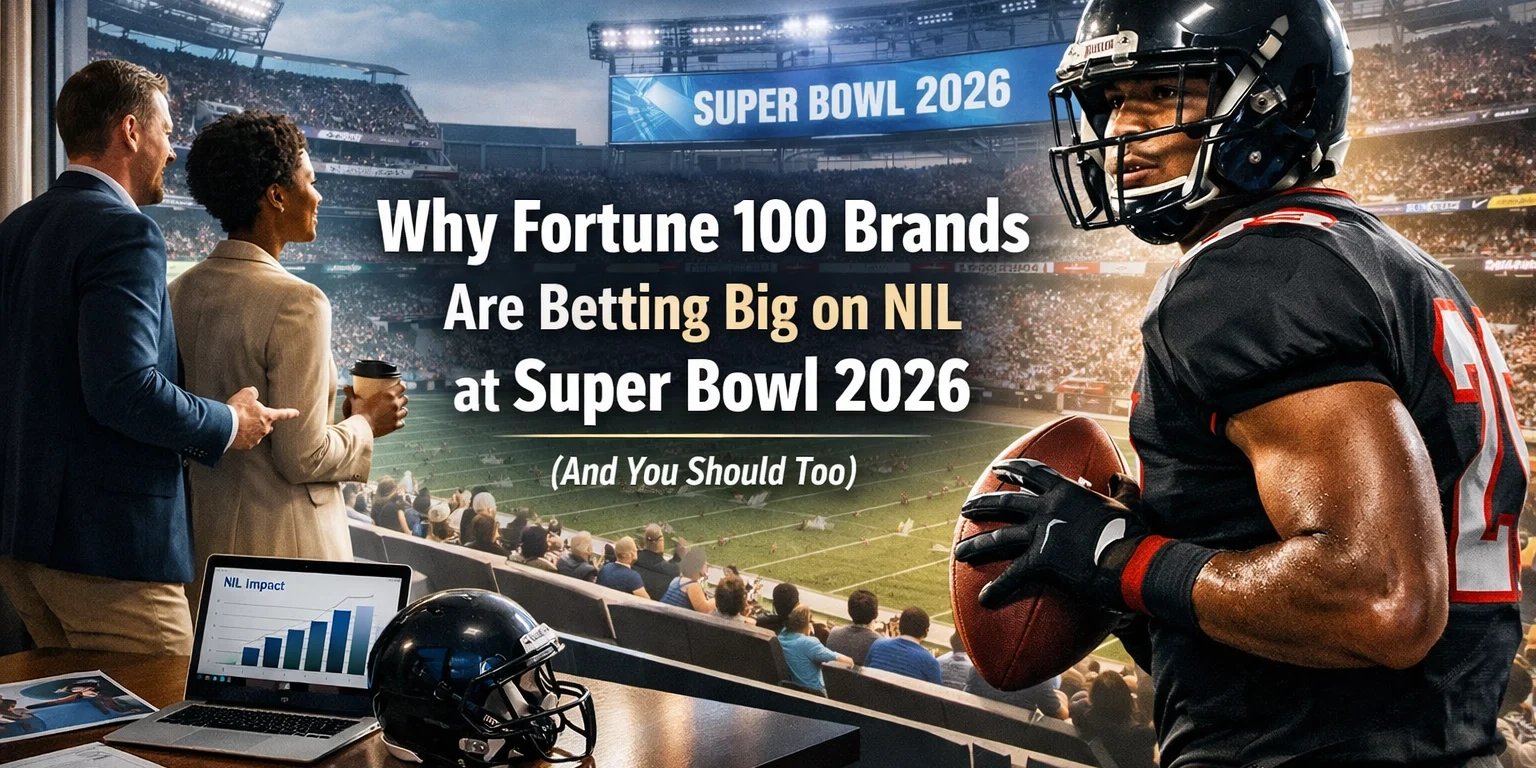
Super Bowl 2026 marks a turning point in sports marketing. While brands have historically poured millions into celebrity endorsements and thirty-second commercials, a different strategy is emerging as the centerpiece of Fortune 100 marketing campaigns: Name, Image, and Likeness (NIL) partnerships with student-athletes.
This shift represents more than a temporary trend. It signals a fundamental recalibration of how major corporations approach authenticity, audience engagement, and long-term talent development. The numbers speak for themselves: brands that once allocated their entire Super Bowl budget to airtime are now diversifying into NIL partnerships that extend far beyond game day.
The NIL Revolution Explained
For those unfamiliar with the landscape, NIL refers to the rights of college athletes to profit from their name, image, and likeness. Following regulatory changes that took effect in 2021, student-athletes can now enter into endorsement deals, monetize their social media presence, and partner with brands: opportunities that were previously restricted under NCAA rules.
This regulatory shift opened the floodgates for a new category of brand ambassadors: collegiate athletes with established followings, authentic community connections, and audiences that trust their recommendations. Unlike traditional celebrity endorsers who may promote dozens of products, these athletes often bring focused passion and genuine alignment with the brands they represent.
Authenticity at Scale
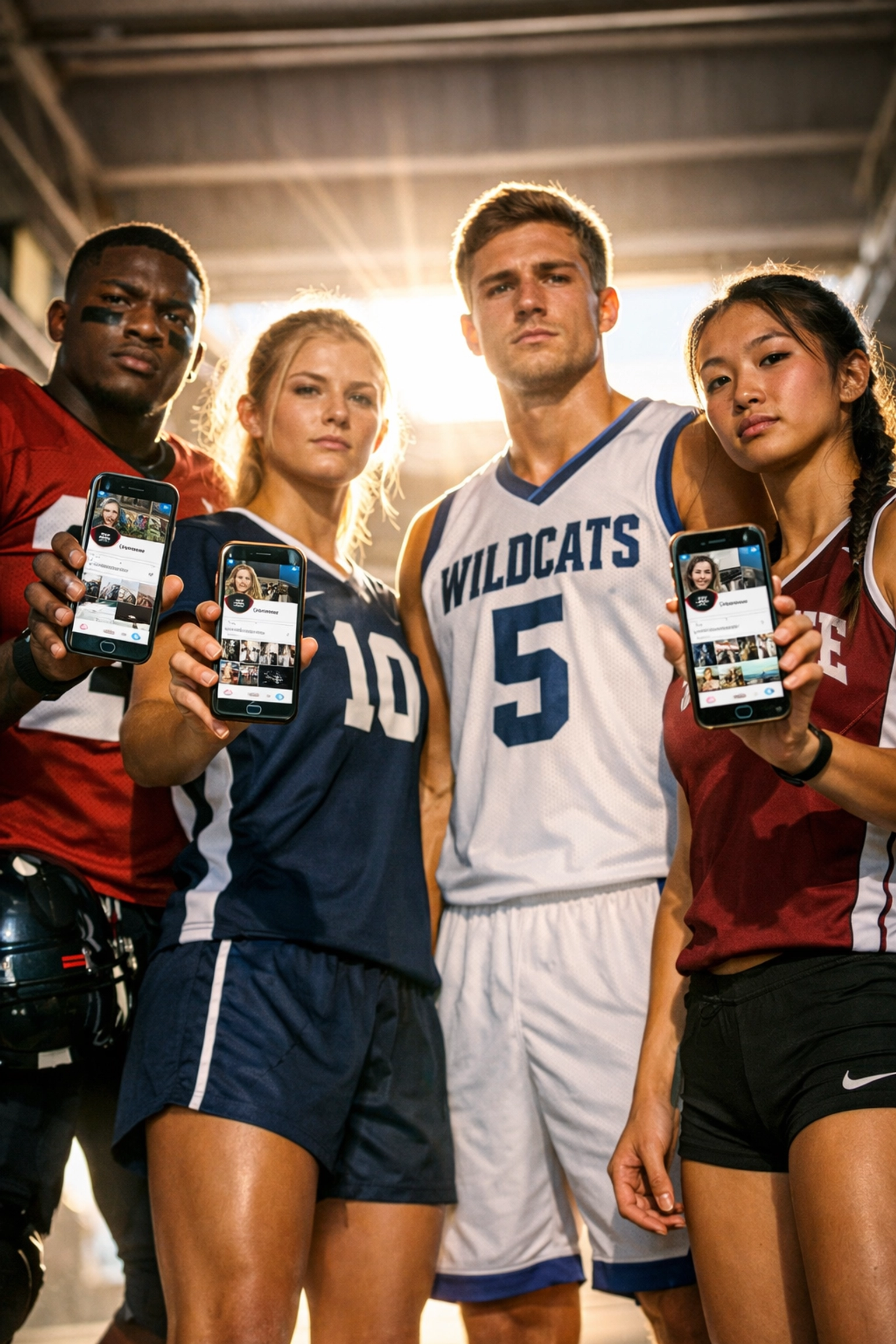
The primary driver behind Fortune 100 investment in NIL partnerships centers on authenticity. Today's consumers, particularly younger demographics, demonstrate increasing skepticism toward traditional advertising. They can identify manufactured endorsements from a distance and respond more favorably to partnerships that feel organic and credible.
Student-athletes occupy a unique position in this landscape. They maintain deep connections within their local communities, universities, and fan bases. When a linebacker from a major football program endorses a sports drink or a basketball star partners with a financial services company, their audiences perceive the relationship differently than they would a multi-million dollar celebrity deal.
Research consistently shows that audiences respond more positively to endorsements from individuals they view as "like them" or accessible, rather than distant celebrities. Student-athletes bridge this gap effectively: they're aspirational yet relatable, successful yet still on their journey.
Building Tomorrow's Talent Pipeline Today
Beyond immediate marketing returns, Fortune 100 brands recognize NIL partnerships as strategic talent development investments. As one industry analysis noted, these partnerships are "building Fortune 100 talent pipelines that will power innovation for the next generation."
This long-term perspective reframes NIL from a marketing expense to a recruitment and development opportunity. Brands partnering with student-athletes today are establishing relationships with potential future employees, executives, and innovators. These athletes bring discipline, leadership experience, and the ability to perform under pressure: qualities that translate directly into corporate success.
Several major corporations have formalized this approach, creating structured NIL programs that include mentorship, professional development, and pathways to internships or full-time positions after graduation. The Super Bowl activation serves as a high-visibility launch point for these ongoing relationships, but the value extends far beyond a single event.
The Economics of Shifting Athlete Partnerships
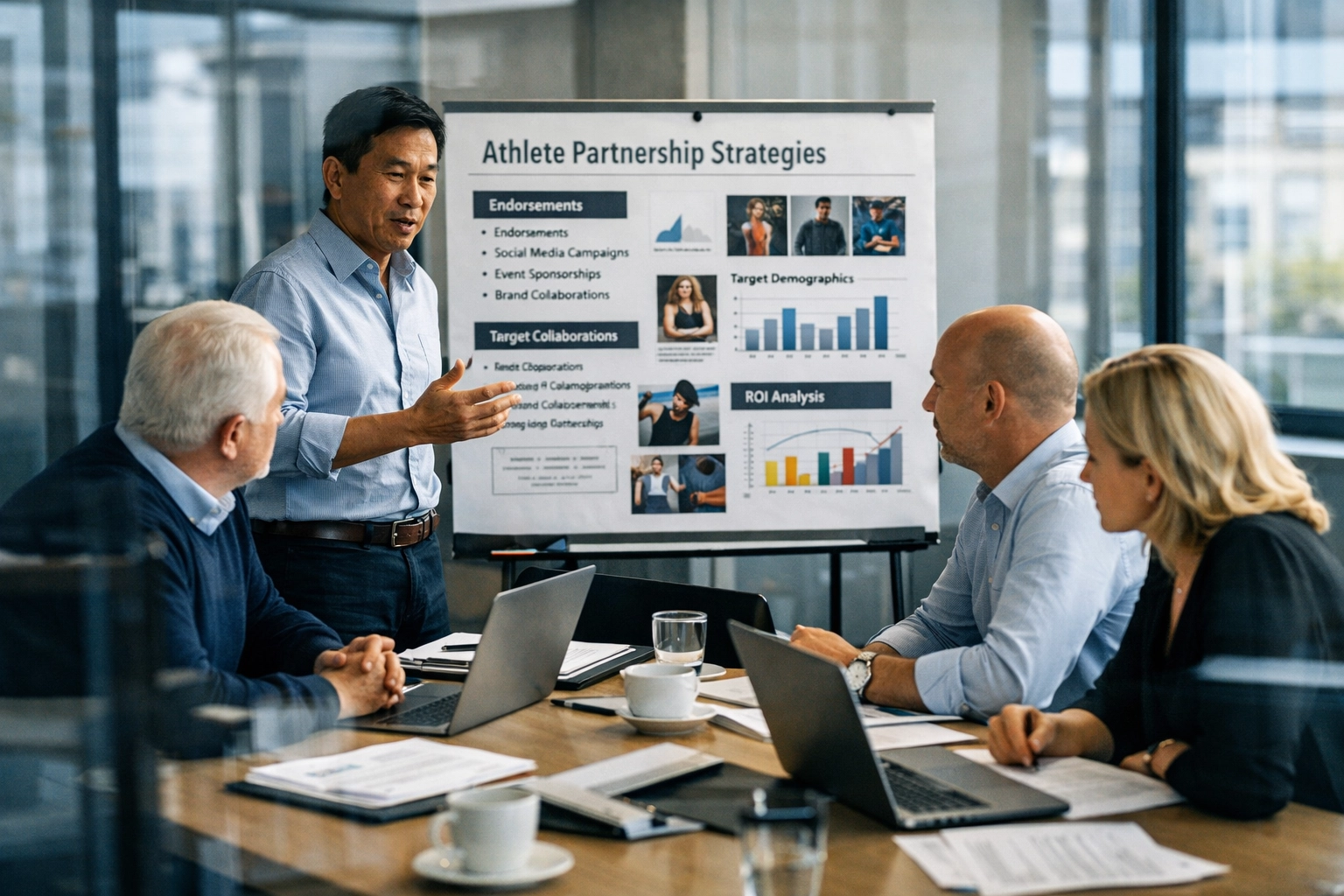
The financial calculus behind NIL investment becomes clearer when examining the broader endorsement landscape. Traditional athlete endorsements have escalated dramatically in recent years. Established professional athletes command premium rates, often requiring seven-figure commitments for short-term campaigns. Many athletes have also launched their own brands or demand equity stakes in partner companies, fundamentally changing the negotiation dynamics.
This economic reality forces brands to reconsider budget allocation. A single thirty-second Super Bowl commercial can cost upward of seven million dollars for airtime alone, not including production costs. For that same investment, brands can activate dozens of NIL partnerships that generate content across multiple platforms, engage diverse audience segments, and extend engagement throughout the season rather than during a single broadcast.
The efficiency gains become even more apparent when considering content generation. A partnership with ten student-athletes can produce exponentially more social media content, appearances, and community engagement opportunities than a traditional celebrity endorsement. This distributed approach also provides risk mitigation: if one partnership underperforms, others can compensate.
Super Bowl 2026 as the Proving Ground
Super Bowl 2026 serves as a critical demonstration of NIL's potential at scale. Unlike previous years where NIL activations existed at the periphery, this year's event features student-athletes in prominent campaign roles for multiple Fortune 100 brands. These aren't token appearances: they're central to brand messaging and activation strategies.
The event provides a controlled environment to measure effectiveness. Brands can track engagement metrics, sentiment analysis, and conversion data to compare NIL-driven campaigns against traditional approaches. Early indicators suggest that NIL partnerships generate higher engagement rates and more favorable sentiment, particularly among the coveted 18-34 demographic.
What This Means for Your Brand Strategy
For Fortune 100 brands evaluating their marketing strategies, the NIL opportunity extends beyond Super Bowl activations. The key lies in approaching these partnerships strategically rather than opportunistically.
Successful NIL programs share several characteristics. First, they prioritize alignment over reach. A partnership with a student-athlete whose values and interests genuinely align with your brand will outperform a higher-profile partnership that feels forced or inauthentic. Second, they embrace long-term thinking. The most valuable NIL relationships extend beyond single campaigns to become ongoing partnerships that evolve as the athlete's career progresses.
Third, effective NIL programs provide value beyond compensation. Brands that offer mentorship, professional development, and genuine career pathways create deeper relationships and more authentic advocacy. This approach also generates better content: athletes who feel invested in a brand's success produce more compelling and genuine promotional materials.
Implementation Considerations
Brands entering the NIL space should consider several practical factors. Compliance remains paramount: NIL regulations vary by state and institution, requiring careful legal navigation. Working with experienced partners who understand this landscape prevents costly mistakes.
Budget allocation deserves thoughtful consideration. While NIL partnerships often provide better ROI than traditional endorsements, they require different resource commitments. Brands need infrastructure to manage multiple athlete relationships, coordinate content creation, and measure effectiveness across diverse platforms.
Geographic strategy also matters. Student-athletes carry particular influence in their regional markets and with their institution's fan base. Brands can leverage this by strategically selecting athletes whose markets align with growth priorities or customer concentration.
Looking Ahead
The convergence of NIL partnerships and major sporting events like Super Bowl 2026 represents an inflection point in sports marketing. Brands that move decisively to establish NIL programs position themselves advantageously for the next decade of consumer engagement.
The evidence suggests this isn't a passing trend but rather a permanent shift in how brands connect with audiences. As regulatory frameworks mature and best practices emerge, NIL partnerships will become increasingly sophisticated and integrated into broader marketing strategies.
Fortune 100 brands betting big on NIL at Super Bowl 2026 aren't chasing a fad: they're recognizing a fundamental change in how authenticity, trust, and influence operate in modern marketing. The question isn't whether to explore NIL partnerships, but how quickly your organization can develop the capabilities to execute them effectively.
The brands that answer this question decisively will find themselves not only with more effective marketing campaigns but also with stronger talent pipelines, deeper community connections, and more authentic brand positioning in an increasingly skeptical marketplace.