
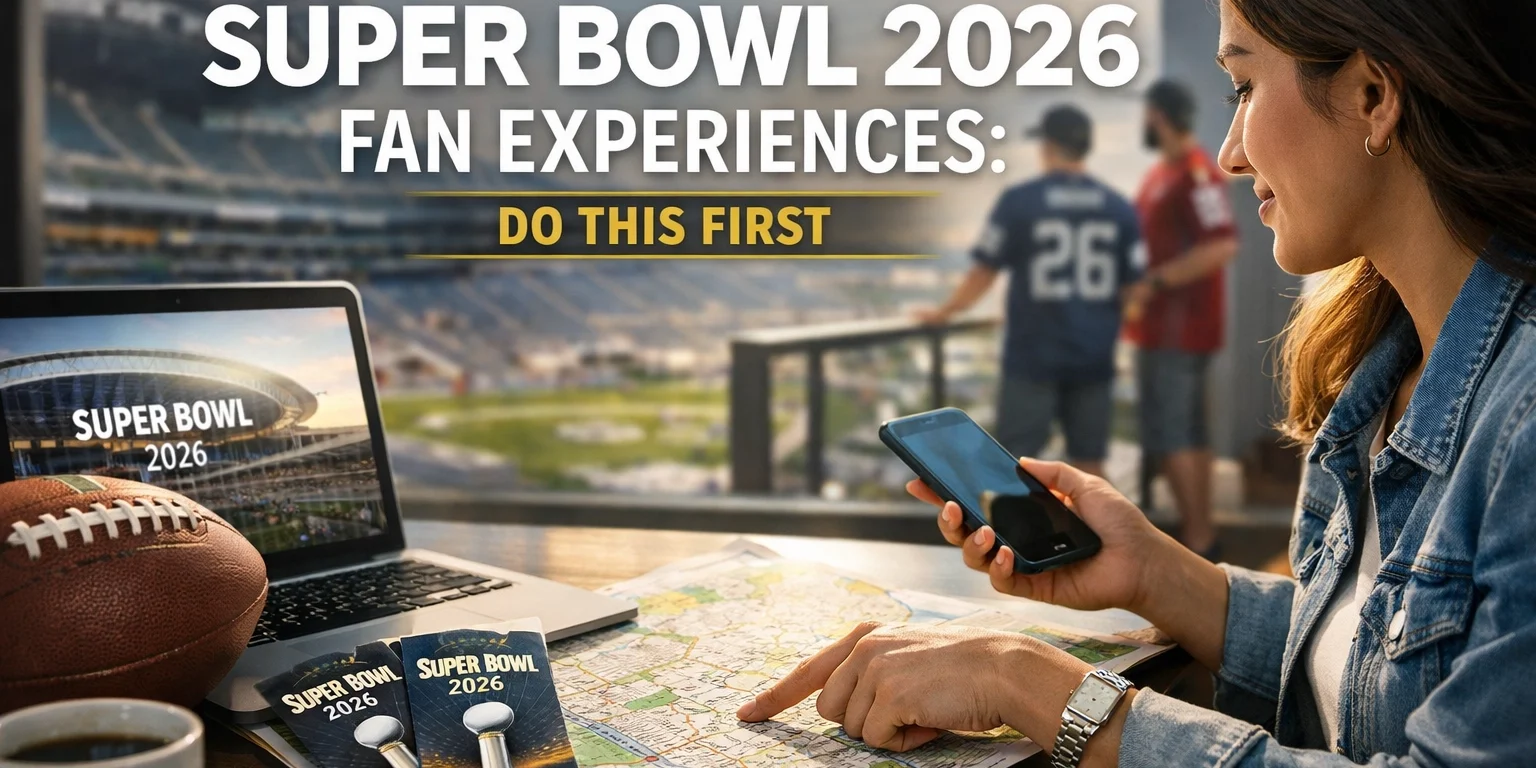
If you're in the business of creating memorable brand experiences, Super Bowl 2026 just gave us a masterclass in how to do tangible fan engagement right. With the dust now settled on Super Bowl LX at Levi's Stadium, let's break down what actually worked: and more importantly, what you need to prioritize first when planning your next big fan experience activation.
Start With the Physical Before the Digital
Here's something that caught a lot of brands off guard this year: fans still want to touch things. In a world drowning in QR codes and augmented reality filters, the experiences that generated the longest lines and most social media buzz were surprisingly tactile.
The Super Bowl Experience at Moscone Center proved this point emphatically. Between February 3-7, thousands of fans lined up not just to take selfies, but to physically interact with NFL memorabilia, run actual 40-yard dashes, and get real autographs from players like Frank Gore and Kirk Cousins. The takeaway for brands and event planners? Lead with tangible experiences, then layer in the digital amplification.

Think about it this way: fans can scroll through Instagram anywhere. They can watch highlight reels from their couch. But they can only pose with the actual Vince Lombardi Trophy or feel the weight of a Super Bowl ring in one place, at one time. That exclusivity and physicality creates genuine emotional connections that digital-only experiences simply can't replicate.
Create Multi-Generational Touch Points
One of the smartest moves at Super Bowl LX was the deliberate design of experiences that worked across age groups. The Kids' Zone featured flag football drills and foam pits that kept younger fans engaged while their parents explored memorabilia exhibits showcasing all 59 Super Bowl rings.
This multi-generational approach isn't just good family planning: it's smart business strategy. When you create touch points for different age groups within the same footprint, you increase dwell time, encourage repeat visits, and generate more comprehensive social media coverage. A grandmother snapping photos of her grandson running drills while dad tries the 40-yard dash creates three distinct content moments from one family visit.
For brands planning major activations, the lesson is clear: don't design for a single demographic. Build experiences that give every generation something worth talking about.
The Power of Player Access
Let's address the elephant in the stadium: player meet-and-greets remain the gold standard of fan experiences, but they're also the most logistically complex. Super Bowl 2026 handled this through structured autograph and photo sessions that balanced accessibility with exclusivity.
The key innovation here wasn't just getting players to show up: it was creating systems that managed fan expectations while delivering genuine moments of connection. Timed sessions, clear communication about what fans could expect, and photo-friendly staging areas all contributed to experiences that felt special rather than rushed.

For business consultants working with brands, this translates to a crucial first step: secure your talent or celebrity element first, then build your experience architecture around that anchor. Everything else: from flow management to social amplification: becomes easier when you have that centerpiece locked down.
Interactive Beats Passive Every Time
Walk through any major fan experience and you'll notice something: the crowds cluster around activities, not displays. Super Bowl 2026's Toyota Touchdown Drive using electric vehicles, the Victory Dance recording stations, and especially the 40-yard dash against virtual NFL players all created lines because they invited participation.
Passive viewing has its place: the memorabilia displays drew substantial crowds: but the experiences people remembered and shared were the ones where they became part of the story. When fans can test themselves against NFL standards, record their own touchdown celebrations, or compete with friends, they're not just observing the brand: they're embodying it.
This participatory approach requires more planning and staffing than static displays, but the ROI in terms of engagement depth and social reach justifies the investment. Fans don't share photos of themselves looking at things nearly as often as they share videos of themselves doing things.
Tech Should Enhance, Not Replace
The Bay Area-themed immersive tech experience at Super Bowl LX walked a smart line: it used technology to create something impossible in the physical world while still delivering tangible results fans could take home or share immediately.

Too often, brands get seduced by the latest technology and build experiences around the tech rather than around the fan. Virtual reality headsets are cool, but if fans are removing them to check how they look or adjust settings, you've broken the immersion. The best tech integrations at major events feel invisible: they enhance the experience without becoming the experience.
For your next activation, ask this question first: "What story are we trying to tell, and how can technology help us tell it better?" Not "What's the coolest tech we can deploy?"
Merchandise and Memorabilia Matter More Than Ever
In an era of digital everything, physical tokens of experience have actually increased in value. Limited-edition merchandise, commemorative items, and especially anything connected to specific moments or players became instant collectibles at Super Bowl 2026.
Smart brands understood this and created multi-tier memorabilia strategies: free items to drive traffic and encourage social sharing, mid-tier souvenirs that marked attendance, and premium collectibles for serious fans willing to invest in tangible memories.
The critical insight here is that merchandise shouldn't be an afterthought or a revenue add-on: it's an integral part of the fan experience strategy. When done right, it extends the emotional connection beyond the event itself and serves as a physical reminder that drives future engagement.
Start Planning Earlier Than You Think
Here's the hard truth from Super Bowl 2026: the brands that succeeded started planning 18-24 months before kickoff. Venue selection, talent booking, permitting, staffing, and logistics for major fan experiences can't be rushed without sacrificing quality.

For business consultants and event planners, this means having conversations with clients about next year's Super Bowl activation right now, while this year's insights are fresh. The competitive advantage comes not from having a bigger budget, but from having more time to iterate, test, and refine your approach.
The Bottom Line for Your Next Activation
Super Bowl 2026 proved that tangible fan experiences still drive engagement in ways that purely digital activations can't match. The brands and organizations that succeeded focused on physical interaction, multi-generational appeal, genuine player access, participatory activities, smart tech integration, and meaningful merchandise.
If you're planning your next major fan experience: whether it's Super Bowl 2027, a music festival, a product launch, or a corporate event: start with these fundamentals. Build something fans can touch, participate in, and take home. Create moments worth sharing not because they're Instagram-ready, but because they're genuinely memorable.
The future of fan experiences isn't about choosing between physical and digital: it's about understanding that the best activations ground digital amplification in tangible, real-world connections. Get the physical foundation right first, and everything else follows.
Want to discuss how to apply these Super Bowl 2026 insights to your next brand activation? Visit USA Entertainment Ventures to explore how we help businesses create fan experiences that actually connect.





