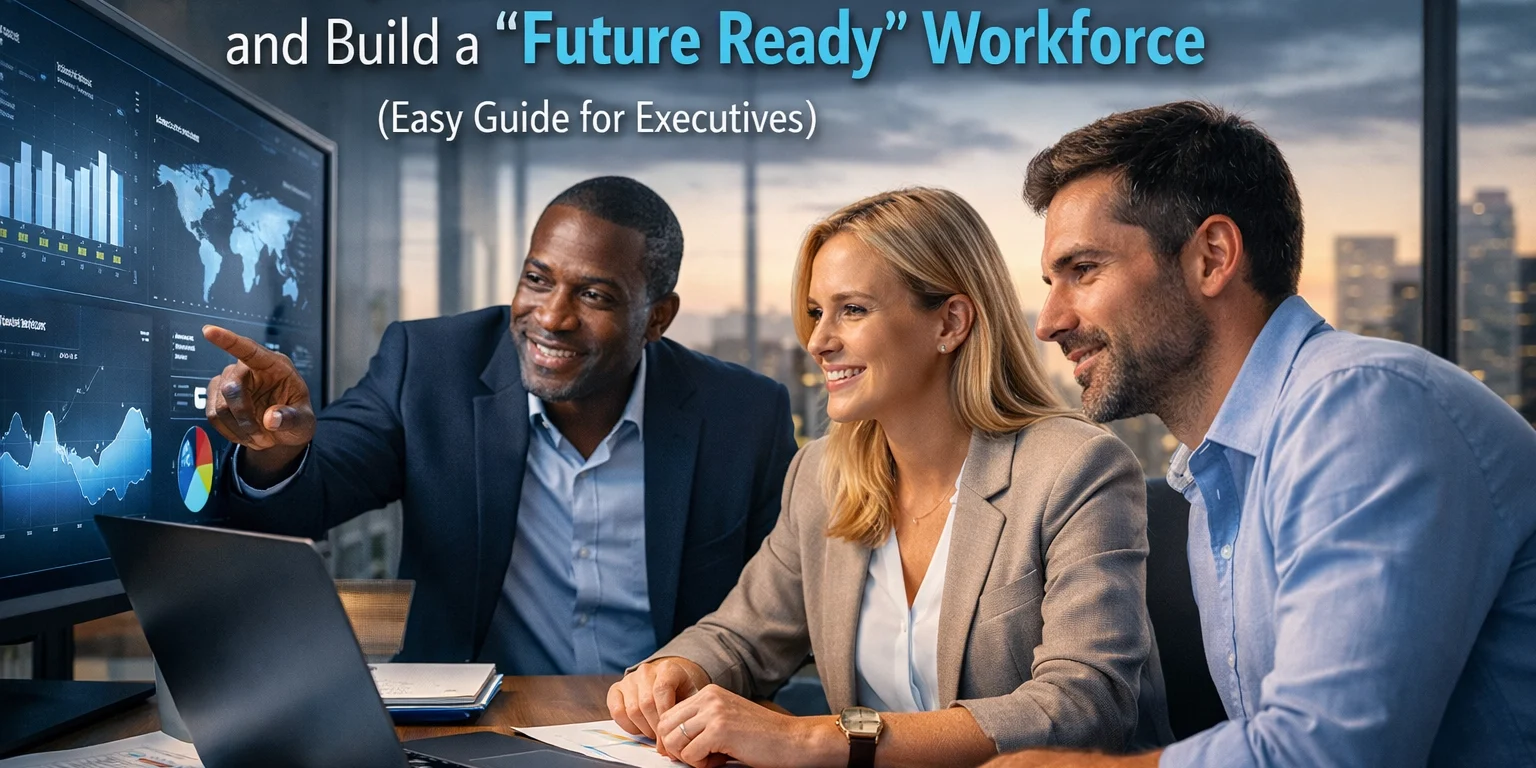
The modern business landscape is no longer defined by traditional milestones. Today, the speed of change is dictated by data. For executives, the challenge isn't just about managing the current workforce; it is about building a "Future Ready" organization that can pivot as quickly as the market does.
To achieve this, leadership must look beyond basic recruitment and retention. We must look at how we integrate data analytics, media literacy, and even emerging trends like Name, Image, and Likeness (NIL) education into the very fabric of our professional development. As we navigate the complexities of 2026, the goal is to transform your organization from a reactive entity into a proactive, data-informed powerhouse.
Here is a 5-step guide for executives to leverage data analytics and cultivate a workforce that is not just prepared for the future, but actively shaping it.
Step 1: Align Workforce Planning with Strategic Business Objectives
The first step in any data-driven initiative is knowing what you are looking for. Workforce planning should never exist in a vacuum; it must be the mirror image of your company’s strategic direction. Before investing in expensive software, ask yourself: What specific business problems are we trying to solve?
Are you looking to reduce turnover in high-stress departments? Are you trying to forecast staffing needs for a new product launch? Or are you aiming to improve media literacy outcomes across your marketing and PR teams?
Executives should focus on SMART goals: Specific, Measurable, Achievable, Relevant, and Time-bound. By identifying key metrics such as workforce growth rates and department-specific hiring needs, you create a roadmap that data can actually follow. In the context of "Future Ready" schools and organizations, this often means looking at how early-stage education in digital branding and NIL management can create a more sophisticated entry-level talent pool.
Step 2: Build a Visual Command Center with Data Dashboards
Data is useless if it is trapped in a spreadsheet that no one reads. For an executive, the "Command Center" is a data analytics dashboard. These tools allow leadership to see a high-level overview of organizational health in real-time.
A "Future Ready" dashboard should track more than just headcount. It should measure:
- Skill Gaps: Identifying where your team lacks the necessary media literacy or technical skills to compete.
- Engagement Levels: Using sentiment analysis to gauge employee morale before it leads to churn.
- Educational Outcomes: Tracking the progress of internal training programs, such as NIL education for employees who are managing their own professional brands.
By centralizing this information, you remove the guesswork from decision-making. At USA Entertainment Ventures LLC, we advocate for simple, streamlined interfaces that prioritize clarity over complexity. When a dashboard is intuitive, executives are more likely to use it as a daily pulse-check for the company.
Step 3: Ensure Data Integrity and Quality
It is a sobering reality in the corporate world: only about 3% of company data meets basic quality standards. If your data is "dirty": filled with duplicates, outdated information, or manual entry errors: your analytics will lead you astray.
To build a future-ready workforce, you must automate as much of the data collection process as possible. AI-powered HR systems can now pull information directly from payroll, performance reviews, and even internal communication tools to provide an accurate picture of the organization.
"Don't wait for perfect systems to start," says many industry experts. "Start with the data you have, identify the gaps, and refine your collection methods as you go." The focus should be on creating a "single source of truth" where HR, Finance, and Operations can all agree on the numbers. This foundation of quality data is what allows an organization to act as an anchor for innovation.

Step 4: Foster Media Literacy and Digital Branding Skills
A workforce is not "Future Ready" if it cannot navigate the modern information ecosystem. This is where media literacy and NIL education become critical components of workforce development.
In an era where every employee is a potential brand ambassador, understanding media literacy is a safeguard against misinformation and a tool for effective communication. Furthermore, the rise of NIL (Name, Image, and Likeness) has moved beyond the world of collegiate sports and into the professional realm. Employees are now managing their personal brands on platforms like LinkedIn and X (formerly Twitter) in ways that directly impact their employers.
Training your workforce to understand their digital footprint: and how to use it to drive business value: is a hallmark of a forward-thinking executive strategy. It’s about teaching your team to be discerning consumers and creators of content. This skill set ensures that your organization remains a leader in creating tangible connections that stick.
Step 5: Implement Data-Driven Decision-Making and Measure Impact
The final step is to embed these insights into your corporate culture. Analytics should not be a "once-a-year" presentation for the board; it should be a part of every weekly leadership meeting.
Use predictive analytics to forecast where your talent gaps will be six months from now. If the data shows a rising need for digital content creators, you can begin the hiring or upskilling process today, rather than waiting for a crisis.
Regularly check in on your performance benchmarks:
- Has the implementation of media literacy training reduced PR risks?
- Are employees more engaged since the introduction of transparent career-pathing dashboards?
- Is the organization hitting its "Future Ready" milestones?
The transition to a data-driven workforce is a journey, not a destination. By consistently measuring the impact of these initiatives and communicating the results to the C-suite, you build the momentum necessary for long-term cultural change.

Positioning for the Future
Building a "Future Ready" workforce requires a partner that understands the intersection of entertainment, media, and business strategy. USA Entertainment Ventures LLC serves as an anchor for schools and businesses looking to navigate this transition. We believe that by combining robust data analytics with a deep focus on media literacy and NIL education, organizations can create a sustainable competitive advantage.
The shift toward a more analytical, literate, and brand-aware workforce is not just a trend: it is a necessity. As we look toward the remainder of 2026 and beyond, the executives who embrace these five steps will be the ones leading the most resilient and innovative companies in their industries.
By focusing on the human element: empowered by data: we can ensure that our schools are producing ready-made talent and our businesses are providing the environments where that talent can thrive.
For more information on how to integrate these strategies into your business consulting needs, visit USA Entertainment Ventures LLC.