
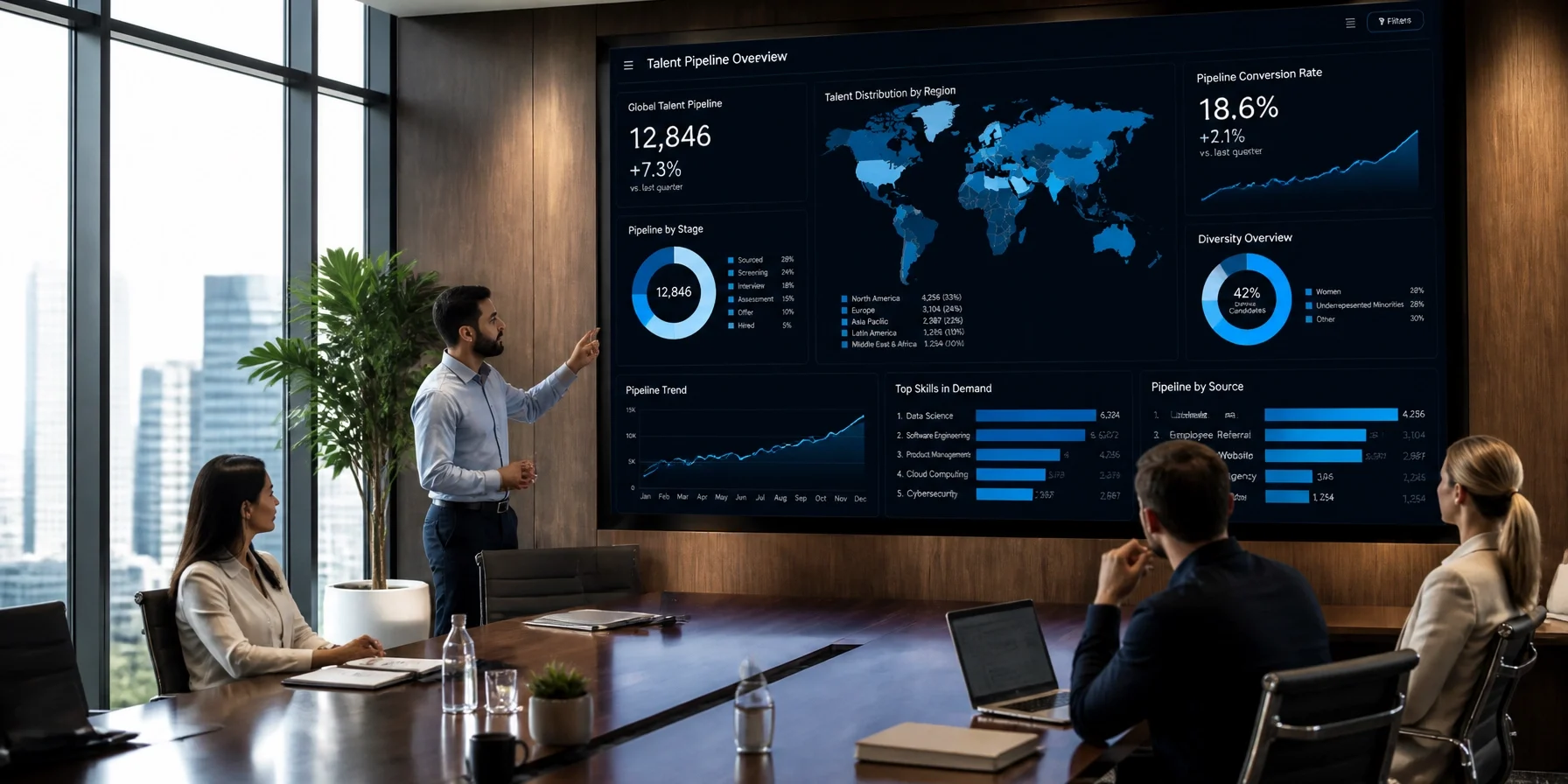
In the rapidly evolving landscape of Fortune 100 operations, the traditional approach to workforce management is no longer a sustainable model. As global markets fluctuate and technological integration deepens, the chasm between legacy hiring practices and future-ready requirements has widened. Executives today face a unique paradox: while they have access to more human capital data than ever before, many are still operating with outdated strategies that fail to leverage real-time insights or emerging educational trends.
USA Entertainment Ventures LLC has observed that the most successful organizations are those that move beyond reactive hiring and transition toward becoming "Future Ready" anchors within their local and national ecosystems. This transition requires identifying and correcting systemic mistakes that hinder talent acquisition and retention. Below, we examine the seven most critical errors currently being made in Fortune 100 workforce strategy and how a data-driven, holistic approach can provide the necessary correction.
1. Relying on Static Data Instead of Real-Time Dashboards
One of the most pervasive mistakes in workforce strategy is the reliance on lagging indicators. Many executives still make multi-million-dollar decisions based on quarterly PDFs or massive spreadsheets that are outdated before they reach the C-suite. This "lagging-indicator leadership" ensures that an organization is always solving yesterday’s hiring and skill-gap problems while the market has already moved on.
The solution lies in the implementation of centralized, real-time data analytics dashboards. These platforms integrate internal metrics: such as recruiting funnels, turnover rates, and internal mobility: with external data points, including educational outcomes and regional certification trends. By visualizing this data, leaders can identify "skill deserts" and forecast gaps six to twelve months in advance, allowing for a proactive rather than a defensive posture.

2. Overlooking the NIL and Personal Branding Revolution
For decades, the concept of "Name, Image, and Likeness" (NIL) was confined to the world of professional and collegiate athletics. Today, however, NIL is a core component of professional identity for the entire "Future Ready" generation. Every incoming hire is managing a personal brand on social platforms, whether they realize it or not.
A significant mistake made by many Fortune 100 employers is failing to acknowledge or support this reality. When workforce strategy treats an employee's personal brand as a threat or a liability, top-tier talent will inevitably seek out organizations that view their brand as an asset. By embedding NIL and personal branding education into corporate learning programs, companies can help students and employees manage their professional presence within corporate guidelines while simultaneously teaching financial and media literacy.
3. The Myth of the "Digital Native" and the Media Literacy Gap
There is a common, yet dangerous, assumption that because younger workers are fluent with digital applications and social media, they possess inherent media literacy. In reality, being a "digital native" does not equate to the ability to vet sources, understand algorithmic bias, or communicate effectively in high-stakes media environments.
Weak media literacy can lead to internal misinformation, poor decision-making, and catastrophic external communication errors. To fix this, media literacy must be treated as a core competency rather than a "soft skill." Organizations should partner with "Future Ready" schools to co-design curricula where students practice decoding complex messaging and producing factual, clear content tied to real corporate use cases. This ensures that the incoming talent pipeline is not just tech-savvy, but media-literate.

4. Neglecting High-Performance Military Transitions
Despite the high cost of recruiting and the ongoing talent shortage, many organizations fail to fully utilize structured military transition programs. The DOD SkillBridge program represents one of the most efficient, yet underutilized, talent pipelines available to Fortune 100 companies today.
By failing to integrate these programs into their broader workforce strategy, companies miss out on highly disciplined, pre-trained talent whose salaries are often covered by the Department of Defense during their internship period. Strategic integration of these programs can significantly reduce hiring costs while improving retention. For more details on how to optimize these efforts, see our insights on how DOD SkillBridge secrets can cut hiring costs by 40%.

5. Failing to Anchor "Future Ready" School Partnerships
Many large-scale employers treat school partnerships as purely philanthropic or "nice-to-have" initiatives. This is a mistake. To build a sustainable pipeline, corporations must act as anchors for "Future Ready" schools. This means moving beyond occasional guest speakers and instead integrating corporate needs directly into the classroom through branded learning modules, dual-enrollment programs, and gamified learning experiences.
When a company serves as an anchor, they are not just looking for talent; they are helping to build the infrastructure that talent requires. This includes addressing the digital divide by supporting physical tech centers or labs within partner schools. By aligning curriculum outcomes with the data findings of corporate analytics dashboards, organizations ensure that the next generation of graduates is ready to hit the ground running on day one.
6. Prioritizing Headcount Over Integrated Skill Mapping
A recurring mistake in the Fortune 100 sector is treating workforce planning as a numbers game. Hiring for "headcount" ignores the reality that a fully staffed team can still be functionally incompetent if it lacks the specific technical, analytical, and media skills required for modern competition.
Data-driven strategy focuses on integrated skill mapping. This process defines the technical (AI tools, data analytics), human (critical thinking, communication), and brand-related (NIL, media literacy) skills needed for future growth. By auditing current employees and incoming pipelines against these specific markers, organizations can target their reskilling and recruitment efforts with precision, ensuring the workforce is built for capability, not just capacity.

7. Siloing Workforce Strategy Within Human Resources
Perhaps the most significant mistake is the perception that workforce strategy is solely the responsibility of the HR department. In a world where talent is the primary differentiator, human capital must be a core C-suite priority, treated with the same rigor and visibility as financial capital.
When the CEO and CFO are disconnected from workforce data, the organization becomes reactive. By elevating metrics such as media literacy outcomes, NIL education participation, and SkillBridge ROI to the board level, a company signals that its people are its most critical strategic asset. As noted in recent executive feedback for USA Entertainment Ventures LLC, the organizations that succeed are those that integrate these diverse divisions: from recruitment to management: under a unified, data-informed vision.
Conclusion: The Path Forward
Correcting these seven mistakes is not merely an exercise in efficiency; it is a requirement for survival in the modern economy. By transitioning to real-time dashboards, embracing the NIL revolution, prioritizing media literacy, and leveraging programs like DOD SkillBridge, Fortune 100 companies can transform from reactive hiring machines into proactive, "Future Ready" anchors.
The future belongs to the organizations that treat workforce strategy as a data-driven science. We invite you to consider how your current strategy aligns with these findings and to explore the potential of a truly integrated, future-ready workforce model.





