
For decades, the traditional computer lab was the undisputed cornerstone of technical education and professional development. Characterized by long rows of identical beige towers and flickering monitors, these spaces provided a essential service: access to expensive hardware and software that was otherwise unattainable for the average student or worker. From the early Apple Macintosh labs of the 1980s to the wireless-enabled laptop hubs of the early 2000s, the mission was clear: democratize access to the machine.
However, as we move further into the 2020s, that model is fundamentally shifting. Modern professionals and students often possess more computing power in their pockets or personal laptops than the aging hardware found in generic labs. According to recent higher education IT analysis, institutions are reporting a sharp decline in the demand for fixed-position desktop PCs. The bottleneck is no longer access to a computer; it is access to specialized, high-performance environments that mirror the complexity of modern industry.
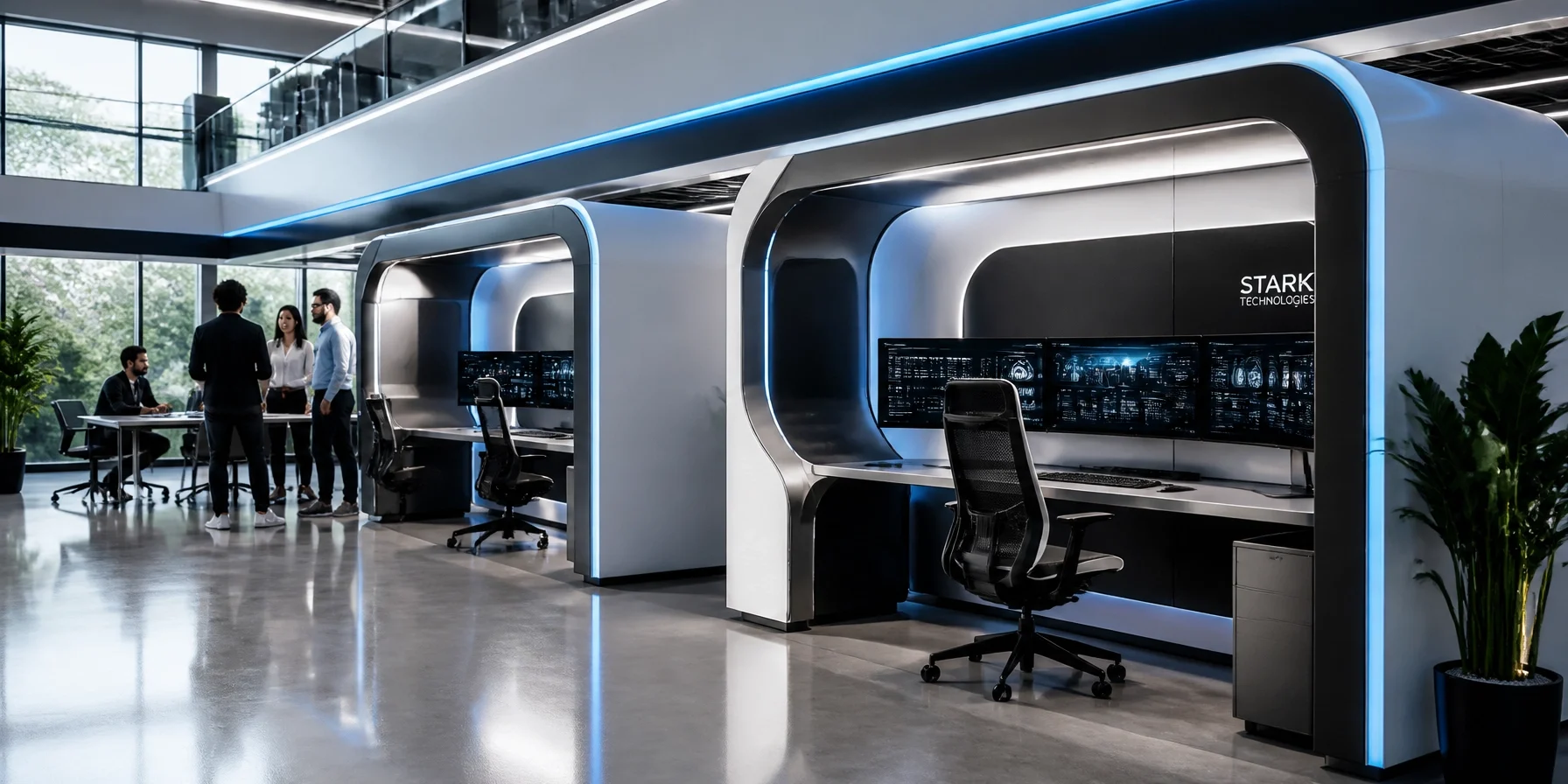
Enter the "High-Tech Pod." These modular, specialized workspaces are rapidly replacing the rows of desks of yesteryear. Unlike their predecessors, pods are not designed for general-purpose tasks like word processing or web browsing. Instead, they are high-density technology hubs focused on specific career pathways: most notably in logistics, cybersecurity, and content creation. This evolution represents a shift from a "one-size-fits-all" approach to a "mission-specific" infrastructure.
The Obsolescence of General Access
The transition from labs to pods is driven by three primary factors: the ubiquity of personal devices, the high cost of hardware refresh cycles, and the rising demand for collaborative, team-based environments. As noted in industry reports, the "hub-and-spoke" model is becoming the new standard. In this model, individuals use their own devices for low-intensity tasks and "plug into" high-tech pods when they require specialized GPUs, large-scale displays, secure network isolation, or collaborative dashboards.
For organizations like USA Entertainment Ventures LLC, this shift is more than just a change in furniture; it is a fundamental reconfiguration of the talent funnel. By creating physical environments that replicate real-world operational centers, businesses can significantly reduce the "readiness gap" for new hires, particularly those transitioning through programs like the DOD SkillBridge recruitment.
Logistics Pods: The "Mission Control" for Global Supply Chains
In the world of modern logistics and supply chain management, a standard computer lab is about as effective as a paper map in a GPS-driven world. Logistics has evolved into a field of high-stakes data orchestration, requiring real-time visualization and complex simulation capabilities.

Modern logistics pods function as localized "Mission Control" centers. They are equipped with:
- Digital Twin Dashboards: High-resolution vertical and horizontal displays allow analysts to interact with virtual replicas of warehouses, shipping ports, and transport networks.
- IoT Integration Zones: These spaces allow for the testing and analysis of RFID, sensors, and autonomous delivery systems.
- Collaborative Layouts: Unlike the isolated rows of a computer lab, logistics pods are designed for team-based problem-solving, mirroring the "war rooms" used by global shipping giants.
Career pathways in this sector have expanded far beyond the warehouse floor. Professionals trained in these pods often transition into roles as logistics analysts, operations planners, and digital-twin simulation specialists. By training in a pod that looks and feels like a real operational center, candidates arrive on the job with a level of situational awareness that generic classroom training cannot provide. For more on how these environments shape the future workforce, explore the next generation talent funnel explained.
Cybersecurity Pods: Navigating the Digital Frontline
Cybersecurity is perhaps the strongest driver of the "pod" movement. Traditional campus or office networks are inherently ill-suited for cybersecurity training. High-risk exercises, such as malware analysis or offensive "red team" simulations, cannot be conducted on shared infrastructure without risking catastrophic data breaches.

Cybersecurity Pods are designed as "Cyber Ranges": isolated, secure environments that allow for intensive technical training. Key features include:
- Physical and Network Isolation: These pods operate on air-gapped or dedicated networks, allowing students to study live malware and execute exploits in a safe environment.
- Red Team / Blue Team Stations: The modular design allows for separate "attacker" and "defender" zones, facilitating live-action competitions that simulate real-world cyber warfare.
- AI-Enhanced Security Operations Center (SOC) Tools: Trainees gain experience using AI-driven threat detection platforms that are becoming the industry standard.
As noted in our analysis on why modular pods are the new hotspot for cyber careers, these spaces provide a direct bridge to careers as SOC analysts, penetration testers, and threat hunters. For veterans transitioning into the private sector, these pods provide a familiar, high-stakes operational environment that translates military discipline into technical expertise.
Content Creation Pods: The AI-Powered Media Studio
The third pillar of the pod revolution is the content creation sector. Historically, "media labs" were merely computer labs with a few copies of expensive editing software. Today, the requirements for modern digital content: ranging from 3D rendering and generative AI to virtual reality (XR): exceed the capabilities of standard hardware.

High-tech content pods are essentially "studios in a box." They offer:
- High-End Rendering Power: Workstations equipped with the latest GPUs capable of processing generative AI models and real-time 3D environments.
- Acoustic and Visual Optimization: Built-in studio lighting, green screens, and sound-dampening panels that transform a simple workspace into a professional production hub.
- Spatial Computing Zones: Dedicated areas for developing and testing AR, VR, and XR experiences.
In a 2026 workforce, generative AI is no longer a luxury; it is a fundamental tool. Creators are expected to orchestrate multiple AI assets: text, image, and video: simultaneously. Content creation pods provide the physical and technical infrastructure to support this multi-modal workflow, preparing individuals for roles as digital content strategists, motion graphics artists, and AI-assisted creative directors.
The Actionable Takeaway: Shifting the Infrastructure Paradigm
For business leaders and educational administrators, the takeaway is clear: the era of the general-purpose computer lab is concluding. The investment must shift toward specialized, modular infrastructure that aligns with specific economic sectors.
To implement this change effectively, organizations should consider the following:
- Identify High-Growth Specializations: Rather than building a lab for everyone, build pods for your most critical talent needs: whether that is logistics, cybersecurity, or AI-driven media.
- Prioritize Modular Design: Use physical pods that can be easily reconfigured or relocated as technology and headcount requirements evolve.
- Leverage Talent Funnels: Connect these physical spaces to existing recruitment pipelines. USA Entertainment Ventures LLC specializes in managing these transitions, particularly through the DOD SkillBridge program, ensuring that the physical infrastructure serves a direct recruitment and retention purpose.
Conclusion: Bridging the Gap for Future Professionals
The death of the computer lab is not the end of shared technical spaces; it is the birth of the "career powerhouse." By moving away from rows of generic PCs and toward high-tech, specialized pods, we are creating a more resilient and capable workforce. These spaces do more than just provide tools; they provide the context, security, and collaborative environment necessary to master the most complex industries of the 21st century.
As we look toward the future, the integration of physical pods with digital-first recruitment strategies will be the hallmark of successful business development. Whether you are a transitioning veteran or a corporate leader seeking to modernize your workforce, the shift to pod-based training is an investment in both business success and broader societal progress.
For further information on how to integrate these strategies into your organization, visit USA Entertainment Ventures LLC to learn about our management services and recruitment initiatives.





