
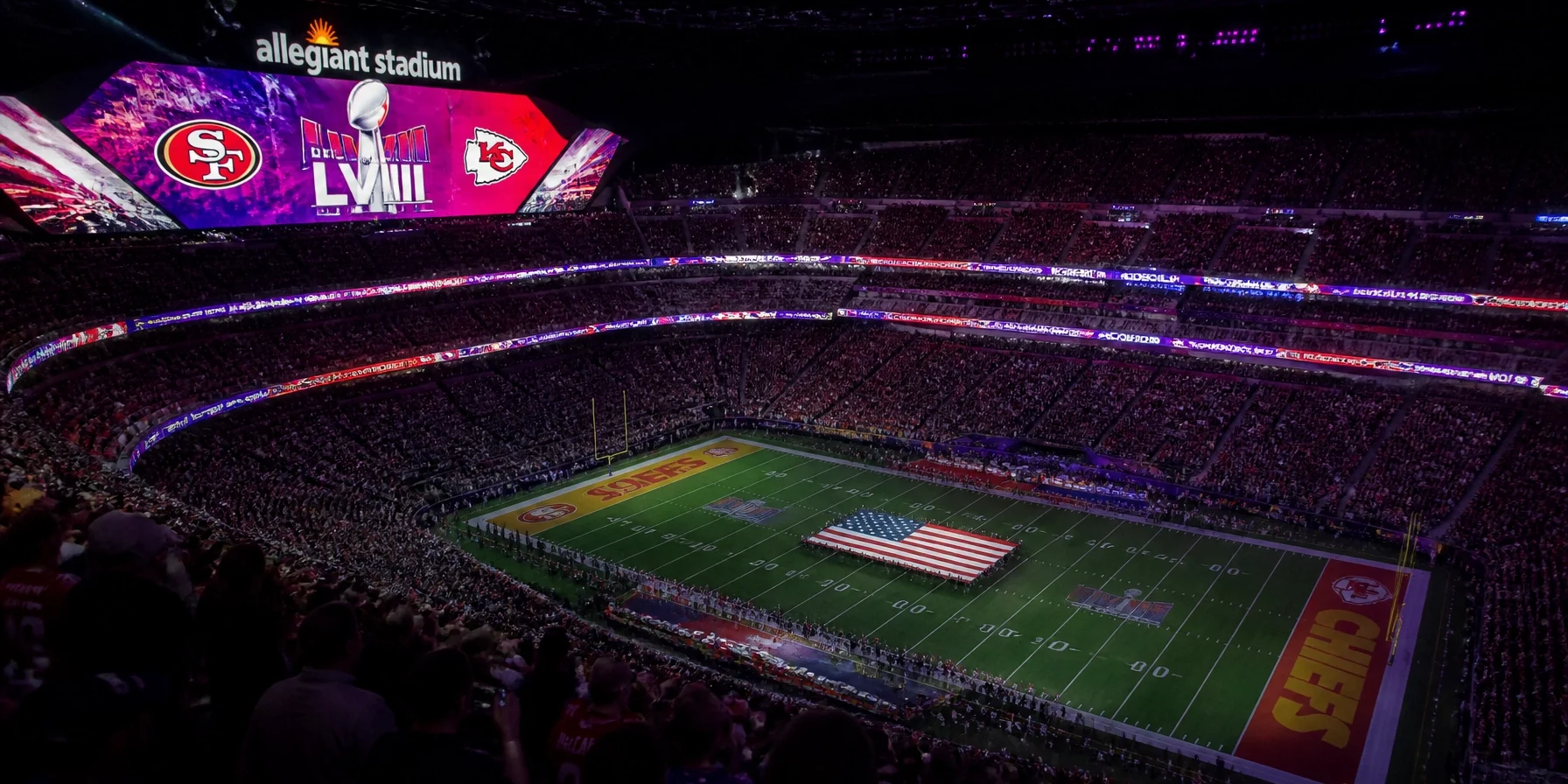
The Super Bowl is more than a championship game; it is a cultural phenomenon that commands the undivided attention of over 100 million viewers. For advertisers, it represents the pinnacle of reach and influence. However, as the cost of a 30-second television spot climbs toward the $8 million mark, savvy brands are increasingly looking toward Out-of-Home (OOH) advertising to "own the environment" surrounding the Big Game.
Despite the massive potential of OOH, many campaigns fall short by treating this high-stakes arena like any other media buy. When you are operating in the high-octane atmosphere of Super Bowl week, traditional tactics often result in missed opportunities and wasted spend.
At USA Entertainment Ventures LLC, we’ve seen how the right strategy can transform a brand’s presence from background noise to a dominant force. Through our Sporttron Digital Network, we provide the infrastructure to avoid these pitfalls. Here are the seven most common mistakes brands make with Super Bowl OOH: and the strategic fixes to ensure your brand wins the day.
1. Treating Digital OOH Like a Static Billboard
The most frequent mistake in the OOH space is a failure to utilize the "Digital" in Digital Out-of-Home (DOOH). Many brands pay a Super Bowl premium only to run a single, static creative loop for the entire week. In an environment where the score, the weather, and the social sentiment change by the minute, static messaging feels dated and disconnected.
The Fix: Dynamic Creative Triggers
Modern OOH should be alive. By using dynamic capabilities, your creative can swap based on real-time data. Imagine a board that counts down to kickoff, updates live scores, or changes its copy based on whether a team is staging a comeback. According to industry data, dynamic DOOH increases brand recall by as much as 18% compared to static content. Our proprietary Sporttron network allows for these real-time pivots across 780+ venues nationwide, ensuring your message remains relevant until the final whistle.

2. Ignoring the "Fan-Centric" Narrative
Many advertisers approach the Super Bowl with an "us-first" mentality, focusing heavily on brand slogans that would work on any random Tuesday. However, the Super Bowl is a deeply emotional event for fans. If your messaging doesn’t tap into the rituals, the rivalries, or the collective anxiety of a fourth-quarter drive, you are failing to connect.
The Fix: Emotional Resonance and Rituals
Make the fan the hero of your story. Use OOH to acknowledge the stress of hosting a party, the superstition of "lucky jerseys," or the humor of Monday-morning quarterbacking. By aligning your brand with the fan experience, you move from being an intruder to a participant in the celebration. As noted in recent sports marketing analyses, brands that leverage "cultural codes" around the game see significantly higher engagement levels.
3. The "One-Night Stand" Media Strategy
There is a common misconception that Super Bowl advertising begins and ends on Sunday. Brands often pour their entire budget into a single, flashy execution with no lead-in and no follow-through. This "one-and-done" approach fails to build the frequency necessary for long-term brand equity.
The Fix: The Multi-Week Ecosystem
The Super Bowl should be the peak of your campaign, not the entire plan. Use the weeks leading up to the game to seed your message and build anticipation. Post-game OOH is equally critical for reinforcement and driving retail calls-to-action. At USA Entertainment Ventures, our management services emphasize a holistic approach, leading the entire sports ecosystem from youth sports publishing to professional arena dominance.
4. Forgetting the "Second Screen" Integration
We live in a multi-screen world. During the Super Bowl, fans are constantly on their phones: checking stats, placing bets, and sharing memes. A major mistake is running OOH that exists in a vacuum, with no clear path for a viewer to engage via their mobile device.
The Fix: Shoppable OOH and Social Syncing
Every OOH placement should assume the viewer has a phone in hand. Incorporate scannable QR codes, memorable hashtags, or direct links to your NIL (Name, Image, Likeness) platforms. Integrating OOH with social media is particularly effective; research shows OOH drives 5.9x more social posts than other media channels. By bridging the gap between the physical board and the digital screen, you turn a passive viewer into an active participant.

5. Creative Overload and Brand Dilution
In an attempt to be "clever" for the Super Bowl, brands often overcomplicate their visuals. They use obscure metaphors or celebrities that overshadow the product itself. In OOH, you often have less than three seconds to make an impression. If the viewer remembers the joke but not the brand, the campaign has failed.
The Fix: Bold Branding and Distinctive Codes
Stick to your "distinctive brand codes": your specific colors, logos, and typography. Ensure your brand is unmistakable within the first second. The goal isn't just to be seen; it's to be remembered. High-contrast, simple, and bold visuals perform best in the fast-paced environment of a stadium concourse or a busy transit hub.
6. Geographic Isolation
Many brands focus exclusively on the host city of the Super Bowl. While the host city is the epicenter, millions of fans are celebrating in "secondary" markets like Philadelphia, Kansas City, or San Francisco. By ignoring these fan bases, you leave millions of impressions on the table.
The Fix: Nationwide Venue Domination
The "Sporttron" advantage lies in its reach. We access ribbon boards and jumbotrons in over 780 venues across the country. This allows brands to dominate the environment not just at the Super Bowl stadium, but at every sports bar, transit center, and local venue where fans gather. Whether it is a professional arena or a collegiate stadium, your brand can be present wherever the passion for the game exists.
7. Operating Without Verifiable ROI
Finally, many OOH campaigns are treated as "vanity plays" with no clear way to measure success. In 2026, relying on "estimated impressions" is no longer enough. If you cannot track how your OOH spend influenced behavior, you cannot optimize your future investments.
The Fix: Predictive Modeling and Sentiment Analysis
We prove your ROI by using predictive modeling and fan sentiment tracking. By leveraging mobile location data and digital retargeting, we can see if a fan exposed to an OOH board later visited a website or made a purchase. As our CEO, Dan Kost, often highlights, the goal is to align your vision with unmatched expertise to ensure every dollar spent translates into a tangible business outcome.
Owning the Environment: The Sporttron Edge
To truly understand what it means to dominate the sports landscape, watch how we integrate these elements into a seamless fan experience:
https://www.youtube.com/watch?v=l6J-0zileKE
This video illustrates our 40 years of advertising leadership and how our out-of-home division ensures your brand owns the environment: from the billboards to the very floors your customers walk on.

Conclusion: Your Moment of a Lifetime
The Super Bowl 2026 will be a defining moment for brands that know how to navigate the complexities of modern OOH. By avoiding these seven mistakes: moving from static to dynamic, from generic to fan-centric, and from isolated to integrated: you can ensure your brand doesn't just participate in the conversation but leads it.
Ready to dominate the arena? Schedule your consultation with USA Entertainment Ventures LLC today and let’s build your legacy in the sports ecosystem.





