
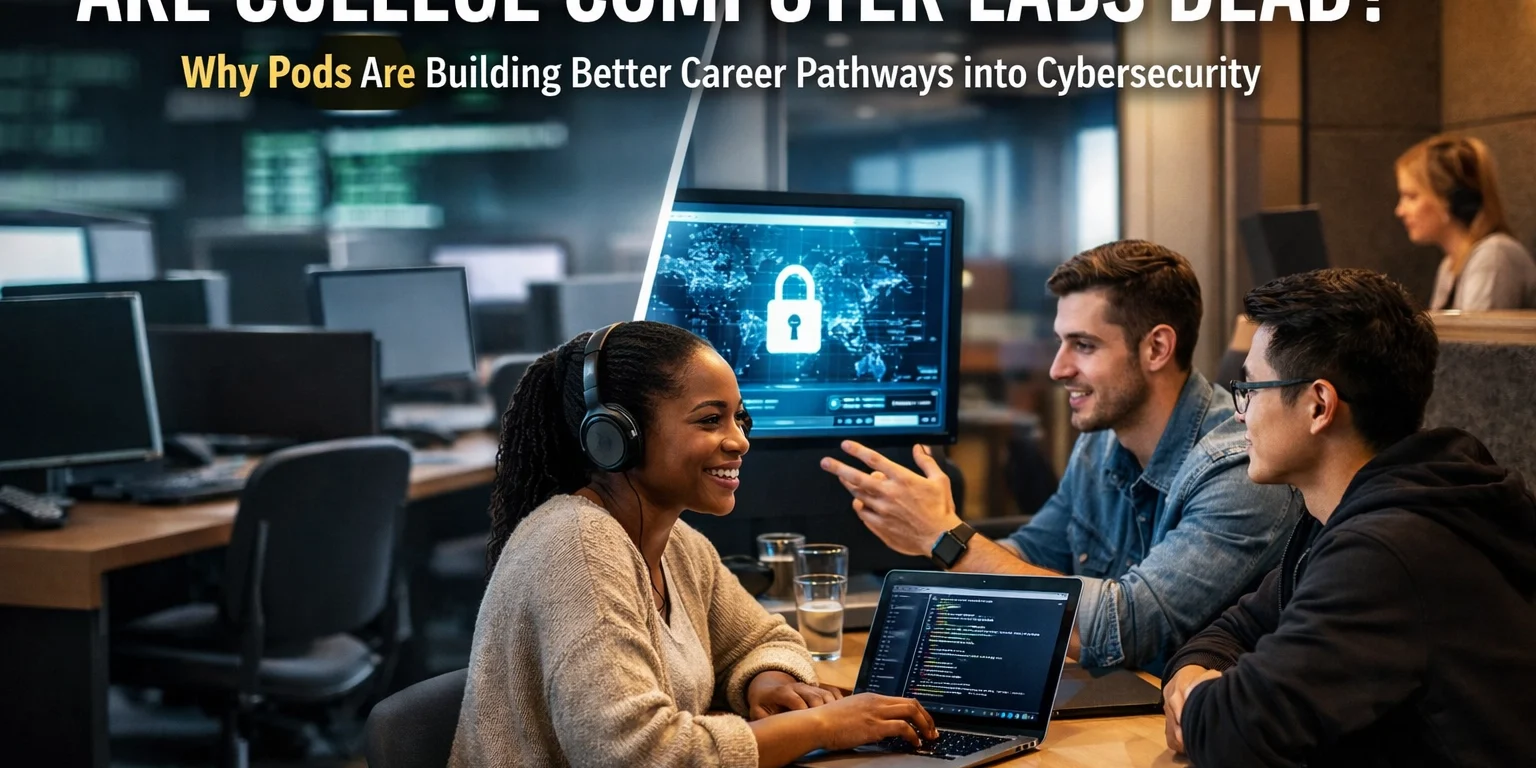
Remember when college computer labs were the heartbeat of campus tech culture? Students crowded around bulky monitors, scrambling for workstations during finals week, while others camped out overnight to finish projects on machines loaded with expensive software their personal laptops couldn't handle. That era is rapidly fading into memory.
Recent data reveals that over 90% of students now arrive on campus with their own laptops, and traditional computer labs frequently operate at less than 40% capacity even during peak usage periods. An EDUCAUSE poll found that computer labs ranked as the number one campus facility requiring improvement, with nearly 90% of respondents agreeing that substantial changes are needed. The writing isn't just on the wall: it's been there for years, and institutions are finally reading it.
But the decline of traditional computer labs doesn't mean the end of specialized technical infrastructure on campus. Instead, a new model is emerging: Pods. These aren't your father's computer labs. They're purpose-built, career-focused spaces designed around specific industry pathways rather than generic computing access. And they're changing how students prepare for high-demand careers in cybersecurity, logistics, and content creation.
The Pod Revolution: Purpose Over Presence
Traditional computer labs failed because they tried to be everything to everyone. A graphic design student sat next to a computer science major who shared a workstation row with someone just checking email. The result? Expensive, underutilized spaces that satisfied no one particularly well.

Pods flip that model entirely. Rather than offering rows of identical machines, Pods are dedicated environments built around specific career pathways and industry needs. A cybersecurity Pod, for instance, isn't just computers with antivirus software: it's a fully configured environment with penetration testing tools, virtual machine sandboxes, network simulation equipment, and secure isolated networks where students can practice real-world defensive and offensive security techniques without risking actual systems.
This specialization matters because modern career preparation requires more than software access. It demands authentic environments that mirror actual workplace conditions, collaborative spaces where students learn team-based problem-solving, and hands-on experience with industry-standard tools and workflows that employers expect from day one.
Building Cybersecurity Careers Through Immersive Environments
Cybersecurity represents one of the fastest-growing career fields, with hundreds of thousands of unfilled positions annually and projected growth continuing for the next decade. Yet traditional computer labs were spectacularly ill-equipped to prepare students for this field. Running a simulated cyberattack on a shared campus network? Not happening. Setting up a vulnerable system for penetration testing practice? Security concerns shut that down immediately.

Cybersecurity Pods solve this problem by creating isolated, realistic training environments. Students work on actual security operations center (SOC) equipment, practice incident response on simulated but realistic networks, and develop skills with the same tools they'll use in professional roles: from Wireshark and Metasploit to Security Information and Event Management (SIEM) platforms like Splunk or QRadar.
The physical infrastructure matters tremendously here. Cybersecurity professionals don't work alone at individual workstations; they collaborate in SOC environments, communicate across teams during incidents, and coordinate responses in real time. Pods replicate this structure, with multiple monitors for different data streams, collaborative workbenches for team-based analysis, and dedicated spaces for scenario-based learning that traditional rows of desktop computers simply cannot accommodate.
This approach produces measurably different outcomes. Students gain hands-on experience that translates directly to industry certifications like CompTIA Security+, Certified Ethical Hacker (CEH), and Cisco CyberOps Associate. More importantly, they develop practical problem-solving skills and collaborative workflows that employers consistently identify as critical gaps in traditional computer science education.
Logistics Pathways: Where Physical and Digital Infrastructure Converge
While cybersecurity might seem like an obvious fit for specialized tech Pods, logistics represents an equally compelling use case that traditional computer labs completely missed. Modern logistics and supply chain management blend physical operations, data analytics, inventory management systems, and increasingly sophisticated automation technologies. Preparing students for these careers requires infrastructure that bridges multiple domains.
Logistics Pods integrate supply chain management software, warehouse management systems, transportation management platforms, and data visualization tools within collaborative environments where students can simulate real-world scenarios. A student might spend their morning optimizing routing algorithms for last-mile delivery, their afternoon analyzing inventory turnover data across multiple distribution centers, and their evening collaborating with teammates on a capstone project that mirrors actual corporate supply chain challenges.

The career pathway advantages are substantial. Supply chain disruptions during recent global events highlighted the critical importance of logistics professionals who can think systematically across complex networks, analyze data rapidly to identify bottlenecks, and implement technology solutions that improve efficiency. Traditional computer labs offered none of this contextual learning. Logistics Pods provide dedicated spaces where students work with industry-standard platforms like SAP, Oracle SCM, or Manhattan Associates: expensive enterprise software that few students could access otherwise.
Beyond software access, these Pods foster the collaborative problem-solving and cross-functional thinking that logistics careers demand. Students learn to communicate across different roles: procurement, warehousing, transportation, analytics: because the Pod environment is specifically designed to support those interactions rather than isolating students at individual workstations.
Content Creation: Democratizing Professional Production
Perhaps the most unexpected beneficiary of the Pod model is content creation, a field that barely existed in recognizable form when most campus computer labs were designed. Today's content economy spans video production, podcast creation, social media management, digital marketing, live streaming, and multimedia journalism: each requiring specialized equipment, software, and collaborative workflows that traditional labs never accommodated.
Content Creation Pods provide professional-grade production infrastructure: high-performance editing workstations with color-accurate monitors, audio production equipment including mixing boards and quality microphones, video editing suites with rendering power for 4K and higher resolution projects, and streaming setups that mirror professional broadcast environments.
The career implications extend well beyond traditional media roles. Nearly every industry now requires content creation capabilities. Marketing departments need video editors. Corporate communications teams require podcast producers. Small businesses seek social media managers who can create compelling visual content. Healthcare organizations need professionals who can develop educational videos. The list continues across virtually every sector.
What distinguishes Content Creation Pods from traditional labs is the integration of workflow and collaboration. Professional content creation rarely happens in isolation. A video project involves scriptwriting, filming, editing, sound design, color grading, and distribution strategy: often with different people handling different aspects. Pods are designed around these collaborative production workflows, with spaces for planning, active production areas, quiet editing zones, and review stations where teams can evaluate work together.
Why Pods Succeed Where Traditional Labs Failed
The transition from generic computer labs to specialized Pods represents more than physical redesign: it reflects a fundamental shift in how institutions think about technical education and career preparation. Traditional labs prioritized access: get students in front of computers with software installed. Pods prioritize outcomes: prepare students for specific career pathways with authentic tools and realistic workflows.
This distinction matters economically as well as educationally. Traditional labs required constant hardware refreshes across dozens or hundreds of identical machines, consumed valuable real estate for underutilized space, and offered minimal differentiation that could attract students or satisfy employer needs. Pods concentrate resources on career-focused infrastructure that directly connects to employment outcomes, creating stronger value propositions for both students evaluating educational investments and institutions competing for enrollment.
The data supports this approach. Cloud-based solutions and virtual desktop environments can handle general computing needs for the 90% of students who arrive with personal laptops. What those solutions cannot effectively replicate is the hands-on, collaborative, industry-authentic learning environment that Pods provide. Students don't need another place to check email or write papers: they already have that capability. They need specialized spaces where they can develop career-specific skills that translate directly to employment opportunities.
The Future of Campus Technical Infrastructure
As traditional computer labs continue their decline, the Pod model offers a forward-looking alternative that aligns technical infrastructure with career outcomes. Rather than maintaining expensive, generic spaces that serve fewer students each year, institutions can invest strategically in specialized environments that prepare students for high-demand careers in fields like cybersecurity, logistics, and content creation.
This shift also reflects broader changes in how students and employers think about technical education. The question is no longer whether students can access computers: they can, and they do, from devices they already own. The relevant question is whether educational institutions provide the specialized, industry-authentic environments where students can develop practical skills that employers value and that traditional computer labs never adequately supported.
Pods aren't perfect solutions for every situation, but they represent a purposeful evolution beyond the one-size-fits-none approach that defined traditional computer labs. By focusing on specific career pathways, investing in industry-standard tools and workflows, and creating collaborative environments that mirror professional settings, Pods are building better bridges between education and employment in fields where that connection matters most.





