
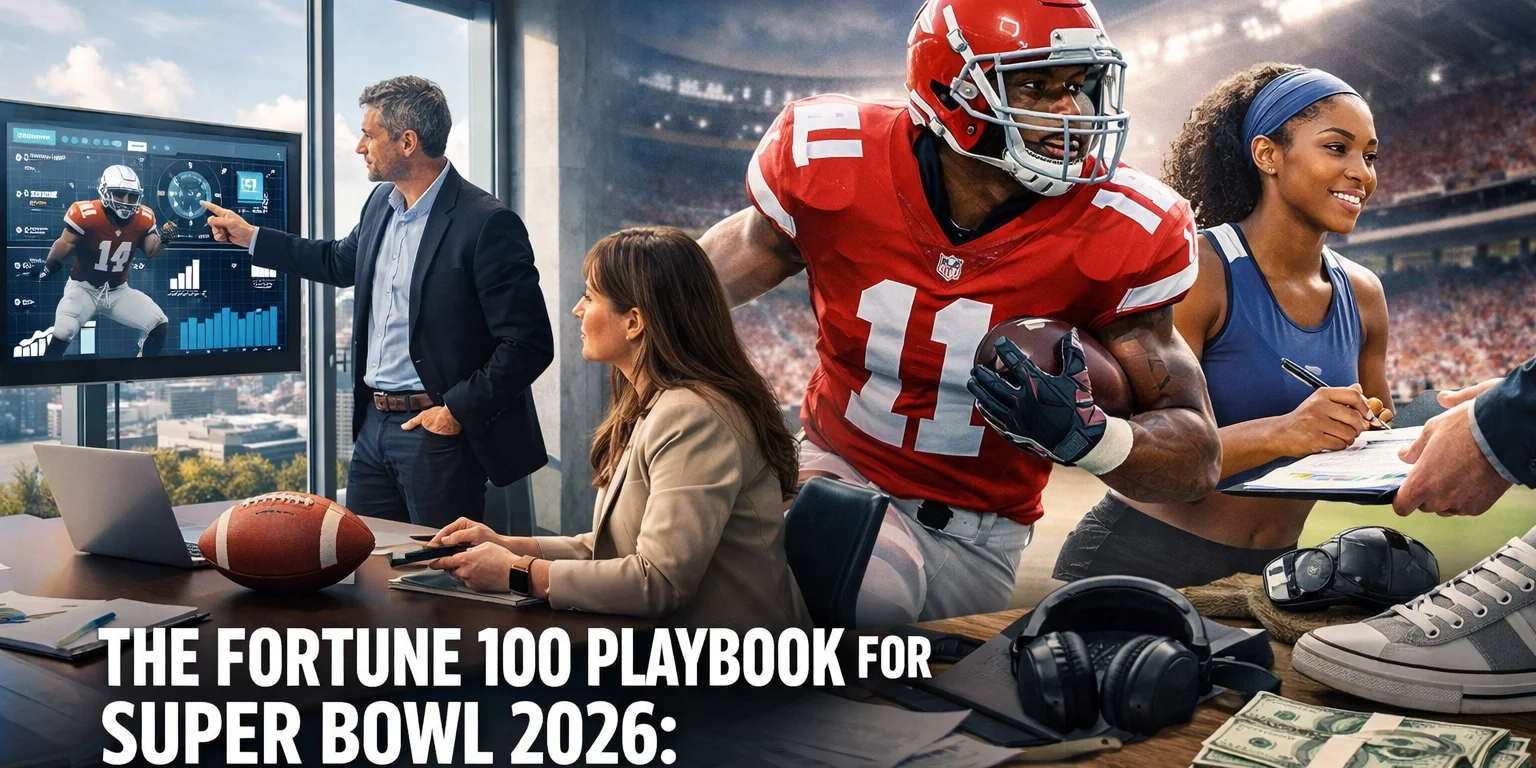
The Super Bowl has always been marketing's most expensive stage. A thirty-second spot during the 2025 game cost approximately $7 million, reaching over 120 million viewers. Yet for all that reach, most brands struggle to demonstrate lasting impact beyond a temporary spike in brand awareness. Fortune 100 companies are now approaching Super Bowl 2026 differently: not as a single-day advertising opportunity, but as the centerpiece of a multi-year talent infrastructure strategy built on Name, Image, and Likeness (NIL) partnerships.
This shift represents a fundamental reframing of sports marketing investment. Rather than paying established celebrities millions for fleeting endorsements, leading brands are sponsoring emerging student-athletes as content creators, treating these partnerships as extended job interviews while simultaneously building permanent recruitment pipelines. The result is a playbook that transforms Super Bowl activation from a marketing expense into a talent development asset.
The End of Traditional Endorsements
The traditional celebrity endorsement model follows a predictable pattern: brands pay established athletes or entertainers substantial fees to appear in advertisements, hoping their fame transfers to product appeal. The relationship typically ends when the campaign concludes, leaving brands with temporary visibility but no lasting organizational capability.
NIL partnerships operate under different economics and objectives. When Fortune 100 brands sponsor student-athletes to create content, they're investing in developing talent they may eventually hire. A brand might sponsor a college quarterback's social media content today, evaluating their creativity, work ethic, and audience engagement, with the explicit goal of offering them a marketing coordinator position after graduation. The sponsorship becomes a paid audition that benefits both parties: the student-athlete develops their personal brand and gains professional experience, while the company identifies and cultivates future employees.

According to industry analysis, this approach delivers authenticity and engagement rates that consistently outperform traditional celebrity endorsements. Student-athletes maintain genuine connections with younger demographics that Fortune 100 brands struggle to reach through conventional advertising. More importantly, these partnerships create measurable talent pipelines that extend far beyond game day.
Building Infrastructure That Outlasts the Event
The smartest Fortune 100 brands are using their Super Bowl budgets to establish permanent educational infrastructure rather than funding temporary activations. This includes dedicated esports facilities in schools, content creation studios, and innovation labs that carry brand presence year-round while supporting ongoing talent development.
Consider the strategic advantages: a brand that establishes an esports education center at a major university gains continuous visibility to students in that program for years, potentially decades. The facility provides professional-level equipment and training while creating a natural recruitment pathway. Students who develop their skills in branded facilities develop professional relationships with company representatives, participate in branded competitions, and become familiar with the company's culture long before formal job applications.
These permanent installations transform one-time marketing expenditures into long-term talent community investments. The facilities remain operational regardless of which city hosts the Super Bowl, creating distributed talent networks across multiple institutions and geographic regions.
Geographic Flexibility Without Location Constraints
Traditional Super Bowl marketing concentrates resources in the host city during game week. The 2026 Super Bowl takes place in Phoenix, Arizona, naturally drawing marketing focus to that metropolitan area. NIL partnerships enable Fortune 100 brands to build local credibility in college towns nationwide while simultaneously dominating the host city, creating what amounts to a distributed talent network.
A brand can sponsor student-athletes at universities in Michigan, Texas, Florida, and California while maintaining prominent activation in Phoenix during Super Bowl week. This geographic flexibility allows brands to establish year-round presence in communities with high concentrations of emerging talent, rather than limiting their visibility to a single location for a single week.

The practical implications are significant. Brands can identify promising content creators in multiple markets, support their development throughout their college careers, and maintain relationships regardless of where those individuals relocate after graduation. This creates a national talent pipeline that extends beyond traditional recruiting constraints.
The Measurement Revolution
Fortune 100 companies implementing NIL-powered Super Bowl strategies are tracking fundamentally different metrics than those measuring traditional advertising campaigns. While impressions and reach remain relevant, the priority shifts to talent pipeline development indicators: how many campaign participants were converted into talent community members, how many submitted portfolios, how many participated in professional development programs, and ultimately, how many became interns or full-time employees.
This measurement approach acknowledges that Super Bowl marketing should generate organizational capabilities, not just temporary visibility. A successful campaign becomes one that identifies dozens of promising content creators, provides them with professional development opportunities, and converts a meaningful percentage into long-term contributors to the company's marketing ecosystem.
The data requirements differ substantially from traditional campaign analytics. Brands need systems to track individual relationships over years, measure skill development, and quantify the quality of talent entering their recruitment pipelines. This requires integration between marketing, human resources, and talent development functions that rarely coordinate in traditional endorsement models.

Beyond Campaigns: Organizational Capabilities
The most culturally successful brands: companies like New Balance, American Eagle, Sephora, and Spotify: treat cultural moments as organizational capabilities rather than isolated campaigns. They build decision-making structures specifically designed around creator ecosystems and talent communities rather than rigid functional silos.
This organizational approach recognizes that authentic cultural engagement requires sustained commitment and specialized expertise. Brands that excel in NIL partnerships typically establish dedicated teams responsible for identifying emerging talent, managing ongoing relationships, coordinating professional development opportunities, and eventually facilitating hiring processes.
These teams operate continuously, not just during Super Bowl season. They maintain relationships with dozens or hundreds of student-athletes throughout the year, providing consistent support and guidance while the athletes develop their skills and audiences. This sustained engagement creates genuine partnerships that audiences recognize as authentic, generating substantially higher engagement than transactional endorsement deals.
The Talent Community Conversion Strategy
Forward-thinking Fortune 100 brands are implementing talent community conversion strategies during Super Bowl activations. Rather than treating stadium attendees or digital audiences as passive consumers, they're creating pathways for interested individuals to join ongoing talent development programs.
This might include QR codes at stadium activations that direct participants to portfolio submission portals, dedicated social media communities where aspiring creators can connect with brand representatives, or structured application processes for professional development programs. The goal is transforming one-time event attendees into long-term talent community members who receive ongoing support and consideration for future opportunities.
The conversion metrics provide clearer ROI than traditional advertising measurements. A brand can calculate the value of identifying and developing talent who eventually contribute to marketing campaigns or join the organization as employees. These calculations typically demonstrate substantially higher returns than temporary visibility generated by conventional Super Bowl advertisements.
Implementing the Playbook
Fortune 100 executives considering NIL-powered Super Bowl strategies should recognize that successful implementation requires organizational alignment beyond marketing departments. Human resources, talent development, content creation, and legal teams all play essential roles in managing these complex, long-term partnerships.
The investment timeline extends far beyond a single Super Bowl. Brands should anticipate supporting student-athletes throughout their college careers, providing consistent guidance and opportunities while evaluating their potential as future employees or long-term brand ambassadors. This requires patience and sustained commitment that differs substantially from traditional campaign cycles.
However, the strategic advantages justify the organizational complexity. Brands that successfully implement NIL-powered talent development strategies build competitive advantages that compound over time. Each cohort of sponsored student-athletes represents potential future employees, brand ambassadors, and content creators who understand the company's culture and values from years of partnership.
The Future of Sports Marketing Investment
The NIL revolution represents more than a new category of endorsement deals. It signals a fundamental shift in how Fortune 100 companies approach sports marketing investment: from temporary visibility purchases to long-term talent infrastructure development. Super Bowl 2026 provides an ideal proving ground for this approach, where brands can demonstrate that the biggest game in American sports can serve as the foundation for decade-long talent development strategies.
As traditional Super Bowl advertising delivers diminishing returns, the brands that treat cultural moments as organizational capabilities rather than isolated campaigns will establish the competitive advantages that define the next era of marketing excellence. The playbook is available; implementation separates leaders from followers.
For Fortune 100 executives evaluating Super Bowl 2026 strategies, the question is no longer whether NIL partnerships merit consideration, but whether their organizations can build the infrastructure and capabilities required to maximize their strategic potential. The brands that answer affirmatively will transform marketing budgets into talent development assets that compound in value long after the final whistle.





