
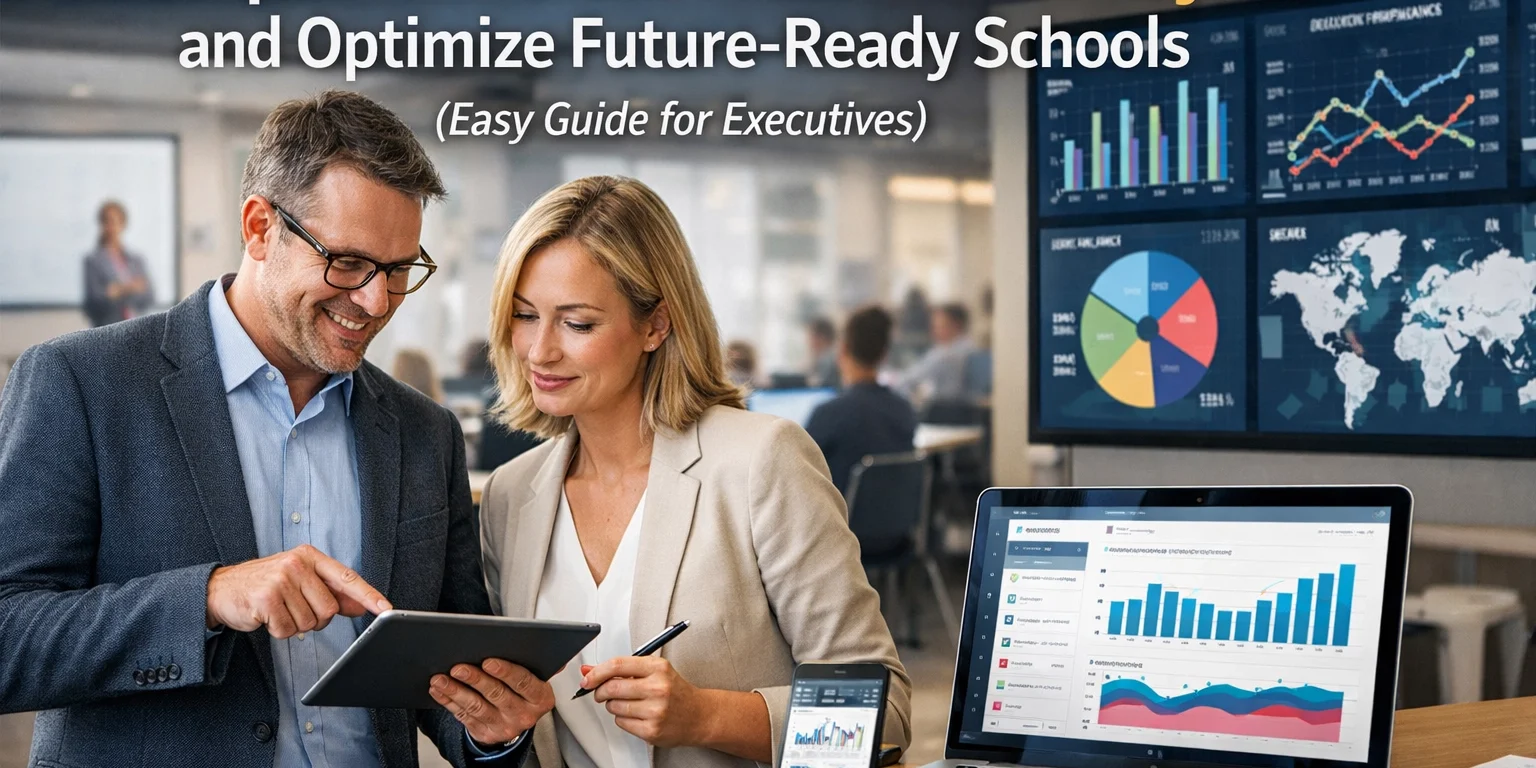
As we navigate through early 2026, the traditional model of educational administration is undergoing a fundamental transformation. For school executives, the challenge is no longer just about managing facilities or curriculum; it is about steering an institution through a data-rich landscape where "Future Ready" is the standard, not an aspiration.
At USA Entertainment Ventures LLC, we see this shift daily. Schools are evolving into sophisticated hubs that mirror modern corporations. They require real-time insights to manage everything from student performance to the complexities of Name, Image, and Likeness (NIL) opportunities for student-athletes. To stay ahead, executives must embrace data analytics dashboards as the primary tool for institutional health.
The New Standard: Why Real-Time Analytics?
In the past, educational data was often "post-mortem." We looked at test scores or attendance figures weeks or months after the fact. By then, the opportunity to pivot had passed. Today, real-time analytics allow for proactive decision-making.
Imagine a dashboard that alerts an administrator the moment a student's engagement in digital media literacy modules drops, or a system that tracks the economic impact of NIL programs on the local community in real-time. This is the bedrock of a Future-Ready school. By integrating these insights, executives can move from guessing to knowing.

Step 1: Establish Clear Objectives and Identify Stakeholders
The first step in any successful digital transformation is defining what success looks like. For a school executive, this means identifying the key metrics that drive your institution's mission. Are you focused on improving media literacy outcomes? Are you trying to streamline the management of NIL contracts for your athletes?
Before looking at software, gather your stakeholders. This includes department heads, IT directors, and even student representatives.
- Define Priorities: Identify if your immediate need is early intervention for at-risk students or optimizing the rollout of new workforce initiatives.
- Stakeholder Alignment: Ensure that those who will be using the dashboards daily: the teachers and coaches: understand the value.
By setting these objectives early, you ensure that the analytics system serves the school, rather than the school serving the data. For more on how we approach these strategic alignments, visit our services page.
Step 2: Invest in Data Quality and Dashboard Infrastructure
A dashboard is only as good as the data flowing into it. For Future-Ready schools, this infrastructure must be robust and secure. Executives should prioritize platforms that offer interoperability: meaning the data from the classroom, the athletic department, and the financial office can all talk to each other.
Modern analytics dashboards should focus on three main pillars:
- Academic Performance: Real-time tracking of curriculum mastery.
- Engagement Metrics: Monitoring student participation in digital literacy and media programs.
- Specialized Outcomes: Tracking NIL education progress and financial literacy benchmarks for student-athletes.
Reliable data allows you to spot trends before they become problems. If the data shows a sudden dip in media literacy scores across a specific grade level, you can investigate the cause immediately. This level of oversight is essential for institutions aiming to be an anchor in their community.

Step 3: Prioritize Media Literacy and NIL Education
In 2026, media literacy is no longer an elective; it is a core survival skill. Future-Ready schools are those that treat media literacy with the same rigor as mathematics. Executives must use analytics to measure how effectively students are navigating the digital world.
Furthermore, the rise of NIL (Name, Image, and Likeness) has introduced a corporate element to high school and collegiate environments. Students are now mini-brands.
- Media Literacy Outcomes: Use analytics to track how well students understand digital footprints, brand management, and content creation.
- NIL Dashboards: Implement systems that help students and parents track compliance, earnings, and educational milestones related to their personal brands.
By positioning your school as a leader in NIL education, you provide a service that is highly valued by modern families. This isn't just about athletics; it’s about preparing students for the modern workforce. You can learn more about our perspective on these trends in our guide on national workforce infrastructure.
Step 4: Build Data Literacy Among Your Leadership Team
Having the best dashboard in the world won't matter if your team doesn't know how to read it. One of the biggest hurdles in educational consulting is the "data gap": the space between having information and knowing how to act on it.
Executive leadership must invest in professional development that focuses on data interpretation. This doesn't mean every principal needs to be a data scientist. It means they need to understand:
- Trend Identification: Distinguishing between a one-time dip and a systemic problem.
- Actionable Insights: Knowing exactly what intervention to trigger when a metric hits a certain threshold.
- Ethical Data Use: Ensuring student privacy is protected while still utilizing data to improve outcomes.
Training your team to be data-literate ensures that your investment in technology translates into actual student success. At USA Entertainment Ventures LLC, we emphasize this human element as much as the technology itself. Read more about our philosophy on our about us page.

Step 5: Implement Adaptive Management and Continuous Improvement
The final step is to create a culture of "constant calibration." Real-time analytics provide a feedback loop. If you implement a new media literacy program and the data doesn't show improvement within the first quarter, you don't wait until the end of the year to change it. You adapt.
Adaptive management involves:
- Pilot Programs: Testing new analytics features in one department before a full rollout.
- Regular Audits: Checking both the data integrity and the effectiveness of the interventions.
- Forward-Looking Adjustments: Using current data to project future needs, such as hiring more media specialists or NIL consultants based on student interest.
This iterative process keeps the school "Future Ready." It shows parents, students, and the community that the institution is agile and committed to excellence.

Positioning Your School as a Community Anchor
Schools that successfully implement real-time analytics do more than just improve grades. They become anchors for the regional economy. By producing students who are media-literate and savvy in the NIL landscape, you are feeding the workforce with high-value talent.
Executives at the helm of these institutions are no longer just administrators; they are visionaries using data to build a better future. USA Entertainment Ventures LLC is proud to support these leaders as they navigate this transition. We believe that with the right tools and a clear strategy, any school can become a beacon of "Future Ready" education.
Summary Checklist for Executives
To recap, here is your path to optimizing your school through analytics:
- Identify your specific goals (NIL, Media Literacy, Academic Growth).
- Build a clean, interoperable data infrastructure.
- Integrate specialized modules for modern needs like NIL management.
- Educate your staff on how to use dashboards effectively.
- Adapt your strategies based on the real-time feedback the data provides.
The transition to a data-driven, Future-Ready school is a journey, not a destination. By taking these five steps, you ensure that your institution remains relevant, efficient, and, most importantly, centered on the success of the students.
If you are ready to explore how real-time analytics can transform your institution, we invite you to reach out to us. Our team at USA Entertainment Ventures LLC is here to help you navigate the complexities of modern educational consulting. Let’s build the future of education together.





