
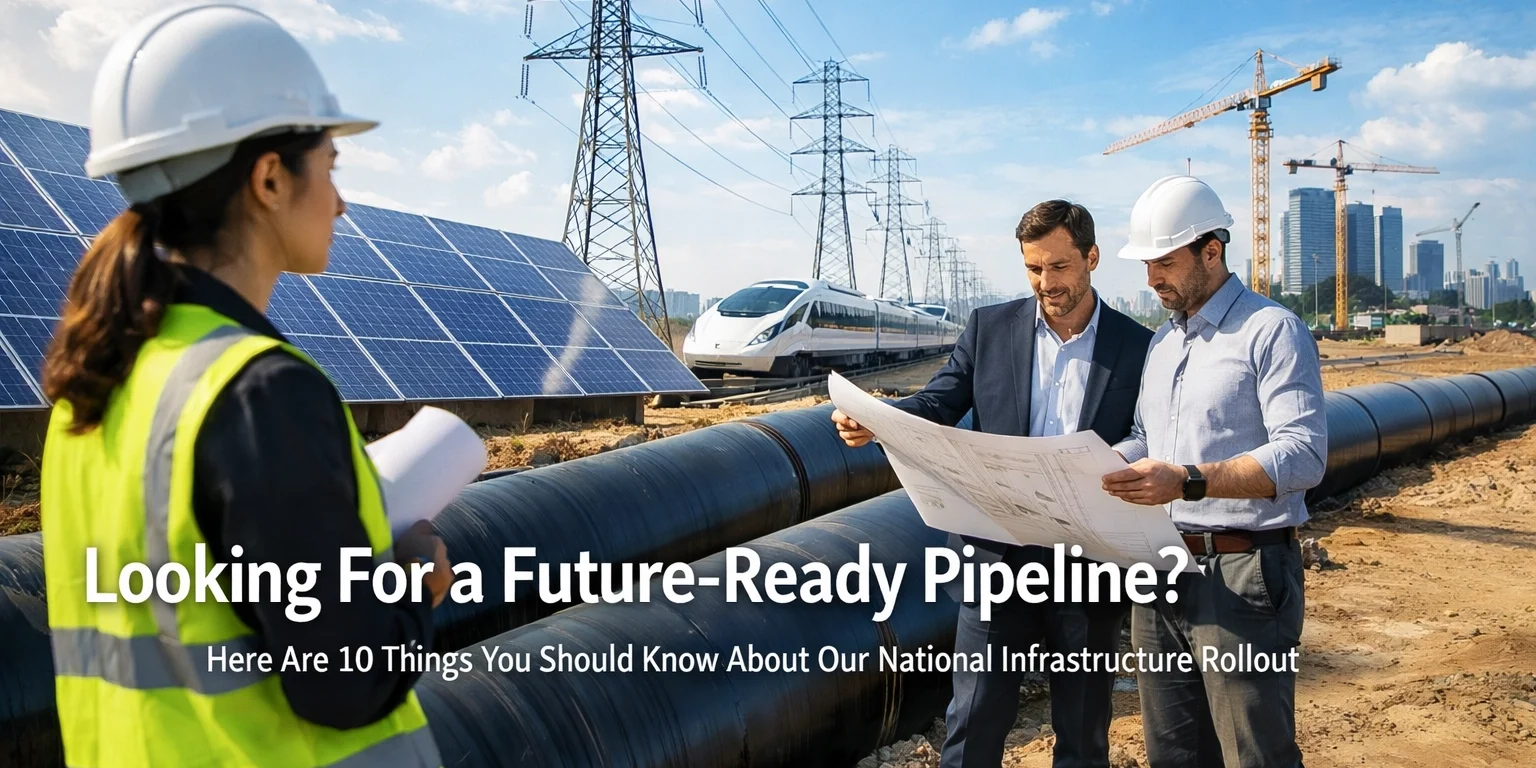
As of February 28, 2026, the American economic landscape has moved beyond the theoretical planning phases of post-pandemic recovery and into a high-velocity execution stage. For Fortune 100 executives, the focus has shifted from "where will the growth come from?" to "how quickly can we scale the infrastructure required to support it?" Under the leadership of CEO Dan Kost, USA Entertainment Ventures LLC is at the forefront of this transition, facilitating a national rollout that redefines what "infrastructure" means in a digitized, AI-driven global economy.
This rollout is not merely about pouring concrete or laying fiber-optic cables. It is about the creation of a career-ready pipeline that integrates physical logistics with digital literacy. By viewing workforce development as a physical distribution system, we are addressing the talent shortage with the same rigor that one would apply to a global supply chain.
1. The 2026 Execution Era: Moving Beyond the "Funding Cliff"
A primary concern for many C-suite executives over the last two years has been the potential for a "funding cliff" as federal stimulus programs reached their sunset clauses. However, current data indicates that 2026 is actually a peak execution year. Because the landmark legislation of previous years was structured with multi-year authorization windows: particularly for highways, transit capital, and grid modernization: the capital is more available now than at any point in the previous decade.
For major corporations, this means the risk of project abandonment is at a record low. The stability of these multi-year timelines allows for long-range planning in capital expenditures, ensuring that the infrastructure supporting your operations will remain a priority through the federal FY 2026 budget cycle and beyond.

2. Esports as a "Trojan Horse" for Cloud and AI Literacy
One of the most innovative components of our national infrastructure rollout is the utilization of esports as a primary vehicle for technical education. At USA Entertainment Ventures LLC, we categorize esports not just as entertainment, but as a "Trojan Horse" for high-level digital literacy.
To the casual observer, an esports arena is a venue for gaming. To a Fortune 100 executive, it is a localized laboratory for cloud computing, low-latency networking, and real-time AI optimization. Young professionals engaging in this ecosystem are inadvertently training in the very disciplines required to maintain modern corporate IT environments. By investing in this infrastructure, we are creating a self-sustaining pipeline of workers who are fluent in the back-end architecture of the future economy.

3. The Physical Distribution System for Workforce Development
Traditional workforce development often fails because it lacks the "last mile" delivery component. We have reimagined talent acquisition as a physical distribution system. Just as a logistics company utilizes regional hubs to move goods, our rollout utilizes localized centers to deliver specialized training.
This model ensures that "career-ready" infrastructure is deployed directly into the communities where the labor is needed. By decentralizing training and integrating it into regional infrastructure projects, we reduce the friction between education and employment, creating a more responsive and agile workforce. More information on this localized approach can be found on our About Us page.
4. Addressing the Energy Demands of the Data Center Boom
The explosion of AI and cloud-based services has placed an unprecedented strain on the national power grid. 2026 marks a critical juncture where dispatchable generation must keep pace with data center expansion. Our infrastructure rollout prioritizes the expansion of natural gas pipelines and grid modernization to ensure that data centers: the brains of the Fortune 100: remain operational and scalable.
Current projections suggest over 22 Bcf/d of projected pipeline capacity additions are being integrated into the grid as permitting reform advances. This energy infrastructure is the literal lifeblood of the AI revolution, providing the reliability that renewable-only solutions cannot yet guarantee at scale.
5. Modernized Permitting and Expedited Timelines
For years, the greatest barrier to infrastructure rollout was not capital, but bureaucracy. In 2026, we are seeing the fruits of significant permitting reform. Environmental review processes have been modernized to clarify NEPA standards and establish predictable federal timelines.
States like New York and California, which were historically difficult environments for infrastructure development, are now implementing fast-track permitting authorities to meet affordability and reliability concerns. This regulatory shift is a green light for executives to initiate large-scale projects that would have been stalled indefinitely just five years ago.

6. The Convergence of Digital and Physical Infrastructure
The silos between "digital" and "physical" infrastructure have effectively collapsed. Today, a new bridge is not just a transportation asset; it is a sensor-laden data node. A new highway is a testing ground for autonomous logistics. Our national rollout treats every physical asset as a digital asset, ensuring that the investments made today are compatible with the technological standards of 2030.
This convergence allows for real-time monitoring of infrastructure health, significantly lowering long-term maintenance costs and providing Fortune 100 companies with the data they need to optimize their own logistics and supply chains.
7. Strategic Public-Private Partnerships (P3)
The 2026 rollout relies heavily on a more sophisticated P3 model. Instead of simple outsourcing, we are seeing "Construction Manager/General Contractor" partnerships that allow for early collaboration during the design phases. This collaborative approach minimizes cost overruns and accelerates delivery timelines.
USA Entertainment Ventures LLC acts as a bridge in these partnerships, ensuring that private sector efficiency meets public sector scale. This synergy is essential for projects that are too large for a single entity but too critical to be left to the slow pace of traditional government procurement.
8. Resilience as a Competitive Advantage
In an era of climate volatility and geopolitical shifts, resilience has become a core business metric. Our infrastructure rollout focuses on "hardening" assets against environmental and cyber threats. This includes water system upgrades and the implementation of microgrids that can operate independently during larger grid failures.
For an executive, this resilience translates to business continuity. An investment in future-ready infrastructure is an insurance policy against the systemic shocks that have defined the early 2020s.

9. Career-Ready Pipelines: Beyond Construction
While infrastructure often brings to mind hard hats and heavy machinery, the 2026 rollout is equally focused on the "soft" infrastructure of career pathways. We are expanding the definition of apprenticeship beyond the trades and into healthcare, IT, and financial services.
By integrating these pathways into the national infrastructure rollout, we are ensuring that the labor market remains fluid. This prevents the "talent bottlenecks" that often stifle corporate growth during periods of economic expansion. You can explore the various projects we manage in this space by visiting our Project Portfolio.
10. Scalability and the 2027 Outlook
As we look toward 2027, the primary goal of the current rollout is scalability. The systems we are putting in place today: whether they are pipeline expansions in the Southwest or AI-literacy hubs in the Midwest: are designed to be modular.
For Fortune 100 companies, this means the infrastructure is ready to grow with you. We are moving away from bespoke, one-off projects and toward a standardized national framework that allows for rapid replication and expansion. This is the hallmark of a truly future-ready pipeline.
Strategic Implementation for Executive Leadership
The transition to a future-ready infrastructure requires more than just capital; it requires a strategic pivot in how leadership views growth. Infrastructure is no longer a background condition of doing business; it is a proactive lever for gaining competitive advantage.
By aligning your corporate strategy with the current national rollout: specifically focusing on digital-physical convergence and the new workforce distribution models: you can insulate your organization from the volatility of the talent market and the energy grid.
The work being done by USA Entertainment Ventures LLC is designed to facilitate this alignment. We invite you to review our National Workforce Infrastructure Rollout guide for a more granular look at how these ten points can be integrated into your specific industry.
The infrastructure of 2026 is built on the realization that our physical, digital, and human assets are inextricably linked. Those who recognize this synergy today will be the ones leading the global market tomorrow. Through the strategic application of AI literacy, energy resilience, and modern logistics, we are not just building roads; we are building the foundation for the next century of American commerce.





