
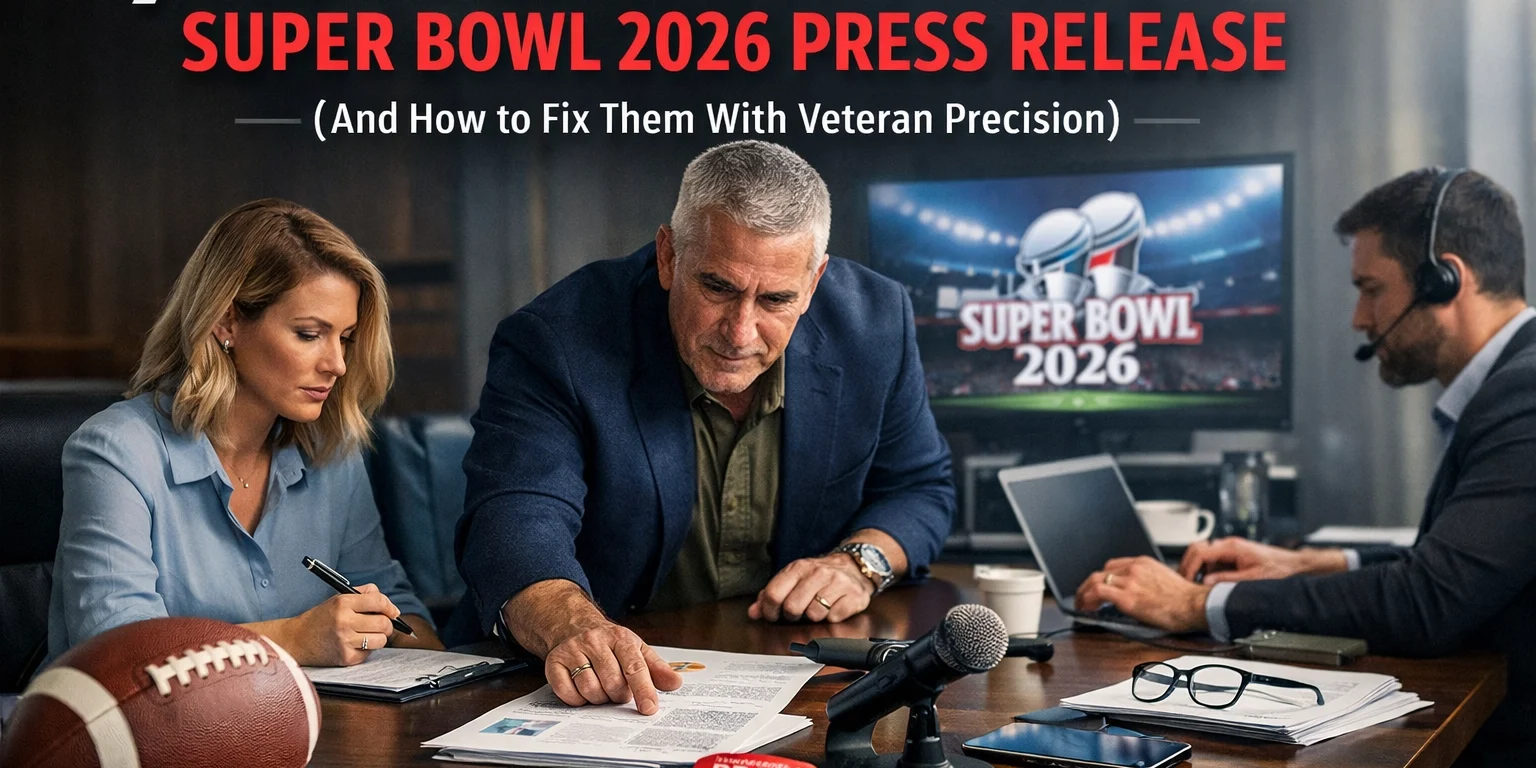
As the calendar turns toward February 2026, the global spotlight is intensifying on what promises to be one of the most significant sporting spectacles in history. For brands, agencies, and consultants, this isn't just another Sunday; it is the ultimate arena for visibility. However, with the high stakes of "The Big Game" comes a minefield of potential errors that can derail even the most expensive marketing campaigns.
At USA Entertainment Ventures LLC, led by CEO Dan Kost, we understand that success in this environment requires more than just a big budget. It requires veteran precision. Drawing from Sports Media’s 40-year legacy of dominating the arena, we’ve identified the critical errors that companies make when drafting their press releases and, more importantly, how to fix them to ensure maximum ROI.
The Magnitude of the 2026 Stage
Before diving into the mechanics of a press release, one must understand the scale. Super Bowl 2026 is projected to break viewership records, blending traditional broadcast power with an increasingly complex digital landscape. Industry experts suggest that the integration of augmented reality and real-time social engagement will make this event a "future-ready" milestone.
To navigate this, businesses must adopt a mindset of "Veteran Precision." This isn't about trial and error; it’s about applying four decades of sports media expertise to a modern digital world.
Mistake 1: Ignoring the Trademark Landmines
Perhaps the most common: and costly: mistake is the improper use of protected trademarks. Many brands mistakenly believe they can freely use the term "Super Bowl" in their press release headlines or promotional copy.
The Fix: Use descriptive language. Refer to the event as "The Big Game," "The Championship in February," or "Big Game Sunday." As noted by legal experts in sports marketing, implying an official endorsement or affiliation where one does not exist can lead to immediate cease-and-desist orders, neutralizing your press release before it even gains traction. Veteran precision means knowing the rules of the field before you step onto it.
Mistake 2: Failing to Leverage a Multi-Decadal Legacy
In a world obsessed with the "new," many press releases fail to anchor their message in credibility. They treat the 2026 event as an isolated incident rather than part of a storied tradition.
The Fix: Align your narrative with established authority. Our team at USA Entertainment Ventures LLC leverages a 40-year legacy through Sports Media. When your press release mentions that you are working with a group that has dominated the arena for four decades, it adds a layer of "Social Proof" that data alone cannot provide. This historical context signals to journalists and stakeholders that your brand is stable, experienced, and reliable.
Mistake 3: The Absence of Rich Media (The Video Gap)
In 2026, a text-only press release is essentially invisible. If your release doesn't show the "Arena" you are dominating, the reader will move on in seconds. High-ranking executives and media outlets prioritize visual storytelling.
The Fix: Embed high-quality video content that demonstrates your presence and expertise. A prime example of this is seen in the Sports Media legacy showcase, which illustrates the power of veteran presence in the sports world.
https://www.youtube.com/watch?v=l6J-0zileKE
By including dynamic video, you aren't just telling the media what you do; you are showing them the ROI in action. This is a foundational element of our agency services, where we prioritize "tangible connections."

Mistake 4: Overlooking the National Infrastructure Connection
Many press releases are "top-heavy": they focus on the glitz of the game but ignore the logistics that make the brand's participation possible. In the lead-up to 2026, the national infrastructure and the rollout of new media pipelines are just as important as the game itself.
The Fix: Connect your story to the broader picture. How does your product or service fit into the national rollout of technology or infrastructure? By positioning your brand as a "future-ready" entity, you appeal to business consultants and B2B partners who are looking for long-term stability. For more insights on how this works, we recommend reviewing our national infrastructure rollout guide.
Mistake 5: Neglecting Tangible Fan Engagement
A press release that only talks about "brand awareness" is missing the mark. In 2026, ROI is measured by tangible connections: how did the consumer actually feel and interact with the brand?
The Fix: Detail your engagement strategy. Are you creating an experience that sticks? Dan Kost often highlights that the goal is to create "sticky" connections. Whether it’s through digital activation or physical fan zones, your press release should highlight how you are moving beyond passive viewing. You can find strategies for this in our Ultimate Guide to Fan Engagement.
Mistake 6: Generic Messaging Without "Veteran Precision"
Generic press releases sound like they were written by an AI with no industry experience. They use buzzwords like "synergy" and "disruption" without providing concrete evidence of how the brand will actually perform during the heat of the game.
The Fix: Use authoritative, data-backed language. Speak to the specific challenges of the 2026 landscape: such as fragmented media consumption and the rise of secondary-screen viewing. When you write with "Veteran Precision," you acknowledge the complexities of the market and offer specific solutions. This level of business consulting expertise sets your release apart from the thousands of others hitting the wires.

Mistake 7: Failing to Define a Clear Path to Conversion (The ROI Flaw)
The ultimate mistake is a press release that ends without a clear "Next Step." Many brands spend thousands on distribution but fail to lead the reader back to their ecosystem.
The Fix: Use relevant, targeted URLs to direct your audience. Whether you want them to see your showcase or contact you for consulting, the path must be clear. A press release during the 2026 season should be a gateway to your brand’s "Future-Ready" pipeline.
Why Veteran Precision Matters in 2026
The term "Veteran Precision" isn't just a catchy phrase at USA Entertainment Ventures LLC; it represents a philosophy of excellence developed over 40 years. In the sports media world, there is no substitute for time on the field.
Dan Kost and the team have seen the evolution of the industry from local broadcasts to global streaming giants. This perspective allows us to anticipate shifts in the market before they happen. When we consult with a client, we aren't just looking at the 2026 game; we are looking at the next decade of their brand's evolution.

Strategic Takeaways for Your 2026 Campaign
To ensure your press release doesn't just get read, but also gets results, consider the following actionable changes:
- Audit Your Language: Remove all trademarked terms and replace them with descriptive, high-impact alternatives.
- Visual First: Ensure your release includes a link to a high-quality video or an interactive element.
- The 40-Year Rule: Ask yourself: "Does this release reflect a legacy of expertise or does it look like we just arrived?"
- Connect the Dots: Link your brand's story to the national infrastructure and broader economic trends.
- Focus on the Human: Prioritize fan engagement and tangible connections over cold metrics.
As we move closer to the kickoff of Super Bowl 2026, the competition for attention will only grow more fierce. By avoiding these seven common mistakes and adopting a strategy rooted in veteran precision, you can ensure that your brand doesn't just participate in the conversation: it leads it.
For those looking to elevate their media strategy and leverage the full power of a 40-year sports media legacy, we invite you to explore our services or reach out to us directly through our contact page. The arena is waiting. Are you ready to dominate it?





