
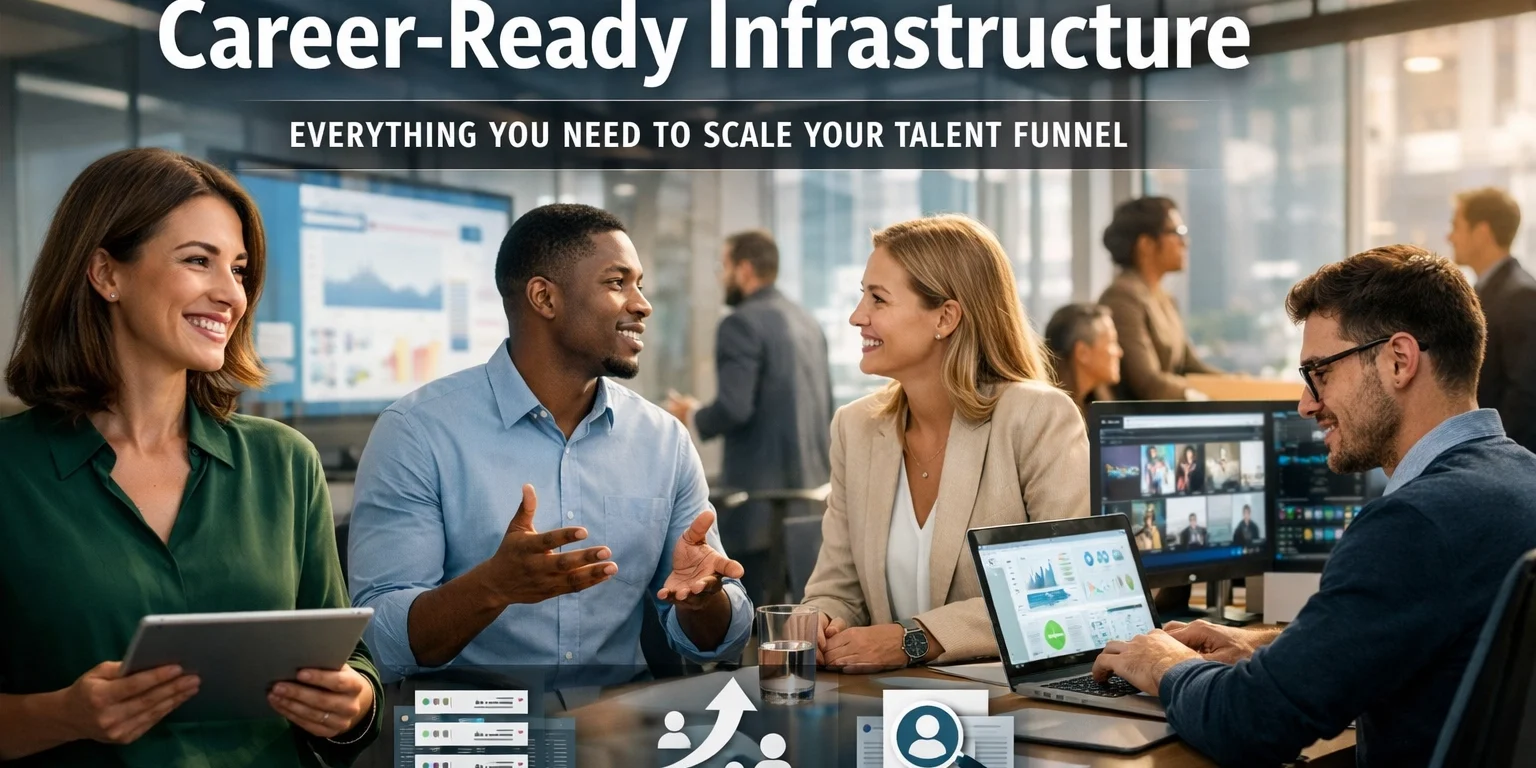
As the global economy moves deeper into the era of artificial intelligence and distributed cloud computing, the bottleneck for Fortune 100 growth is no longer capital, it is the availability of a workforce capable of navigating high-complexity technical environments. For executive leadership, the challenge has evolved from simple recruitment to the fundamental architecture of talent development.
The traditional "wait and see" approach to workforce pipelines is failing. Instead, industry leaders are turning toward career-ready infrastructure: a national, systematically designed network that merges physical distribution points, employer-led curricula, and technology-enabled training. This guide explores the blueprint for scaling these funnels to meet the demands of the 2030 economy.
The Shift from Reactive Hiring to Proactive Infrastructure
Historically, workforce development has been reactive. When a company required cloud architects or data scientists, they looked to university graduates or the open market. However, with the rapid acceleration of AI deployment, the demand for these skills has outpaced the traditional educational cycle.
Career-ready infrastructure solves this by treating talent development as a logistics problem. It focuses on three core dimensions:
- Deployment Speed: Reaching communities beyond established tech hubs to tap into underutilized talent pools.
- Technical Alignment: Synchronizing training with real-time industry needs, ensuring candidates can manage high-compute environments.
- Measurement Precision: Utilizing data to track long-term employment outcomes and technical competency.
At USA Entertainment Ventures LLC, we recognize that scaling this funnel requires more than just digital modules; it requires a physical presence and a strategic narrative that engages the workforce of tomorrow.

The "Trojan Horse" Strategy: Esports as a Catalyst for AI Literacy
One of the most effective, yet often overlooked, components of career-ready infrastructure is the integration of competitive gaming, or esports. For many Fortune 100 executives, esports might seem like a niche entertainment sector. In reality, it serves as a "Trojan Horse" for high-level technical literacy.
To run a professional-grade esports facility, one must master:
- Low-Latency Networking: Understanding the fundamentals of packet prioritization and edge computing.
- GPU Management: Configuring high-performance hardware essential for training AI models.
- Cloud Orchestration: Managing the servers and virtualized environments that host global competitions.
By investing in esports infrastructure, organizations are essentially building the physical and mental framework for a workforce that is comfortable with the same technologies that power modern cloud and AI ecosystems. This approach bridges the gap between recreation and professional readiness, creating a natural pipeline for technical talent.
The Physical Distribution System for Talent
While the digital economy is borderless, the human infrastructure required to support it is not. A national rollout of career-ready infrastructure necessitates a physical distribution system. This involves repurposing existing community assets into "Innovation Hubs" where hands-on learning can occur.
These physical sites serve as the delivery points for workforce development. They provide the hardware that many high-potential candidates lack at home, such as high-speed fiber optics and specialized workstations. More importantly, they provide the collaborative environment necessary for peer-to-peer learning and professional mentorship.
Strategic auditing of physical assets, ranging from community centers to underutilized retail spaces, is the first step in establishing a national footprint. These sites act as the "last mile" of the talent funnel, ensuring that workforce development reaches the individuals who are most ready to pivot into high-growth sectors.
Technical Alignment: Beyond the Certification
The current market is saturated with "certified" candidates who lack the practical experience to manage enterprise-level systems. A robust career-ready infrastructure prioritizes competency verification over theoretical knowledge.
To achieve this, the training environment must mirror the actual work environment. This includes:
- Hands-on Cloud Instances: Participants must build and configure actual cloud environments, not just read about them.
- AI Model Deployment: Training should involve the deployment and fine-tuning of containerized applications and data analytics workflows.
- Cybersecurity Protocols: Integrating security-first mindsets from day one of training.
This level of technical alignment ensures that when a candidate enters the workforce, they are not just "ready to learn", they are ready to contribute. For businesses looking to scale quickly, this reduces the "time-to-productivity" metric, which is critical for maintaining a competitive edge.
Addressing the Human Infrastructure
Scaling a talent funnel is not purely a technical challenge; it is a human one. Industry research indicates that the success of training programs often hinges on "wraparound services." These are the support structures that remove fundamental barriers to entry for diverse populations.
Key components of human infrastructure include:
- Career Counseling and Coaching: Navigating the transition from training to full-time employment requires individualized guidance.
- Social Support Services: Access to childcare and reliable transportation can determine whether a candidate completes their training.
- Community Integration: Aligning with labor unions and community organizations ensures that the training is socially and economically relevant to the region.
By integrating these services into the broader infrastructure, companies can ensure a higher retention rate and a more diverse, resilient talent pipeline. You can learn more about how we approach these challenges on our About Us page.

The 18-24 Month Roadmap to Scale
Building a national, career-ready infrastructure is not an overnight endeavor. It requires a structured implementation timeline to ensure long-term viability and ROI.
Phase 1: Months 1-6 (Strategic Alignment)
- Identify regional talent gaps and high-growth technical needs.
- Establish partnerships with state agencies and educational institutions.
- Audit existing physical assets for delivery site potential.
Phase 2: Months 7-12 (Infrastructure Preparation)
- Design curricula matched to specific industry demands (AI, Cloud, Cybersecurity).
- Equip physical sites with the necessary hardware and high-speed connectivity.
- Onboard certified career coaches and technical instructors.
Phase 3: Months 13-24 (Deployment and Optimization)
- Launch initial training cohorts.
- Monitor and analyze data on candidate performance and employment outcomes.
- Scale the model to additional regions based on initial success.
This roadmap ensures that the investments made today result in a steady stream of career-ready candidates by the time next-generation technologies reach full market maturity.
Collaborative Success and the Future of Work
The complexity of modern technology means that no single organization can solve the talent crisis in isolation. It requires a collaborative effort between the private sector, government agencies, and consulting firms specializing in infrastructure deployment.
Strategic partnerships allow for the sharing of best practices and the pooling of resources, creating a rising tide that lifts all participants. By focusing on a brand-neutral, standardized approach to career readiness, the industry can create a more fluid and capable labor market.

Conclusion: Securing the Future Talent Pipeline
The national rollout of career-ready infrastructure is more than a social initiative; it is a business necessity. For Fortune 100 executives, the ability to scale talent funnels through physical distribution and technical alignment will be the defining factor of success in the coming decade.
By utilizing innovative entry points like esports to build technical literacy and supporting candidates through robust human infrastructure, organizations can secure their future in an increasingly AI-driven world. The roadmap is clear, the technology is available, and the need is urgent.
If you are looking to refine your organization's approach to workforce development and infrastructure, consider exploring our services or visiting our career opportunities page to see how we are building the future of work.
For further inquiries on how USA Entertainment Ventures LLC can assist in your talent scaling initiatives, please contact us directly.





