
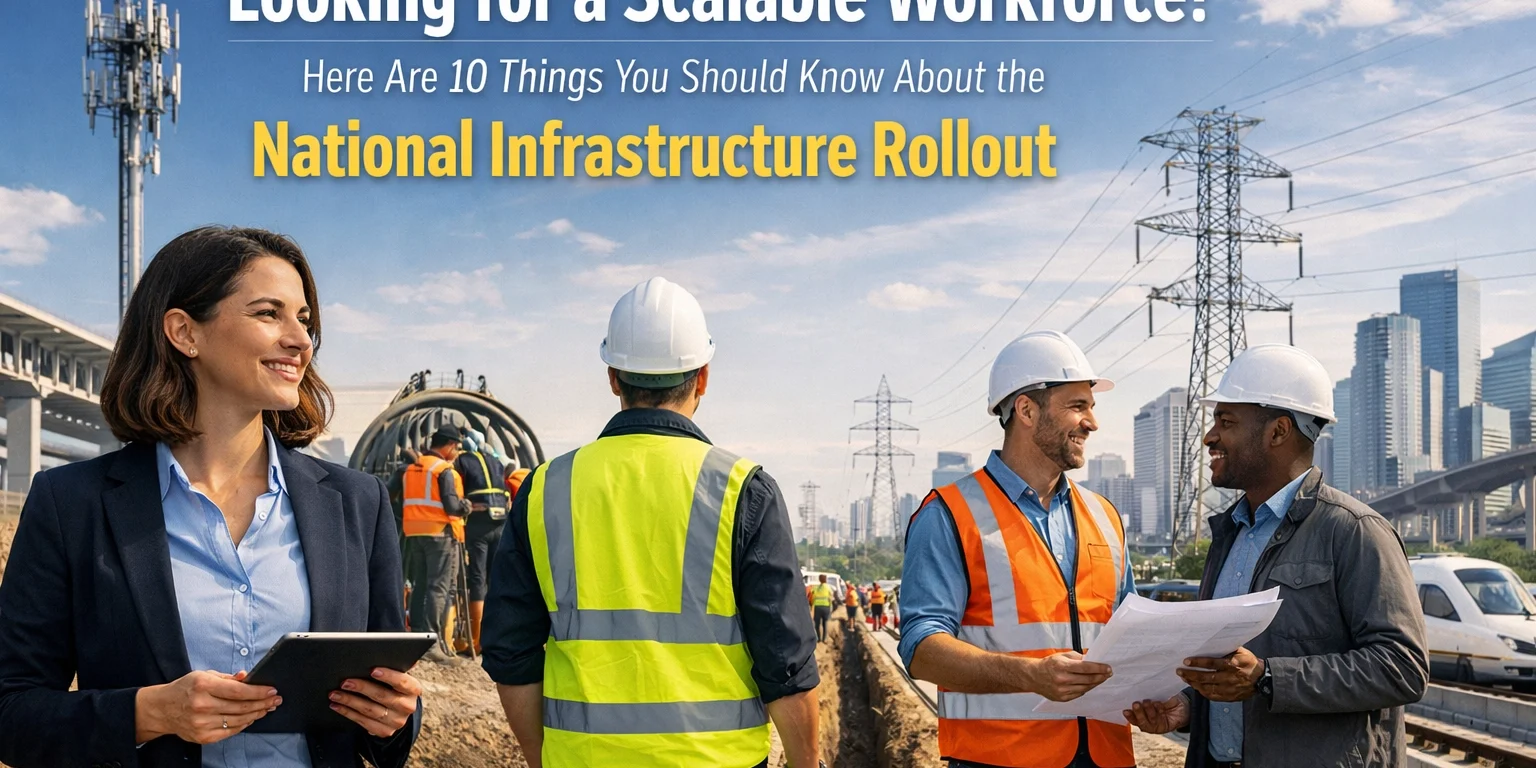
In the current economic landscape of early 2026, Fortune 100 executives are facing a paradigm shift in how talent is acquired, trained, and deployed. The traditional model: relying on external educational institutions to funnel graduates into the corporate pipeline: is no longer sufficient to meet the rapid demands of AI integration and infrastructure expansion. To address this, a national rollout of career-ready infrastructure is fundamentally altering the human capital landscape.
At USA Entertainment Ventures LLC, we recognize that the convergence of technology and physical distribution is the new frontier for business consulting. This rollout represents more than just construction; it is a sophisticated delivery system for workforce development designed for "Day Zero" readiness.
Here are the 10 critical things you need to know about the national infrastructure rollout and how it is redefining the scalable workforce.
1. Infrastructure is Now Synonymous with Human Capital
Historically, national infrastructure meant roads, bridges, and power grids. In 2026, the definition has expanded to include the physical and digital pipelines required to cultivate a high-skill workforce. The federal government has allocated approximately $1.5 billion for FY 2026 BUILD grants specifically to fund workforce training facilities. These are not isolated campuses; they are integrated directly into transportation hubs and logistics centers. By treating training as a core component of the national grid, the rollout ensures that talent is developed where the work actually happens.
2. Distributed Training Networks Overcome Urban Bias
One of the primary challenges for large-scale enterprises has been the centralization of talent in major metropolitan hubs, leading to inflated costs and regional labor shortages. The current national rollout focuses on distributed training networks. Rather than expecting talent to migrate to university centers, the infrastructure brings specialized technology training to the talent. Mobile training units and regional satellite hubs allow rural and underserved areas to access career preparation that was previously out of reach. For an executive, this means the ability to scale operations in more cost-effective regions without sacrificing the quality of the labor pool.

3. Esports as a "Trojan Horse" for AI Literacy
Perhaps the most innovative aspect of this rollout is the use of esports as a vehicle for cloud and AI literacy. Industry experts have identified competitive gaming as a "Trojan Horse": a relatable entry point that builds the foundational skills required for modern technical roles.
"We aren't just teaching people how to play games," notes a leading workforce strategist. "We are teaching them how to manage low-latency networks, interact with AI-driven analytics, and operate within complex cloud environments." By integrating esports arenas into regional infrastructure, the rollout cultivates a workforce that is inherently comfortable with high-stakes, technology-driven environments.
4. Achieving "Day Zero" Readiness via Simulation
The cost of onboarding remains a significant hurdle for Fortune 100 firms. The national rollout addresses this through high-fidelity simulation-based training. These facilities use digital twins of actual corporate hardware and software stacks. When a new hire completes their certification within this infrastructure, they possess "Day Zero" readiness. They are not learning on the company’s time; they arrive with a level of proficiency that mirrors an employee with six months of on-the-job experience. This shift significantly reduces the time-to-productivity for new hires in complex fields like data center management and media production.

5. Strategic Geographic Specialization
The 2026 rollout is not a uniform blanket across the country; it is a series of strategic corridors optimized for specific industry needs. Key markets such as Colorado, Maryland, and North Carolina have been designated as specialized zones.
- Colorado is emerging as a hub for renewable energy infrastructure and remote systems management.
- Maryland continues to lead in cybersecurity and data integrity.
- North Carolina is focusing on the intersection of logistics and AI.
Understanding these regional specializations allows executives to align their corporate expansion with the specific skills being cultivated in those geographic "talent corridors."
6. Data-Driven Talent Projections
For the first time, every stage of the talent development pipeline is being tracked with the same rigor as supply chain logistics. The national infrastructure rollout utilizes predictive analytics to provide 18-month workforce availability projections at a regional level. This data allows business leaders to make informed decisions about where to locate new facilities or move operations, knowing exactly how many qualified technicians or operators will be graduating from the local infrastructure pipeline in the coming quarters.
7. Addressing the Critical Instructor Bottleneck
A primary bottleneck in scaling any workforce is the shortage of qualified instructors. To reach the goal of training 140,000 new technicians by 2030, the current rollout includes a dedicated "Train the Trainer" initiative. This program identifies journeyman-level professionals and provides them with the pedagogical tools and AI-literacy required to lead the next generation. By professionalizing the role of the industrial instructor, the infrastructure ensures that the training quality remains consistent as the volume of students increases.

8. Closing the Productivity Timing Mismatch
We are currently facing a demographic shift where retirements are peaking just as the demand for AI-literate workers is skyrocketing. Traditional four-year apprenticeships often create a timing mismatch: workers entering training today wouldn't reach full productivity until 2029 or 2030. The new national infrastructure utilizes accelerated, modular certifications that allow workers to enter the workforce in stages. This "earn-while-you-learn" model provides immediate relief to labor shortages while ensuring the worker continues to advance toward master-level proficiency.
9. National Resilience and Economic Sovereignty
From a macro-economic perspective, the national infrastructure rollout is a play for economic sovereignty. By cultivating a domestic talent pipeline that is proficient in critical AI and cloud technologies, the U.S. reduces its reliance on volatile global labor markets. This internal resilience is a key consideration for Fortune 100 executives who must account for geopolitical risks in their long-term planning. A domestically sourced, highly skilled workforce is a hedge against global instability.
10. The 2027 Horizon: Preparing for Exponential Growth
The systems being implemented throughout 2026: the physical hubs, the esports-driven literacy programs, and the integrated data networks: are designed for exponential growth. While the current focus is on building the foundation, the volume of career-ready individuals is expected to increase substantially by 2027. Executives who engage with this infrastructure now are positioning themselves to capitalize on this surge in talent.

Conclusion: An Actionable Path Forward
The national infrastructure rollout represents a move toward a more logical, data-driven approach to workforce development. For leadership at the highest levels, the takeaway is clear: the future of hiring is no longer about finding talent, but about integrating your corporate needs into the physical and digital distribution systems already being built.
At USA Entertainment Ventures LLC, we specialize in navigating these complex shifts. Whether you are looking at marketing your firm as an employer of choice within these new hubs or seeking consulting on how to align your growth strategy with national trends, the time to act is now.
The infrastructure is in place. The talent is being cultivated. The only question remains how your organization will leverage this rollout to maintain its competitive edge in 2026 and beyond.
For more information on our initiatives and how we are helping businesses adapt to these changes, visit our About page or explore our recent insights on business technology.





