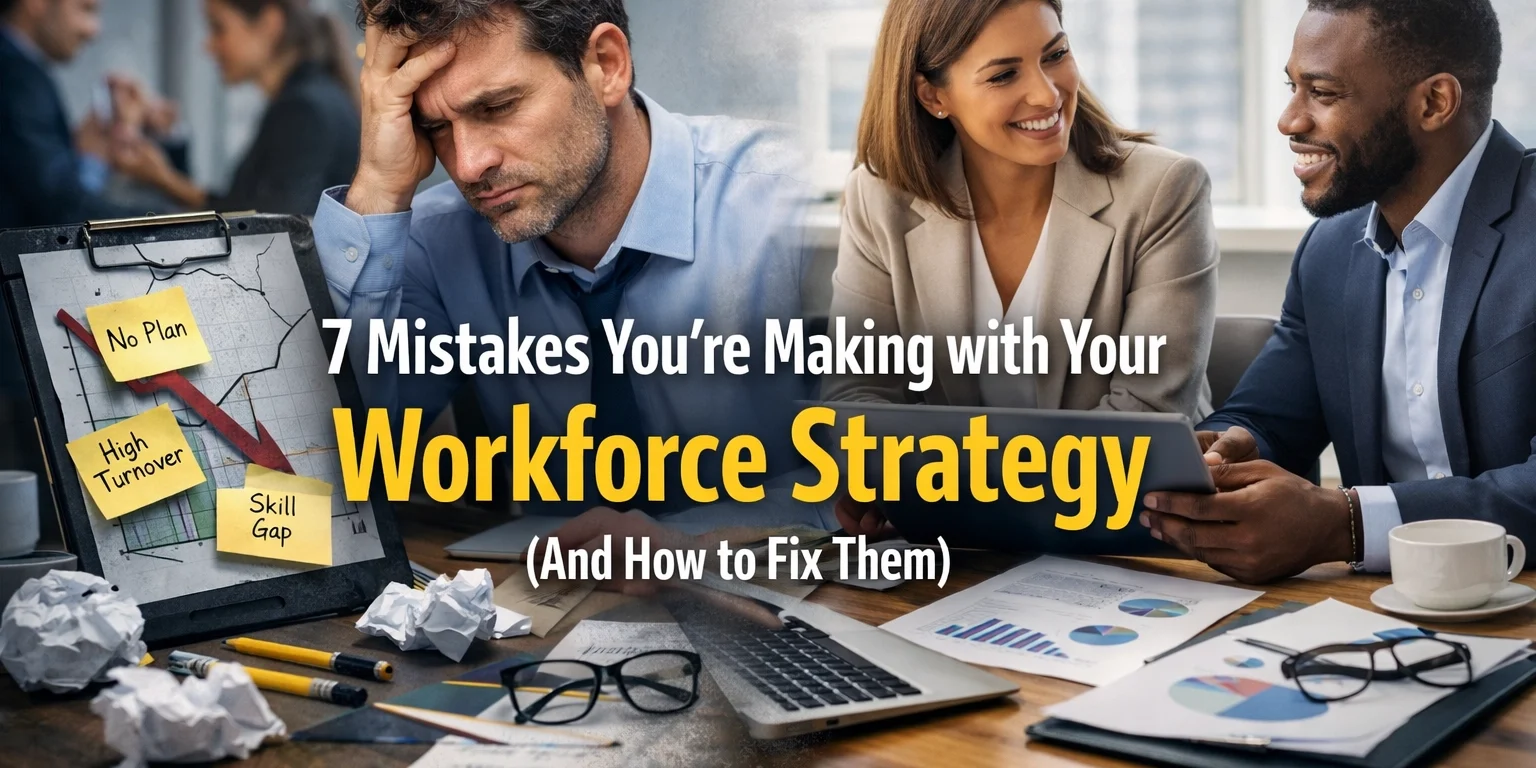
In the current economic climate of 2026, the traditional boundaries of human resources and business strategy have blurred. As we navigate a landscape defined by rapid technological shifts and a highly specialized talent pool, the way organizations approach workforce planning can no longer be a secondary concern. For many executives, the workforce strategy remains a legacy process: a set of habits formed in a different era that no longer serves the "Future Ready" requirements of today’s market.
At USA Entertainment Ventures LLC, we observe that the most successful organizations are those that treat their workforce not as a cost center, but as a dynamic ecosystem. This shift requires moving away from outdated spreadsheets and reactive hiring toward a data-driven, education-first model. Below, we outline seven critical mistakes leaders are making with their workforce strategies and the executive-level fixes required to stay competitive.
1. Treating Workforce Planning as a Reactive Firefight
One of the most prevalent errors in modern management is viewing workforce planning as a series of urgent fires to be extinguished. When staffing decisions are driven solely by missed production targets, sudden turnover, or immediate customer demands, the organization pays a "speed premium." This often manifests as high recruiting fees, sign-on bonuses for under-qualified candidates, and the hidden cost of burning out existing staff who must cover the gaps.
The Fix: Proactive Forecasting and Data Dashboards
To move away from reactive firefighting, leadership must implement centralized data analytics dashboards. These tools allow executives to look ahead at market trends and internal turnover patterns before they become crises. By integrating recruitment data with retention metrics, you can identify "smoke" before there is a "fire," allowing for a more measured and cost-effective hiring pace.
2. Relying on Fragmented Data and Manual Spreadsheets
In an age where data is the primary currency of business, many firms still keep their most valuable asset: people data: trapped in silos. Fragmented data leads to a "broken telephone" effect between HR, Finance, and Operations. Decisions made on outdated spreadsheets are, by definition, decisions based on the past, not the future.
The Fix: The Single Source of Truth
Modern workforce strategy requires a single source of truth. This means utilizing real-time executive dashboards that visualize skill levels, department outcomes, and long-term talent pipelines in one place. When leadership can see the big picture at a glance, decision-making becomes rapid and informed rather than speculative.
3. Neglecting NIL Education in the Talent Pipeline
A mistake unique to the modern era is failing to recognize the impact of Name, Image, and Likeness (NIL) education on the incoming workforce. As students enter the professional world with existing personal brands, organizations that don't understand the "NIL mindset" are often at a disadvantage. This isn't just for athletes; the principles of personal branding and professional autonomy now apply to the broader student population.
The Fix: Partnering with "Future Ready" Schools
Forward-thinking companies are positioning themselves as anchors for Future Ready schools. By supporting NIL education and business literacy at the high school and collegiate levels, businesses can help shape a workforce that understands value creation, personal responsibility, and professional ethics before they even submit an application.
4. Overlooking Media Literacy as a Core Workforce Competency
In 2026, media literacy is no longer an "extra" skill: it is a foundational requirement for organizational security and brand integrity. A workforce that lacks the ability to discern credible information or understand the implications of their digital footprint can inadvertently cause significant reputational damage.
The Fix: Prioritizing Media Literacy Outcomes
Incorporate media literacy assessments into your workforce strategy. This ensures that employees at all levels are equipped to handle the complexities of modern communication. Organizations that prioritize these outcomes foster a culture of critical thinking, which directly translates to better problem-solving and risk management on the job.
5. Starting with Vacancies Instead of Strategic Goals
Many managers begin the workforce planning process only when a desk becomes empty. This "vacancy-first" approach puts the employer in a permanent state of catch-up. It focuses on filling a seat rather than fulfilling a strategic objective. When you hire out of desperation to fill a gap, you often compromise on cultural fit and long-term potential, leading to a cycle of repeated turnover.
The Fix: Outcome-Based Talent Acquisition
Instead of asking "Who do we need to replace?", ask "What goal are we trying to achieve in the next 18 months?" This shift allows you to hire for the future needs of the company rather than its past requirements. It may turn out that the role you are trying to fill shouldn't exist in its current form at all, or that it needs to be evolved into a different function entirely. You can explore how these strategic shifts look in practice by reviewing our showcase of initiatives.
6. Lack of Senior Leadership Buy-In for Human Capital
Too often, workforce planning is delegated entirely to HR as a "support function" rather than a core business strategy. Without executive buy-in, these efforts lack the necessary resources and, more importantly, the credibility to drive change across the organization. If the CEO isn't looking at the workforce dashboard, the rest of the company won't take it seriously either.
The Fix: Human Capital as a C-Suite Priority
Workforce strategy must be a recurring agenda item for the executive team. By treating human capital with the same rigor as financial capital, leadership can ensure that talent initiatives are aligned with overall company growth and market expansion. This alignment is a hallmark of professional business consulting and is essential for long-term sustainability.
7. Hiring on a "Hunch" Rather than Data-Driven Assessments
Despite the availability of sophisticated assessment tools, many hiring decisions are still made based on "gut feeling" or perceived cultural similarities. While intuition has its place, relying on hunches often leads to unconscious bias and the exclusion of high-potential candidates who don't fit a traditional mold.
The Fix: Structured Process and Skill-First Evaluation
Implement a structured process that relies on objective data, verified skills, and cultural contribution rather than just "fit." Use your data analytics dashboards to track the success rates of different hiring criteria. Over time, this data will reveal the true markers of success within your specific organization, allowing you to refine your search for the best talent. For those looking to join a team that values this data-driven approach, our career opportunities page offers a glimpse into how we structure our own growth.
The Path to a Future-Ready Workforce
The errors mentioned above are not just HR problems; they are fundamental business risks. Organizations that continue to rely on reactive, fragmented, and "hunch-based" strategies will find it increasingly difficult to compete in a world where talent is both highly mobile and highly informed.
By pivoting to a strategy anchored in data analytics, NIL education, and media literacy, your organization can move beyond merely "filling roles" to building a resilient, future-ready team. This proactive stance not only reduces costs but also positions your company as a leader in the modern economy: a "Future Ready" anchor that attracts the best and brightest.
As we look toward the remainder of 2026 and beyond, the question for every executive is no longer just "Who are we hiring?" but "How are we preparing our workforce for the challenges of tomorrow?" The answers lie in the data, the education we provide, and the strategic foresight we apply today.
If you are ready to refine your approach and eliminate these common pitfalls, consider exploring our Q&A section or reaching out to our team via our contact page to learn more about our consulting services and how we can help your organization become truly future-ready.