
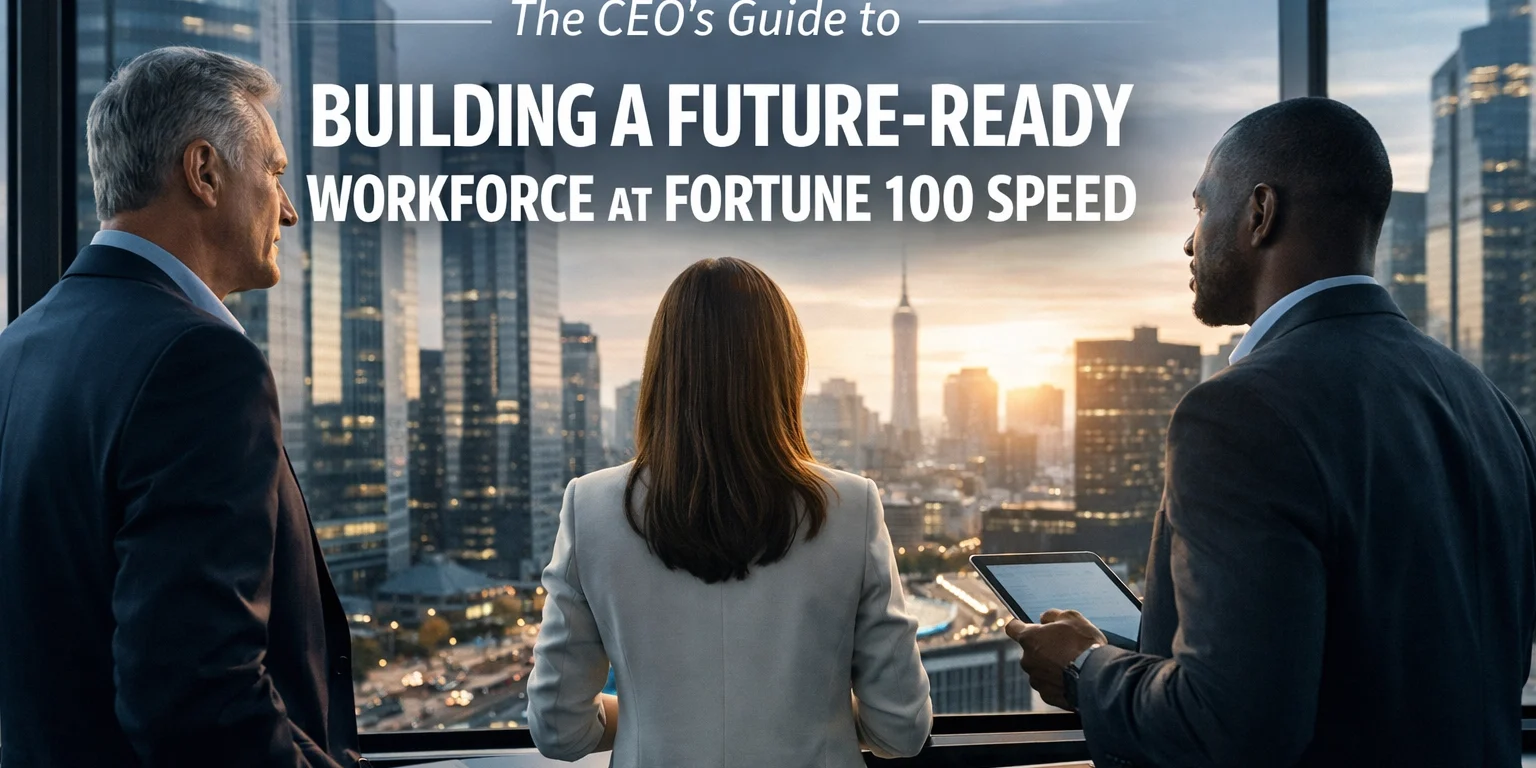
In the current economic landscape of 2026, the traditional methods of talent acquisition and workforce development are no longer sufficient. For Fortune 100 companies and those aspiring to reach that scale, the gap between institutional learning and industry needs is widening. To stay competitive, CEOs must transition from being passive consumers of talent to active architects of the workforce.
Building a "future-ready" workforce is not a vague HR initiative; it is a strategic business imperative that requires speed, data-driven precision, and a fundamental shift in how we view education and media. This guide outlines the framework for transforming your organization into a talent powerhouse, focusing on the integration of data analytics, Name, Image, and Likeness (NIL) education, and media literacy.
The Shift to Real-Time Data Analytics Dashboards
Historically, workforce planning was a retrospective exercise. Executives looked at quarterly turnover rates or annual performance reviews to make decisions. Today, Fortune 100 speed demands real-time visibility. The most successful organizations have implemented advanced data analytics dashboards that provide a 360-degree view of their human capital.
These dashboards are not just about headcount; they are about predictive modeling. By analyzing current workforce trends against market shifts, CEOs can forecast talent gaps before they become critical bottlenecks. This infrastructure allows leadership to:
- Monitor Skills Taxonomies: Track the specific competencies existing within the organization versus the skills required for upcoming projects.
- Predict Attrition: Identify patterns that suggest high-potential employees may be looking elsewhere, allowing for proactive retention strategies.
- Measure Educational ROI: Evaluate the effectiveness of internal upskilling programs by linking learning milestones directly to performance outcomes.
As we look toward the future, the ability to interpret these data streams will separate the leaders from the laggards. Strategic business consulting, such as the services provided by USA Entertainment Ventures LLC, emphasizes the necessity of this data-first approach to remain agile in a volatile market.

Media Literacy and NIL: The New Standard for Every Employee
One of the most significant shifts in the modern workforce is the blurring line between personal branding and corporate identity. Originally a concept reserved for collegiate athletes, Name, Image, and Likeness (NIL) education has become a vital competency for the professional world.
In an era of hyper-connectivity, every employee is a media outlet. Their digital footprint impacts the company’s brand equity. Therefore, media literacy is no longer a "soft skill": it is a core requirement. A future-ready workforce must be proficient in:
- Digital Reputation Management: Understanding how personal digital presence correlates with corporate values.
- Content Discernment: The ability to navigate an environment of deepfakes and misinformation, ensuring that decision-making is based on verified data.
- Communication Agility: Mastering the art of professional storytelling across various digital platforms.
By providing NIL education, companies empower their employees to build personal brands that complement the corporate mission. This creates a workforce of ambassadors who are not only more engaged but also more media-savvy, reducing the risk of PR crises and increasing the company's overall digital influence.
Positioning the Company as an Anchor for "Future-Ready" Schools
The most effective way to build a talent pipeline at Fortune 100 speed is to stop waiting for graduates to arrive and start influencing their development much earlier. We are seeing a shift where forward-thinking companies are acting as "anchors" for educational institutions.
"Future-Ready" schools are those that have moved away from outdated curricula to focus on real-world competencies: data literacy, technological adaptability, and media competency. When a company positions itself as an anchor for these schools, it creates a symbiotic relationship.
- Curriculum Input: Companies provide insights into the specific tools and methodologies currently in use, ensuring students graduate with relevant skills.
- Structured Internships: Moving beyond "busy work" to high-impact projects that allow students to integrate into the corporate culture before they are even hired.
- Mentorship Pipelines: Establishing direct lines of communication between senior executives and promising students.
This "Anchor Model" ensures that the talent entering the workforce is already "future-proofed." It reduces onboarding time and significantly increases the likelihood of long-term retention because the alignment between the student and the company was established years prior. For more information on how our organization fosters these connections, visit our About Us page.

The Four-Part Operating Model for Talent Scalability
To implement these changes at speed, executives should adopt a structured four-part operating model: Grow, Flex, Hire, and Augment. This framework allows for maximum flexibility and efficiency.
1. Grow: Internal Development
Focus on upskilling and reskilling your current staff. Use your data analytics dashboards to identify individuals with the "foundational DNA" for new roles and provide them with the necessary training. This is often more cost-effective than external hiring and boosts morale by providing clear career pathways.
2. Flex: Tactical Agility
In a fast-moving economy, you will often face short-term resource gaps. Use contingent workers or internal "gig" platforms to move talent where it is needed most without the overhead of permanent hires.
3. Hire: Strategic Acquisition
When internal gaps cannot be bridged by growing or flexing, hire specifically for the missing competencies identified in your skills taxonomy. Shift away from looking at degrees and focus on demonstrated skills and media literacy.
4. Augment: AI Integration
Deploy AI strategically to handle routine, repetitive tasks. This does not replace human talent; it maximizes its value. By automating the mundane, you allow your workforce to focus on high-level strategy, creative problem-solving, and relationship management.

Implementing a Phased Rollout
Speed does not mean recklessness. The most successful Fortune 100 implementations follow a phased approach to ensure stability.
Phase 1: The Pilot. Select one department or one partnership with a specific "Future-Ready" school. Implement the data dashboards and the NIL education modules here first.
Phase 2: Iteration. Use the analytics from the pilot to identify what worked and what didn't. Refine the training materials and the dashboard metrics based on real-world feedback.
Phase 3: Systematic Expansion. Once the ROI is demonstrated through increased productivity and better talent retention, scale the model across the entire organization.
The Forward-Looking Executive Perspective
The role of the CEO is shifting from a manager of resources to a curator of talent and technology. The pace of change will never be this slow again. By embracing data analytics, prioritizing media literacy and NIL education, and anchoring your organization in the educational ecosystem, you are not just preparing for the future: you are creating it.
The transition to a skills-based, future-ready workforce is a journey that requires commitment from the top down. It is about building an organization that is as resilient as it is innovative. As we move further into 2026, the question for every executive is not whether to adapt, but how quickly they can implement these changes to maintain their competitive edge.
If you are ready to begin this transformation and want to explore how data-driven workforce strategies can benefit your business, we invite you to contact our team for a strategic consultation.
USA Entertainment Ventures LLC is a business consulting firm dedicated to helping organizations navigate the complexities of the modern entertainment and business landscape through innovative talent and media strategies.





