
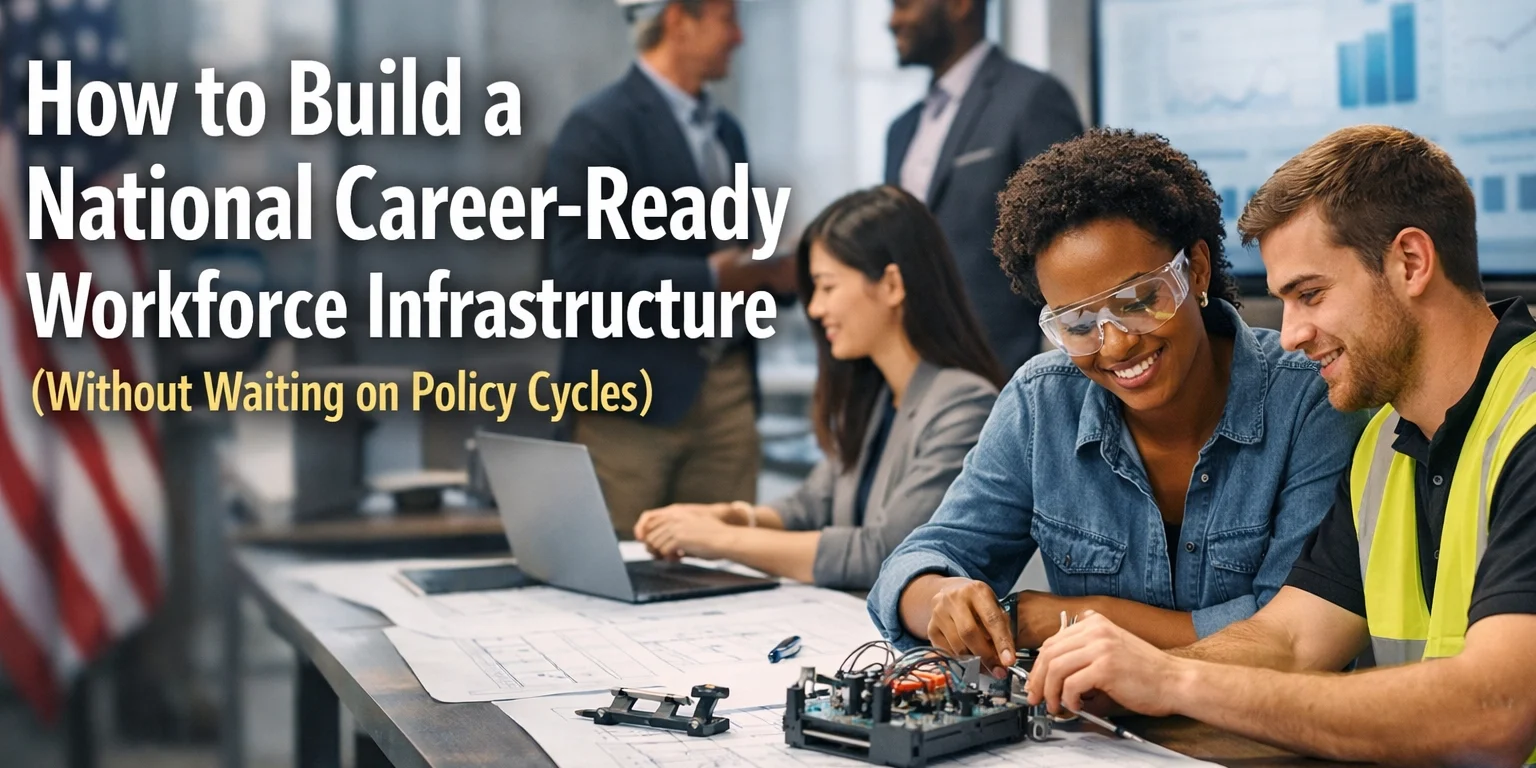
The widening gap between the skills required by Fortune 100 companies and the competencies of the emerging workforce has reached a critical inflection point. As of 2026, the demand for cloud-native literacy, AI integration, and high-stakes digital troubleshooting has outpaced traditional educational pipelines. While many executive suites look toward long-term federal policy shifts to solve this talent crisis, a more immediate and robust solution exists within the framework of existing national infrastructure.
Building a national, career-ready workforce does not require a decade of legislative debate. It requires the strategic activation of current capital, the utilization of physical distribution networks, and the deployment of "Trojan Horse" engagement models that meet the next generation where they already reside.
The Infrastructure of Opportunity: Moving Beyond Theoretical Training
The primary barrier to workforce development at scale is not a lack of interest, but a lack of accessible, high-tech physical infrastructure. However, the funding for this transformation is already available. The Infrastructure Investment and Jobs Act authorized approximately $1.2 trillion in spending, a significant portion of which is earmarked for digital inclusion and workforce preparedness.
For the modern executive, the challenge is shifting from a passive recruitment model to an active infrastructure-building model. By leveraging state-level distribution authority, specifically through the Department of Transportation and regional workforce boards, corporations can facilitate the deployment of training centers that are integrated into the very fabric of American communities.
At USA Entertainment Ventures LLC, we recognize that the future of business consulting lies in bridging the gap between physical infrastructure and human capital. This is not merely about job placement; it is about building a permanent system of competency-verified talent.

The Esports "Trojan Horse": Building AI and Cloud Literacy
To reach a workforce that is increasingly disconnected from traditional career fairs, leadership must employ more sophisticated engagement strategies. Esports has emerged as the premier "Trojan Horse" for technical literacy. To the observer, it appears to be competitive gaming; to the infrastructure architect, it is a high-pressure environment for mastering low-latency networking, cloud computing, data analytics, and real-time AI collaboration.
The logic is simple: the same hardware and software stack required to run a professional-grade esports facility is the exact stack used in modern enterprise cloud operations. By deploying these hubs into communities, we are creating a localized distribution system for workforce development.
When a participant learns to optimize a server for a global tournament, they are simultaneously learning the fundamentals of edge computing. When they manage a multi-channel digital broadcast, they are gaining skills in high-bandwidth data management. This is the essence of being "career-ready" without the delay of traditional four-year degree cycles.
A Three-Tier Operating Framework for National Rollout
To implement this infrastructure effectively, Fortune 100 executives should focus on a structured, three-tier framework that ensures scalability and measurable ROI.
1. Partnership Development and Fund Alignment
The first step is moving beyond siloed corporate social responsibility (CSR) initiatives. Engagement must happen with state transportation agencies, labor unions, and community colleges. These entities control the flow of federal funds. By aligning corporate talent needs with these existing fund-flow mechanisms, organizations can subsidize the cost of training infrastructure while ensuring the curriculum meets actual technical requirements.
2. Physical Planning and Procurement
Successful deployment relies on high-traffic, trusted community locations. Rather than building new facilities from the ground up, the focus should be on retrofitting existing physical distribution networks. This includes transit hubs, community centers, and existing educational annexes. The goal is to create "access points" that provide the hardware and connectivity necessary for AI and cloud-based skill acquisition.
3. Competency-Based Program Delivery
The final tier is the transition from "participation" to "verification." Program delivery must focus on digital certifications that are recognized across the industry. By providing wraparound services, such as childcare, transportation assistance, and digital connectivity, we remove the barriers that historically prevented high-potential candidates from completing technical training.

The 18-24 Month Implementation Roadmap
For executives seeking to secure their talent pipeline before the next fiscal cycle, a phased approach is essential. The following roadmap outlines how a national career-ready infrastructure can be mobilized rapidly.
Phase I: Alignment (Months 1-6)
In the initial six months, the priority is identifying regional talent gaps and establishing formal partnerships with state-level authorities. This phase involves a comprehensive workforce assessment to ensure that the infrastructure being deployed matches the technical demands of the local and national economy. Details on how these services are integrated can be found through our services division.
Phase II: Infrastructure Deployment (Months 7-12)
Once partnerships are solidified, the focus shifts to the physical deployment of training hubs. This includes the installation of high-speed digital infrastructure and the procurement of the "Trojan Horse" engagement tools (esports and AI workstations). This is the period where the "distribution network" becomes tangible.
Phase III: Execution and Verification (Months 13-24)
By the second year, the first cohorts should be entering the system. The focus here is on producing candidates with verified competencies in cloud platforms and data analysis. These individuals are not just "eligible" for hire; they are already integrated into the technological ecosystem your company uses daily.

Immediate Action Priorities for the Fortune 100
The competition for talent is no longer a localized battle; it is a national security and economic imperative. Waiting for policy cycles to catch up to the speed of technological change is a recipe for stagnation. To lead, executives must take the following steps:
- Audit Existing Networks: Identify where your physical footprint overlaps with areas of high talent potential and low digital access.
- Leverage Federal Incentives: Engage with business consulting experts who understand how to navigate the $1.2 trillion infrastructure landscape.
- Invest in Engagement: Move beyond the "job board" and toward the "hub" model. Build the environments where the next generation of engineers and analysts are already spending their time.
Scaling for a Competitive Future
The development of a national career-ready workforce infrastructure is not a philanthropic endeavor, it is a strategic necessity. By treating workforce development as a physical distribution problem rather than a policy problem, we can bypass the delays of traditional systems.
As we look toward the horizon of 2026 and beyond, the companies that succeed will be those that didn't wait for a "prepared" workforce to appear, but instead built the infrastructure to prepare them. The tools, the funding, and the roadmap are already in place. The only remaining variable is the speed of implementation.
For more information on how we are facilitating this national rollout, please visit our showcase or contact our executive team directly.

Building the future of the American workforce requires a bold departure from the status quo. By leveraging esports as a gateway to high-level digital literacy and utilizing existing physical networks for distribution, we can create a sustainable, career-ready infrastructure that serves both the industry and the public good. The time to act is not in the next policy cycle, but in the current one.





