
For Fortune 100 executives, the "war for talent" is no longer a metaphor; it is a structural barrier to growth. Despite record investments in recruitment and internal upskilling, the gap between the demand for advanced digital competencies and the available supply of career-ready professionals continues to widen. The traditional pipeline: relying on elite higher education and passive recruitment: is proving insufficient for the scale of the AI and cloud revolution.
We are currently witnessing a paradigm shift from passive recruitment to active talent manufacturing. This transition is being driven by a national workforce infrastructure that treats human capital with the same logistical rigor as a supply chain. By deploying career-ready programming through physical distribution networks and leveraging high-engagement platforms like esports as entry points for technical literacy, this new model is set to redefine how organizations source, train, and retain their most critical assets.
The Shift from Recruitment to Talent Manufacturing
For decades, corporate talent acquisition has functioned as a reactive department. When a need arises, recruiters search a finite pool of candidates who already possess the necessary credentials. This "extraction" model is reaching its mathematical limit. As emerging technologies like generative AI and decentralized cloud computing become standard, the pool of qualified individuals cannot keep pace with the vacancy rate.
National workforce infrastructure proposes a different approach: active manufacturing. Instead of competing for the top 5% of existing talent, organizations are now partnering with infrastructure providers to create a proprietary pipeline. This involves structured 18-24 month roadmaps that transition individuals from baseline digital literacy to verified competencies in cloud platforms and infrastructure management.

This systematic approach, championed by entities like USA Entertainment Ventures LLC, moves the needle from "finding" talent to "building" it. By aligning training curricula with real-time job demands, the workforce produced is not just theoretically educated but immediately operational.
The Physical Distribution of Workforce Development
One of the most significant innovations in this national rollout is the utilization of existing retail and logistics networks as the "last mile" for workforce development. Traditionally, tech training has been concentrated in geographic hubs: Silicon Valley, Austin, or New York. This has created a geographic bottleneck, excluding vast swaths of the population in rural and suburban regions.
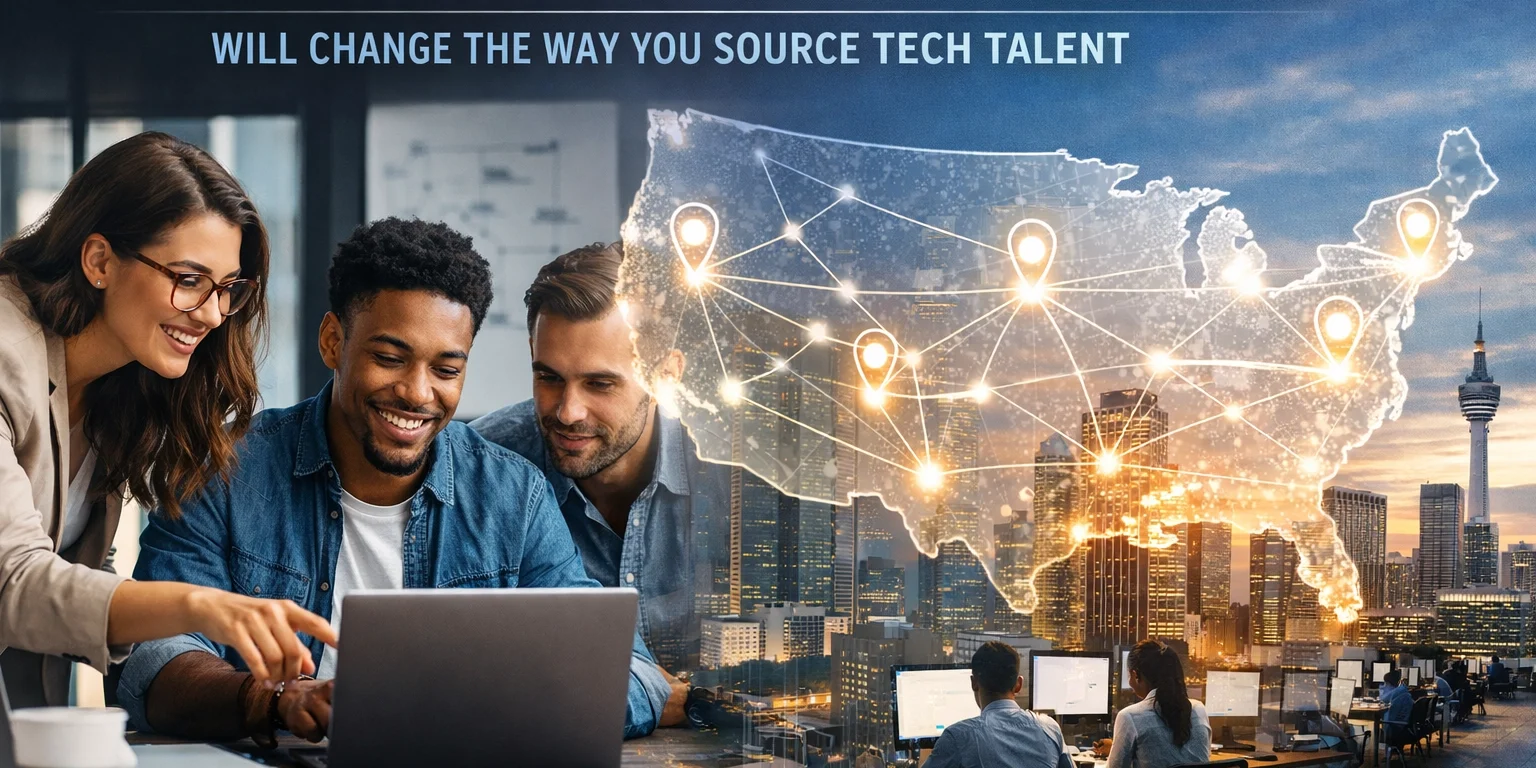
The new infrastructure model decouples talent acquisition from geography. By integrating training modules into a physical distribution system: using regional community centers, local logistics hubs, and retail footprints: technical education becomes accessible in every zip code. This "distributed campus" model ensures that a candidate in a rural community has the same access to high-level cloud certification as one in a major metropolitan center.

This geographic inclusivity is not merely a social good; it is a strategic advantage for Fortune 100 companies. It allows for a more resilient and diverse workforce that is not subject to the high cost-of-living pressures of traditional tech hubs. Executives can now look to a national map for talent, knowing that the infrastructure provides a standardized level of competency regardless of location.
Esports: The Trojan Horse for Cloud and AI Literacy
Perhaps the most unconventional yet effective element of this national infrastructure is the use of esports as a vehicle for technical training. To the uninitiated, esports is entertainment. To an executive looking at long-term workforce trends, esports is a "Trojan Horse" for developing the foundational skills required for the 2030 economy.
Competitive gaming at an enterprise level requires an understanding of low-latency networking, real-time data analysis, cloud resource management, and collaborative software environments. By engaging the next generation through a medium they are already passionate about, the national infrastructure introduces complex technical concepts in a high-engagement environment.
"The integration of esports into workforce development is not about the games themselves," notes a leading consultant in business consulting. "It is about the infrastructure behind the screen. When a student learns to optimize a server for a tournament, they are learning the fundamentals of cloud architecture. When they analyze match data, they are practicing the basics of AI-driven analytics."

This approach solves the engagement crisis in traditional STEM education. It creates a natural bridge into careers in cybersecurity, data science, and cloud operations, ensuring a steady flow of candidates who are digitally native and technically curious.
Real-Time Alignment and the Removal of Participation Barriers
A primary criticism of traditional vocational training is that it is often outdated by the time a student completes the program. The national workforce infrastructure addresses this through real-time data alignment. By partnering directly with technology leaders: including firms like Palantir, Meta, and Oracle: the system identifies regional skills gaps and updates curricula in months, not years.
Furthermore, the rollout focuses on removing the "wraparound" barriers that often prevent qualified candidates from entering the tech sector. National infrastructure isn't just about the software; it's about the support. This includes:
- Digital Inclusion: Ensuring high-speed access and hardware are available to all trainees.
- Childcare and Transportation Integration: Utilizing federal and private grants to ensure participation is feasible for working adults.
- Verified Competencies: Shifting from degree-based hiring to skill-based hiring, where candidates enter the workforce with industry-recognized certifications.
The goal is clear: the initial implementation phases aim to place thousands of technology specialists into the workforce within a two-year window. This is a scalable solution that individual HR departments simply cannot replicate on their own.
The Strategic Mandate for Fortune 100 Executives
For the C-suite, the emergence of a national workforce infrastructure offers a rare opportunity to move from a defensive talent posture to an offensive one. Strategic alignment with these initiatives provides first-mover advantages in securing a pipeline of "career-ready" individuals who are trained specifically for the challenges of a cloud-and-AI-first world.
Organizations that continue to rely on traditional recruitment methods will find themselves paying a "talent tax": higher salaries for a shrinking pool of candidates and higher turnover rates as competitors poach their staff. Conversely, those who integrate with the national distribution system can stabilize their human capital costs and ensure a steady supply of talent tailored to their specific operational needs.

Conclusion: A Future-Focused Workforce
The rollout of a national workforce infrastructure represents a fundamental maturing of the digital economy. It acknowledges that talent is a national resource that requires the same level of investment and logistical planning as energy or transportation.
By leveraging physical distribution networks, high-engagement platforms like esports, and real-time data alignment, this system is creating a more inclusive, scalable, and efficient way to source tech talent. For the Fortune 100 executive, the message is clear: the infrastructure for your future workforce is being built today. The question is whether your organization will be a consumer of this talent or a partner in its creation.
To learn more about how these infrastructure shifts impact your industry, explore our showcase or contact our team at USA Entertainment Ventures LLC to discuss strategic workforce alignment. The transition to a "talent manufacturing" mindset is not just a trend; it is the new standard for global business leadership.





