
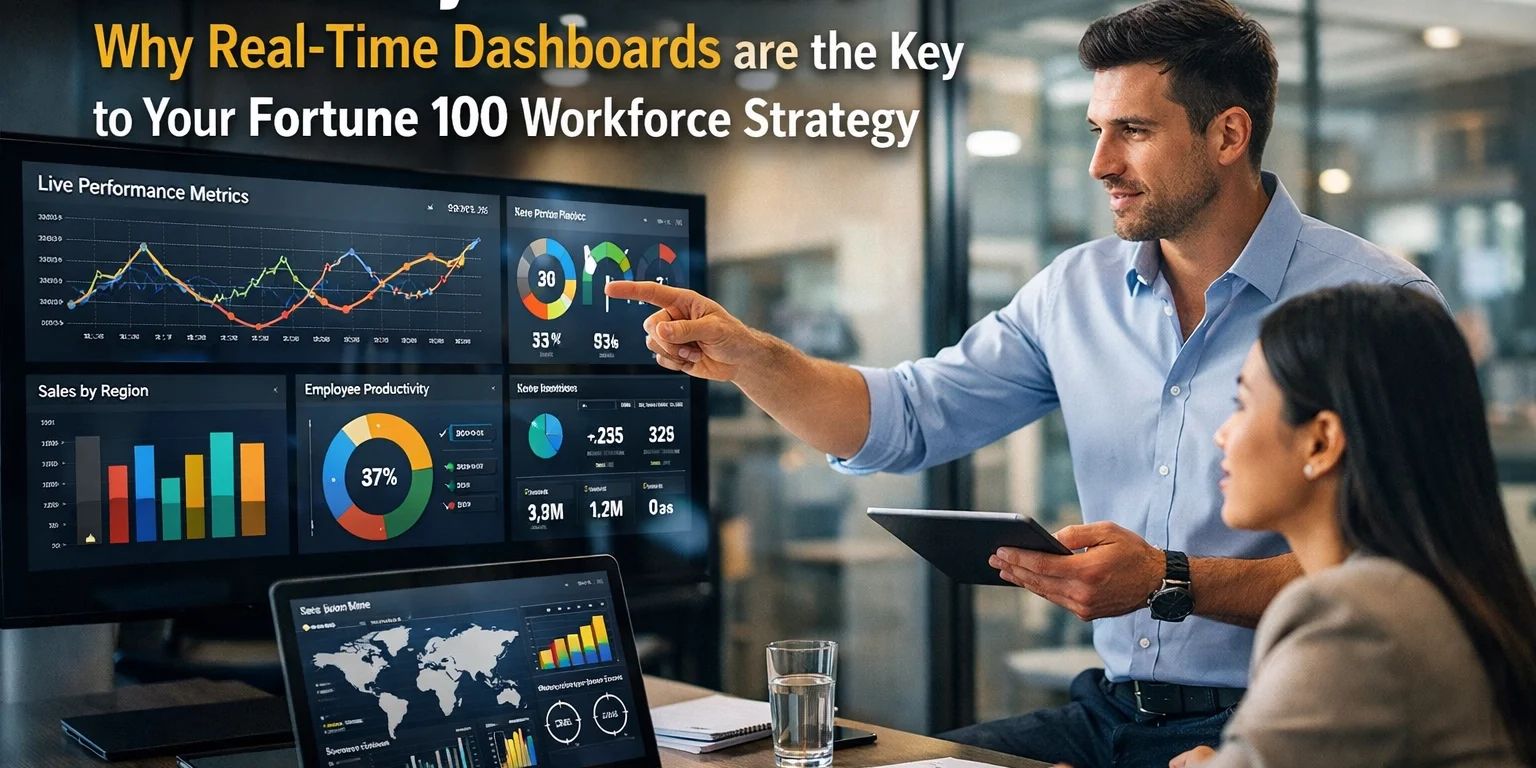
In the current economic landscape of early 2026, the traditional methods of workforce management: relying on annual reviews, quarterly retrospectives, and static spreadsheets: have become relics of a slower era. For Fortune 100 companies and the educational institutions preparing the next generation of talent, the shift toward data-driven, real-time decision-making is no longer a luxury; it is a prerequisite for survival.
As organizations navigate a global market defined by rapid technological shifts and changing employee expectations, the ability to see what is happening now: rather than what happened three months ago: determines the difference between a thriving culture and a talent drain. At the heart of this transformation is the real-time data dashboard, a tool that has evolved from a simple reporting feature into the central nervous system of modern workforce strategy.
The Shift from Reactive to Proactive Leadership
For decades, human resources and executive leadership operated in a reactive state. If retention rates dropped, leadership found out during the exit interview. If productivity lagged, it was discovered during the end-of-quarter financial wrap-up. This lag time costs large enterprises millions in lost output and recruitment expenses.
Current research suggests that organizations leveraging real-time dashboards report a 32% boost in employee productivity and a staggering 25% to 39% increase in retention rates. By consolidating data from fragmented sources into a unified platform, executives can monitor performance and engagement metrics instantly. This allows for proactive interventions. If a specific department shows a spike in disengagement, leaders can address the root cause: be it workload, management style, or lack of resources: before it leads to a mass exodus of talent.
Education as the Foundation: NIL and Media Literacy
The workforce of the future is being built today in our schools. However, there is often a disconnect between academic preparation and the professional realities of the Fortune 100. This is where the concept of "Future Ready" schools becomes critical. To prepare students for a world dominated by data and personal branding, education must evolve to include Name, Image, and Likeness (NIL) education and media literacy.
NIL is no longer just a concern for elite collegiate athletes. In a digital-first economy, every professional has a "brand." Understanding the value of one's likeness, the legalities of digital contracts, and the nuances of personal financial management is essential. Programs like Money Smart and Money Smart TV are designed to bridge this gap, providing students with the media literacy and financial foundations they need to navigate a complex professional world.
When schools act as anchors for these programs, they produce graduates who are not only technically proficient but also "media literate." These individuals understand how to interpret data, how to present themselves in digital spaces, and how to protect their professional reputations: skills that are highly prized by Fortune 100 recruiters.

Scaling Insights: The Fortune 100 Advantage
Managing a workforce of tens of thousands requires more than just good intuition; it requires scale. Fortune 100 companies operate across diverse geographies and business units. Real-time dashboards provide a "single source of truth" that cuts through the noise of decentralized information.
By tracking diversity metrics, compensation equity, and skill gaps in real-time, executives can make informed decisions on merit increases and strategic adjustments without waiting for the next fiscal year. For instance, if data reveals an emerging skill gap in a specific region, the company can deploy targeted training programs or adjust its recruitment pipeline immediately.
This level of agility is supported by the rapid growth of the HR analytics market, which is projected to reach nearly $12 billion by 2032. The message from the market is clear: the most successful companies will be those that treat their workforce data with the same rigor as their financial data.
Media Literacy and Risk Mitigation
In an age of instant communication, media literacy is a critical component of risk management. For both the individual and the corporation, understanding the impact of digital footprints is vital. Workforce strategies must now include media literacy outcomes that teach employees how to engage with media responsibly and how to identify misinformation.
By integrating media literacy into workforce development: much like the initiatives seen in Sports Media and Buy Sports Media projects: organizations protect themselves from reputational damage while empowering their employees to be better brand ambassadors. A media-literate workforce is a more resilient workforce, capable of navigating the complexities of the 21st-century information ecosystem.

Future Ready Schools: The Anchor of the Community
To ensure a steady pipeline of talent that is ready for the demands of a data-driven workforce, we must look to "Future Ready" schools. These are institutions that prioritize real-world outcomes, such as financial literacy, data fluency, and media management.
USA Entertainment Ventures LLC serves as a consultant and anchor for these schools, helping them implement programs that focus on the "Future Ready" criteria. This involves moving beyond rote memorization and toward practical application. When a school implements a real-time dashboard to track student outcomes or uses programs like E-Sports Pod to teach digital collaboration, they are directly preparing students for the Fortune 100 environment.
These schools do not just teach; they provide a laboratory for the professional world. By focusing on media literacy and NIL education, they ensure that students understand the economic value of their skills and their identity before they even enter the job market.
Actionable Takeaways for Executive Leadership
For executives looking to modernize their workforce strategy, the path forward involves three key pillars:
- Invest in Integrated Dashboards: Move away from siloed data. Implement platforms that pull from payroll, performance management, and employee engagement tools to provide a holistic, real-time view of organizational health.
- Prioritize Media and Financial Literacy: Whether through internal training or by partnering with educational anchors, ensure your workforce understands the mechanics of the digital economy. This includes NIL principles and media literacy.
- Bridge the Gap with Education: Partner with schools and universities that are committed to "Future Ready" curriculum. By supporting these institutions, you are securing your future talent pipeline.
The Future of Workforce Strategy
As we look toward the remainder of 2026 and beyond, the integration of real-time analytics and specialized education will only deepen. The companies that succeed will be those that view their workforce not as a static resource, but as a dynamic ecosystem that requires constant, data-informed nurturing.
Real-time dashboards provide the visibility needed to lead with confidence, while media literacy and NIL education provide the workforce with the tools they need to excel. Together, these elements form a strategy that is not just about managing people, but about maximizing human potential in an increasingly complex world.
The transition to a "Future Ready" workforce is a journey, not a destination. By adopting these tools and philosophies today, leaders can ensure their organizations: and the students who will one day join them: are prepared for whatever the future holds.

Conclusion: A Vision for Growth
The convergence of data analytics and modern education represents a significant opportunity for business consulting and enterprise leadership. By moving toward transparent, real-time systems and prioritizing the literacy of the next generation, we create a more stable, productive, and equitable economy.
USA Entertainment Ventures LLC remains committed to this vision, acting as a bridge between the corporate world and the educational institutions that fuel it. For more information on how we are helping build "Future Ready" environments, explore our various projects and initiatives designed to drive innovation and excellence in the modern workforce.





