
Let’s take a trip down memory lane. Think back to the "computer lab" of the early 2000s. It was usually a windowless room that smelled faintly of ozone and old carpeting, packed with rows of beige towers and monitors that took up half the desk. It was where you went to learn how to use a mouse or, if you were lucky, play a pixelated game of Oregon Trail.
Fast forward to 2026, and that model isn't just outdated: it’s functionally extinct. In the high-stakes world of modern business and technology, the "general-purpose" lab has been replaced by something far more sleek, strategic, and effective: The Pod.
At USA Entertainment Ventures LLC, we’ve seen the landscape of professional training and infrastructure shift dramatically. Whether you are aiming for a career in cybersecurity, logistics, or content creation, the environment in which you learn and work dictates your success. The shift from "labs" to "pods" isn't just a change in furniture; it’s a fundamental reimagining of how we build technical talent.
The Death of the Row: Why Traditional Labs Failed
The traditional computer lab was built on the idea of uniformity. Every student or employee sat at the same machine, running the same software, facing the same whiteboard. This worked when we were all learning how to use Microsoft Word. But as industries became more specialized, the "one size fits all" approach started to fall apart.
In a traditional lab, the infrastructure is rigid. If you want to run a high-intensity cybersecurity simulation that requires isolated networks, you risk crashing the entire school or office system. If you want to record a podcast or edit 8K video, the standard-issue desktop is going to cough up smoke.
The industry realized that we don't need more computers; we need better environments. According to recent research, institutions that pivot from traditional labs to specialized pods can see cost savings of 50 to 75 percent. Why? Because you aren't over-provisioning expensive hardware for people who don't need it. You are concentrating your firepower where it matters most.
Enter the Pod: A Hub for the New Professional
So, what exactly is a "Pod"? Think of it as a purpose-built nerve center. Instead of rows of desks, a pod is a modular, high-tech cluster designed around a specific career outcome.
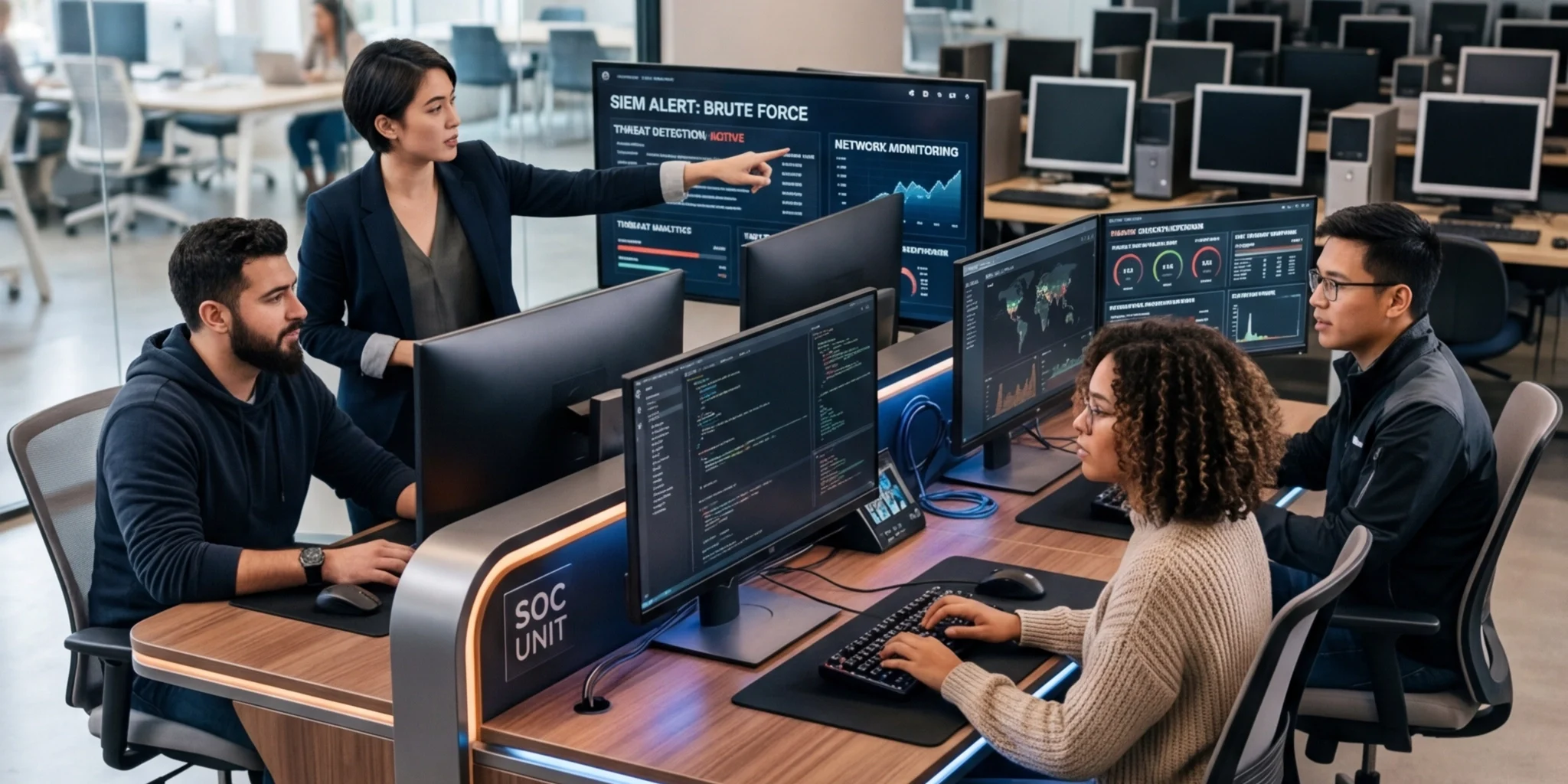
For a cybersecurity professional, a pod isn't just a desk: it’s a Security Operations Center (SOC) in miniature. It’s an environment where the hardware and software are tightly integrated to mirror the real world.

The Cybersecurity Pod: More Than Just a VPN
Cybersecurity is a team sport. When a breach happens, you don't sit in a row and work in silence. You collaborate, you analyze multiple data streams, and you communicate.
A dedicated cybersecurity pod includes:
- Multi-Monitor Arrays: To track network traffic, logs, and threat intelligence simultaneously.
- Isolated Sandboxes: Virtual machine environments where practitioners can safely release malware or test penetration techniques without risking the main network.
- Collaborative Workbenches: Physical layouts that allow for "Red Team vs. Blue Team" exercises.
- Real-World Tools: Access to the industry standard: Metasploit, Wireshark, Splunk, and QRadar: all pre-configured and ready for action.
By training in a pod, you aren't just learning "about" cybersecurity; you are living it. This is why these hubs are becoming the gold standard for career pathways. Employers aren't looking for people who have read a textbook; they want people who have navigated a simulated breach in a SOC-style environment.
Beyond Security: Logistics and Content Creation
While cybersecurity is the primary driver for pod adoption, the model is spreading across other high-growth sectors. At USA Entertainment Ventures LLC, we look at business consulting through a lens of efficiency and future-proofing.
The Logistics Pod
Logistics isn't just about moving boxes; it’s about data orchestration. A logistics pod is designed for supply chain managers who need to visualize global shipping routes, monitor real-time warehouse inventory, and manage fleet telematics. These pods often use high-resolution dashboard displays and specialized ERP (Enterprise Resource Planning) software integrations. They serve as a command center for the modern logistics professional.
The Content Creation Pod
In the creator economy, your environment is your instrument. A content creation pod is a modular studio. It includes acoustic treatment, high-fidelity microphones, 4K cameras, and the processing power needed for real-time rendering. By moving from a general lab to a pod, creators can jump straight into production without the friction of setting up equipment every time.
The Economic Reality: Why Businesses Are Making the Switch
Let’s talk numbers. As our CEO Dan Kost often points out, efficiency is the name of the game. Maintaining a traditional lab with 50 identical machines is a maintenance nightmare. Every three years, you have to refresh 50 machines, many of which were barely used to their full potential.
Pods allow for a "strategic concentration" of resources. Instead of 50 mediocre computers, a business can invest in five high-performance cybersecurity pods, five content pods, and five logistics pods. The result?
- Reduced Real Estate Footprint: Pods are modular and can be deployed in smaller, more flexible spaces.
- Lower IT Overhead: Standardizing specialized pods is easier than troubleshooting 50 different machines used for 50 different tasks.
- Higher Retention and Success: Employees and students who train in authentic environments are more engaged and reach "job-ready" status faster.
Virtualization is another key player here. Platforms like NETLAB+ allow users to access these pod environments remotely. This means the physical pod serves as the high-intensity hub, while the "virtual pod" extends that reach to anyone with an internet connection.
How to Transition Your Infrastructure
If you are still operating on the "Lab" model, it’s time for a renovation. Here’s a casual guide to making the jump:
- Audit Your Outcomes: Stop asking "how many computers do we need?" and start asking "what jobs are we training for?" If the answer is cybersecurity, your infrastructure should look like a SOC.
- Go Modular: Don't bolt desks to the floor. Use modular furniture and mobile server racks. The needs of a logistics pro in 2026 might be different by 2028.
- Focus on the "Vibe": This sounds non-technical, but it matters. Pods should feel like a professional workplace, not a classroom. High-quality chairs, proper lighting, and "command center" aesthetics boost productivity and morale.
- Invest in Integration: A pod is only as good as its software. Ensure your cybersecurity pods are loaded with real-world tools like Splunk or Metasploit.

Looking to the Future
The "beige box" era is over. As we move deeper into 2026, the demand for specialized technical talent will only increase. Whether you’re a business looking to upskill your workforce or an educational institution trying to stay relevant, the move to pod-based infrastructure is no longer optional: it’s a necessity.
Pods represent the physical manifestation of the modern career path: specialized, collaborative, and highly efficient. They provide the sandbox where the next generation of cybersecurity defenders, logistics maestros, and creative geniuses will hone their craft.
At USA Entertainment Ventures LLC, we believe in the power of the right environment. We’ve seen firsthand how transitioning to a specialized hub can transform a business's bottom line and its culture. The computer lab isn't just dead; it’s been reborn as something far more exciting.
For more insights into how we are shaping the future of business and entertainment infrastructure, feel free to explore our portfolio or check out our latest news.
The future isn't in rows. It's in the pod. Are you ready to make the switch?





