

Remember the traditional computer lab? That fluorescent-lit room filled with rows of identical, beige towers, the faint hum of thirty cooling fans, and the unmistakable scent of dust and ozone? For decades, it was the "high-tech" hub of every school and office. But let’s be honest: those labs were the ultimate generalists. They were built for "computing," a vague term that usually meant typing up a Word doc or playing Oregon Trail when the teacher wasn't looking.
Welcome to 2026. The world has changed, and the "generic computer lab" is officially on life support. In its place, we are seeing the rise of the Pod.
At USA Entertainment Ventures LLC, we’ve seen a lot of shifts in business consulting, but the move toward specialized, modular infrastructure is one of the most exciting. We aren't just talking about a change in furniture; we are talking about a fundamental reimagining of how we train the next generation of professionals.
What Exactly is a "Pod"?
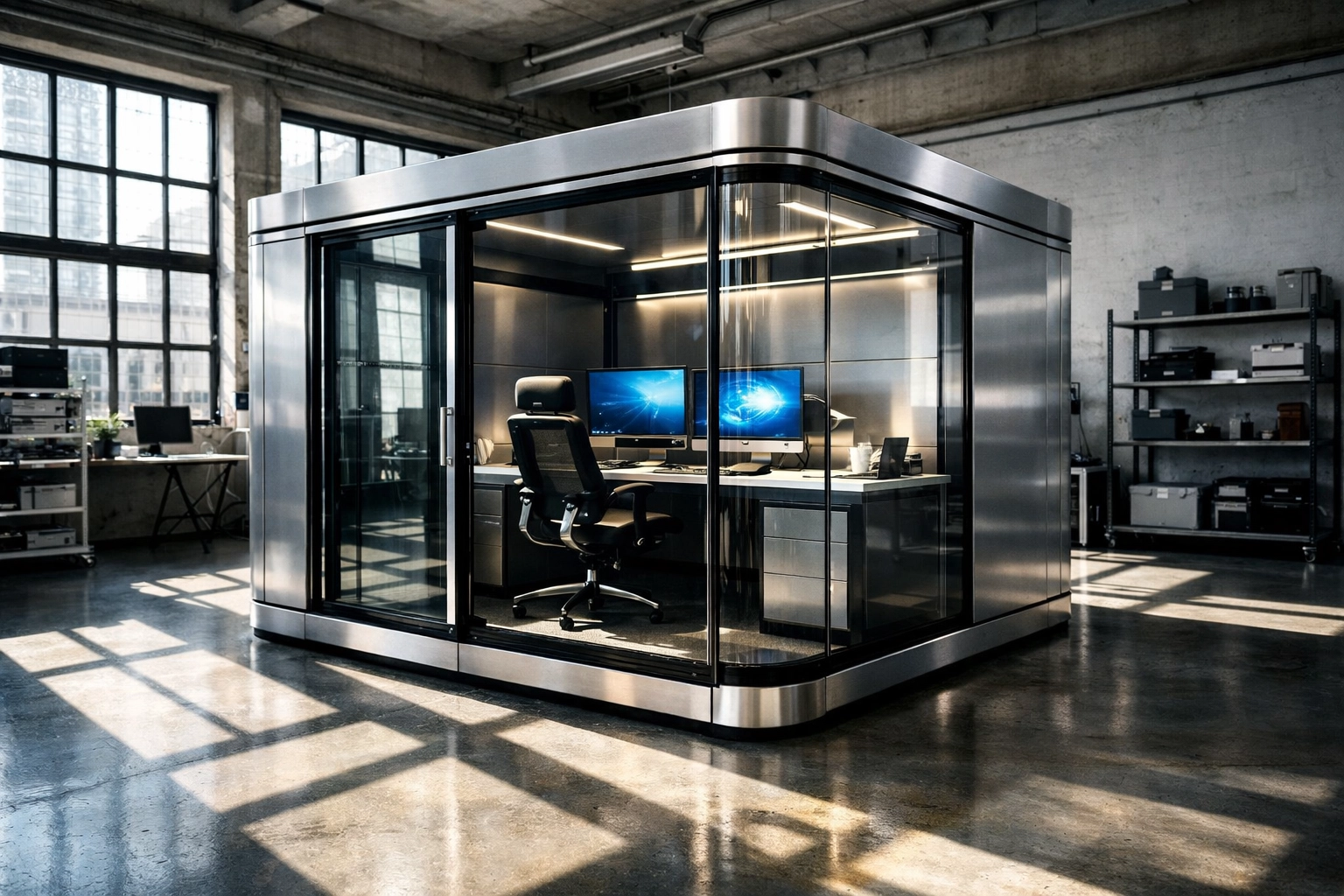
If you’re picturing a sci-fi sleep chamber, you’re not quite there. In the context of modern physical infrastructure, a Pod is a purpose-built workspace organized around a specific career pathway.
Instead of a room full of general-purpose PCs, a pod is a specialized ecosystem. It contains the hardware, software, and physical environment required to master a specific craft. Think of it as a "lab-in-a-box" that can be deployed anywhere: from a rural high school to a corporate headquarters.
As Dan Kost, our CEO, often says: "Efficiency isn't about having the most tools; it's about having the right tools in the right box."
Why the "Box" Metaphor Matters
The "box" isn't just a figure of speech. Many modern pods are literally modular units. This design allows for:
- Specialization over Generalization: Every inch of the space is optimized for a specific job role.
- Portability: You can drop a pod into a community center or a warehouse without a six-month renovation project.
- Scalability: Need more cybersecurity experts? Drop in another pod.
The Three Pillars of the Pod Revolution
While you could theoretically build a pod for anything, three specific career pathways are currently leading the charge: Cybersecurity, Content Creation, and Logistics. Let’s break down why these fields are ditching the lab for the pod.
1. The Cybersecurity Pod: The Digital Fortress
In a traditional lab, teaching cybersecurity is a nightmare. You can’t exactly ask students to practice "ethical hacking" on the same network that handles the school’s payroll.
Cybersecurity pods solve this by using a hybrid architecture. They combine local, high-power computing with isolated, "sandbox" network environments.
- The Tech: These pods feature network simulation equipment and penetration testing tools that are completely air-gapped from the rest of the building.
- The Experience: Students aren't just reading about firewalls; they are defending a simulated power grid from a mock attack.
- The Result: Graduates emerge with demonstrable experience using industry-standard tools, making them "day-one ready" for the workforce.
2. The Content Creation Pod: From "Influencer" to "Industry Pro"
Content creation is no longer just about taking selfies. It’s a multi-billion dollar industry involving high-end video production, 3D rendering, and live streaming. A generic lab computer will melt the moment you try to render a 4K video.
A Content Creation pod is essentially a professional-grade mini-studio.
- The Tech: Professional lighting, sound-treated walls, high-end GPUs, and 4K cameras.
- The Career Path: This prepares students for roles in digital marketing, film production, and corporate communications.
- The Value: By working in these pods, students learn the "soft" technical skills: like lighting a shot or managing a multi-track audio board: that you simply can't learn on a standard desktop.

3. The Logistics & Operations Pod: Moving the World
Logistics is the invisible engine of the global economy. As supply chains become more complex, the need for trained operators has skyrocketed.
A Logistics pod doesn't look like a computer lab at all; it looks like a command center.
- The Tech: Supply chain simulation software, inventory management systems (WMS), and even VR setups for forklift or drone operation.
- The Goal: Students learn to manage real-time data, optimize shipping routes, and handle the "chaos" of a simulated global shipping delay.
- Why it Works: It bridges the gap between the classroom and the warehouse floor, giving students a safe space to fail before they’re responsible for millions of dollars in inventory.
The Economics of the Pod: Why Business Leaders Are Listening
From a business consulting perspective at USA Entertainment Ventures LLC, the most compelling argument for pods isn't just the tech: it's the bottom line.
Recent data suggests that moving to a pod-based infrastructure can result in cost savings of 50-75 percent compared to maintaining traditional, general-purpose computer labs.
How is that possible?
- Utilization Rates: In a traditional lab, specialized equipment (like a high-end 3D printer or a server rack) often sits idle 90% of the time. In a pod, the equipment is utilized specifically by the programs that need it.
- Maintenance: It is significantly cheaper to maintain ten specialized pods than it is to keep 100 general-purpose machines updated with the latest software and hardware every three years.
- Equity and Access: Because pods use a hybrid of local power and cloud connectivity, they are a godsend for rural or underserved areas. If the internet goes down, the "local box" still has the horsepower to keep the students working.

The Human Element: Skills Over Degrees
The most profound shift we’re seeing is how pods change the student (or trainee) mindset. When you sit in a generic computer lab, you feel like a student. When you step into a Cybersecurity Pod or a Content Creation Pod, you feel like a professional.
Research shows that student engagement rates are consistently higher in these specialized environments. When a student can see the direct connection between the button they are pressing and a future paycheck, the motivation follows naturally.
We are moving into an era where "what you can do" matters more than "where you went to school." Pods provide the physical proof of competency. Employers are increasingly looking for concrete evidence of practical skills. Showing a potential employer that you managed a simulated logistics crisis in a dedicated pod carries more weight than a generic certificate of completion.

Future-Proofing: What’s Next?
As we look toward the future, the "pod" concept will only become more modular and more intelligent. We expect to see:
- AI-Integrated Pods: Environments that adapt their technical stack based on the learner's progress.
- Mobile Pods: Specialized boxes that can be "rented" by small businesses or schools for short-term intensive training.
- Global Connectivity: A student in a rural pod in Idaho collaborating in real-time with a student in a pod in New York on a simulated cybersecurity threat.
Practical Steps for Implementation
If you’re a business owner or an educational leader considering the jump from a lab to a pod, here are three actionable takeaways:
- Identify Your Priority Pathway: Don't try to build a "general" pod. Decide if your community or business needs cybersecurity, content creation, or logistics talent first.
- Focus on the Hybrid Model: Ensure your infrastructure has enough local computing power to handle high-level tasks without relying 100% on a perfect internet connection.
- Collaborate with Industry: Reach out to local businesses to see what software they are actually using. A pod is only as good as its relevance to the current job market.
At USA Entertainment Ventures LLC, we believe the future of work is specialized, modular, and accessible. The traditional computer lab had a good run, but it’s time to move the "lab" into the "box."
The transition from generic spaces to purpose-built pods isn't just a trend; it's a necessary evolution to meet the demands of a high-speed, tech-driven economy. Whether you're interested in the career opportunities this creates (check out our career opportunities page) or you're looking to modernize your organization, the pod is the platform of the future.
The "computer lab" isn't dead: it just finally got a specialized job.
Want to learn more about how physical infrastructure is changing the business landscape? Connect with us at USA Entertainment Ventures LLC for a consultation.





