
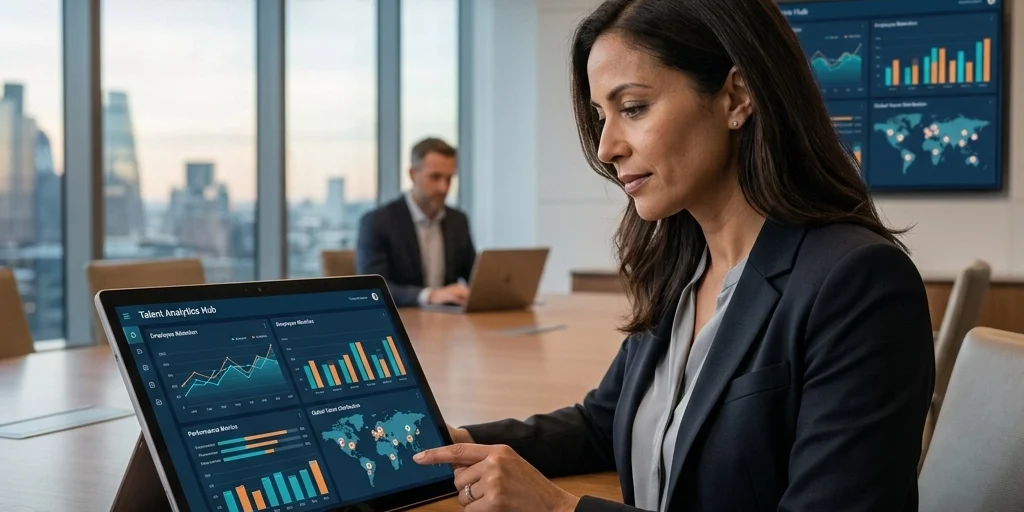
In the current economic landscape of 2026, the traditional resume is becoming a secondary document. For decades, Fortune 100 executives relied on academic credentials: GPAs, standardized test scores, and prestigious university names: as the primary filters for talent acquisition. However, a significant shift is occurring. Decision-makers are realizing that these static metrics are failing to predict actual workplace readiness.
The disconnect between academic success and professional performance has reached a tipping point. As a result, the world’s leading organizations are moving toward real-time talent dashboards. These data-driven tools offer a live look at a candidate's capabilities, digital literacy, and adaptability long before they ever sit down for an interview. This evolution is not just about hiring better; it is about building a "Future Ready" workforce that can navigate an increasingly complex digital economy.
The Failure of Traditional Metrics
For a long time, a high GPA was seen as a proxy for discipline and intelligence. While those traits remain valuable, they do not necessarily translate to the specific competencies required in a modern corporate environment. Research indicates that many recent graduates arrive at their first jobs with impressive transcripts but lack fundamental skills in digital collaboration, media literacy, and technological adaptability.
The core problem lies in the "lagging" nature of traditional data. A degree tells you what a student did over the last four years in a controlled environment. It does not tell you how they handle a real-time crisis, how they manage their professional digital presence, or how quickly they can acquire a new technical skill. When companies rely solely on these outdated indicators, they often face high turnover rates and a heavy burden of remedial training.

Why Real-Time Dashboards Are the New Standard
To solve this, executives are turning to talent dashboards that track live operational indicators. Instead of a single snapshot in time, these platforms provide a longitudinal view of a student’s development. They measure capability accumulation rather than just credential accumulation.
These dashboards typically track several key performance areas, including:
- Digital Engagement Analytics: How does the individual navigate collaborative software? Do they take initiative in technology-mediated settings?
- Skill Acquisition Rates: How quickly can the candidate move from "novice" to "proficient" in a new software or methodology?
- Media Literacy Competency: Can they discern credible information from misinformation? Do they understand the impact of their digital footprint?
- Professional Presence: How effectively do they communicate in a digital-first environment?
By focusing on these metrics, organizations can identify high-potential candidates years before graduation. This allows for a proactive recruitment strategy rather than a reactive one.
The Role of NIL Education and Media Literacy
A unique and powerful data point emerging in 2026 is Name, Image, and Likeness (NIL) education. While originally associated with collegiate athletics, the principles of NIL: personal branding, contract literacy, and digital reputation management: are becoming universal markers for professional success.
Students who engage in NIL education programs demonstrate a high level of media literacy. They understand that every post, comment, and digital interaction is a reflection of their personal brand. For a Fortune 100 executive, a candidate who has successfully managed their NIL is a candidate who understands professional accountability and the nuances of public-facing communication.
Media literacy, in particular, has become a non-negotiable skill. In an era of AI-generated content and rapid information cycles, the ability to analyze and verify media is critical. Real-time dashboards allow employers to see how students engage with information, providing a clear picture of their critical thinking skills.
Positioning Schools as "Future Ready"
This data-driven approach isn't just changing how companies hire; it’s changing how schools operate. Educational institutions that prioritize these real-time metrics are being classified as "Future Ready." These schools serve as anchors for regional talent pipelines, integrating technology not just as a tool, but as a fundamental medium for learning.
USA Entertainment Ventures LLC works as a bridge in this ecosystem, helping organizations identify these "Future Ready" hubs. When schools adopt real-time talent tracking, they provide their students with a significant advantage. They move away from the "teach to the test" model and toward a "train for the career" model.
For more information on how our consulting services help bridge the gap between education and industry, visit usaentertainmentventures.com.
Tangible Business Outcomes: The ROI of Data
The move to real-time talent dashboards is not a trend; it is a calculated business move based on clear ROI. Organizations that engage with "Future Ready" schools and utilize data-sharing partnerships report a significant reduction in time-to-productivity for new hires.
On average, these companies see a 35 percent reduction in onboarding time. Because the candidates have already demonstrated proficiency in digital collaboration and media literacy through their dashboard data, the need for remedial "workplace basics" training is virtually eliminated.
Furthermore, data-driven hiring leads to better retention. When a candidate's skills are matched to a role based on years of engagement data rather than a 30-minute interview, the "fit" is significantly more accurate. This reduces the immense costs associated with turnover and re-hiring.

Strategic Workforce Planning
Beyond individual hiring decisions, real-time dashboards enable high-level strategic workforce planning. Executives can look at the data trends across various "Future Ready" institutions to identify emerging talent gaps before they become critical.
If the data shows a decline in media literacy scores in a specific region, a company can adjust its recruitment strategy or partner with local schools to bolster that specific curriculum. This level of visibility allows for a level of agility that was previously impossible. It turns talent acquisition from a human resources function into a core strategic advantage.
Implementing the Change: Actionable Steps for Executives
Moving to a data-centric talent model requires a shift in both technology and mindset. For executives looking to lead this change, there are several immediate steps to take:
- Audit Your Metrics: Look at your current hiring criteria. How much weight is given to static credentials versus dynamic capability data?
- Identify "Future Ready" Partners: Seek out educational institutions that are already utilizing real-time dashboards and media literacy programs.
- Invest in NIL Literacy: Recognize the value of candidates who have experience managing their digital brand. These skills are highly transferable to corporate reputation management.
- Leverage Business Consulting: Work with experts who understand the intersection of entertainment, media, and talent data to build a robust pipeline.

The Future of Talent is Live
As we look toward the second half of 2026 and beyond, the reliance on real-time data will only increase. The companies that continue to hire based on 20th-century metrics will find themselves struggling to compete for the best talent. Meanwhile, those who embrace the "Future Ready" model will enjoy a workforce that is more productive, more engaged, and better equipped to handle the challenges of the digital age.
Data analytics matters because people matter. By using better data, we can ensure that the right people are in the right roles, with the right skills to succeed. It is a win for the business, a win for the schools, and most importantly, a win for the talent.
For a deeper dive into our various media and sports media initiatives that support these talent pipelines, you can explore our portfolio tags at usaentertainmentventures.com/dt_portfolio_tags-sitemap.xml or check out our latest updates on Zoomedia News.
The transition to real-time talent dashboards is a fundamental shift in how we value human potential. It is an investment in a more transparent, efficient, and capable future. Fortune 100 executives are moving in this direction because the data leaves them no other choice: and the results speak for themselves.





