
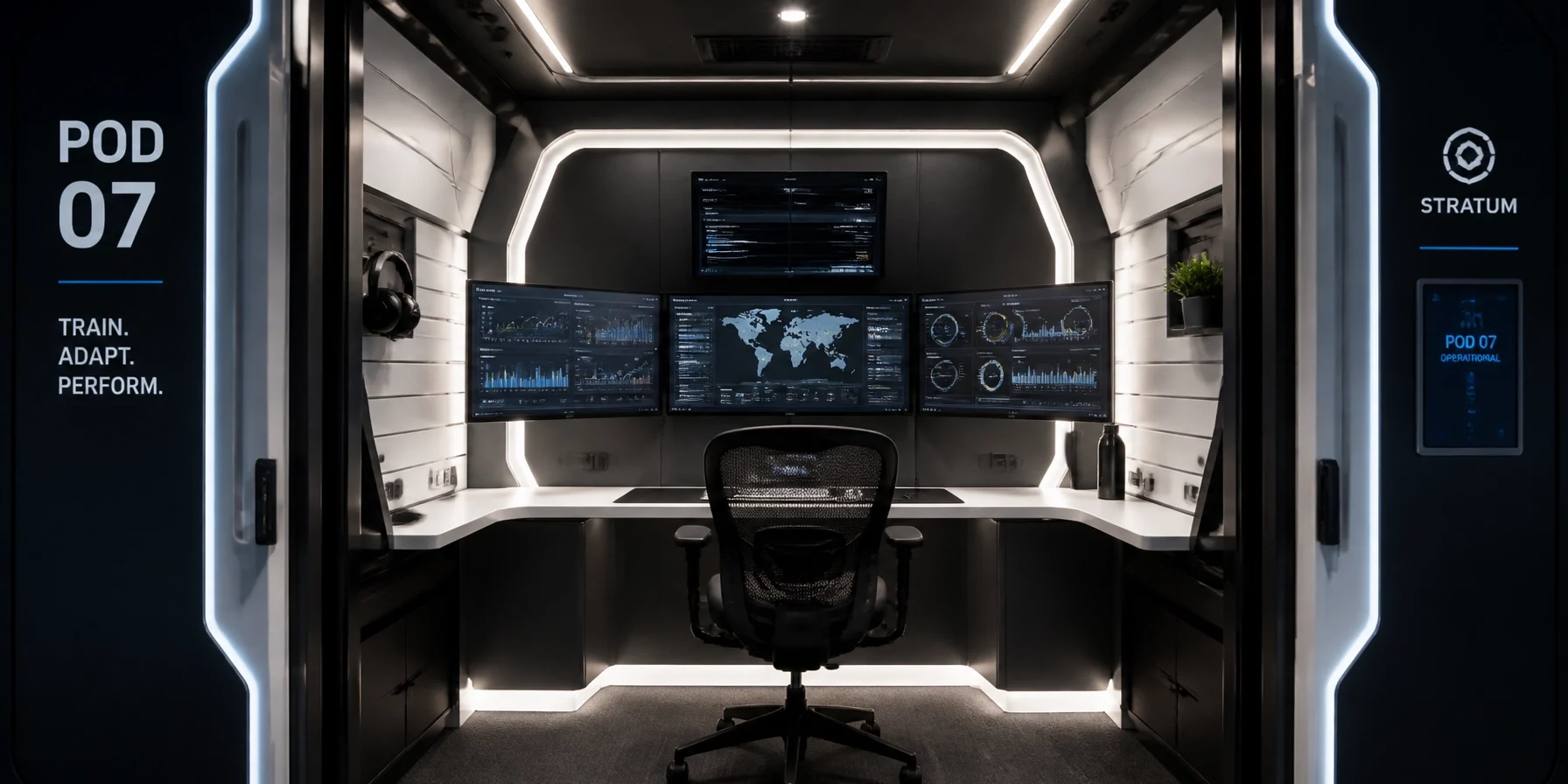
The traditional computer lab, once the cornerstone of technical education and corporate training, is increasingly viewed as a relic of a bygone era. Characterized by rows of static workstations, tangled cables, and rigid infrastructure, these environments often struggle to keep pace with the rapid evolution of modern industry. As businesses and government agencies pivot toward more agile, secure, and specialized operations, the demand for a more flexible solution has emerged. Enter the "Career-Ready Pod": a modular, self-contained environment designed for rapid deployment and high-stakes training.
At USA Entertainment Ventures LLC, we recognize that the future of business development and recruitment, particularly within the Department of Defense (DOD) SkillBridge programs, necessitates a shift toward these high-tech, portable enclaves. This transition is not merely about aesthetic modernization; it is a fundamental shift in how organizations manage human capital and technological infrastructure.
The Evolution of the Learning Environment
For decades, the standard model for technical training involved significant capital investment in "brick-and-mortar" facilities. These labs were often underutilized, difficult to upgrade, and physically tethered to a single location. In contrast, modular training pods represent a "secure by design" approach that prioritizes physical and logical segmentation. According to industry research, these units serve as mission-ready enclaves that can be engineered to stringent standards, including electromagnetic shielding and controlled access protocols typical of Sensitive Compartmented Information Facilities (SCIFs).
The shift from the "dusty lab" to the "career-ready pod" is driven by three primary factors: the need for mobility, the requirement for enhanced cybersecurity, and the demand for specialized environments that mirror real-world professional settings. By adopting a modular approach, organizations can bypass the months-long construction projects associated with traditional builds and instead deploy a fully functional training environment in a matter of minutes.
The "5-Minute" Setup: Logistics of Rapid Deployment
The concept of building a career-ready pod in five minutes is not an exaggeration of speed, but a testament to the efficiency of prefabricated, plug-and-play architecture. These systems are designed to be "dropped" into existing spaces: warehouses, office floors, or even maritime vessels: and brought online almost immediately.

The logistics of this deployment involve integrated power, cooling, and connectivity systems that require only a single point of attachment to the host facility's infrastructure. This mobility allows for training to be conducted "at the point of need." For example, a logistics firm can deploy a cybersecurity training pod directly into a distribution center, ensuring that staff are trained on the specific systems they use daily without the need for off-site travel.
This level of agility is particularly beneficial for DOD SkillBridge recruitment. As transitioning service members move into the civilian workforce, providing them with training environments that mirror the modular, high-stakes nature of military operations can significantly improve retention and performance.
Career Pathway 1: Advanced Logistics and Infrastructure Management
The adoption of modular pods has created a burgeoning career field centered on the logistics and management of these units themselves. Professionals in this sector are responsible for the deployment, maintenance, and technical integration of modular infrastructure across global supply chains.
Current trends indicate that the intersection of logistics and cybersecurity is a critical area of growth. As supply chains become more digitized, the physical units that house the data and training systems must be managed with the same precision as the goods themselves. Careers in this field involve:
- Modular Infrastructure Coordination: Managing the lifecycle of portable training units.
- Supply Chain Security: Ensuring that the deployment of training pods does not introduce vulnerabilities into the broader corporate network.
- Operational Integration: Aligning modular training capabilities with real-time business needs at various geographical sites.
Career Pathway 2: Cybersecurity and Mission-Ready Enclaves
Perhaps the most significant application of the pod model is within the realm of cybersecurity. Traditional open-plan labs are often ill-suited for high-stakes cyber exercises due to the risks of unauthorized physical access and "shoulder surfing." Modular pods solve this by providing a physically isolated environment that aligns with Zero Trust principles.

Inside these pods, candidates can engage in realistic red/blue team simulations: where one group attacks a system and another defends it: without risking the production networks of the host organization. This is essential for organizations working under sensitive government contracts or managing critical infrastructure. The demand for professionals who can operate within these "mission-ready enclaves" is at an all-time high, particularly for roles involving threat analysis, incident response, and secure network architecture.
As an expert in the field recently noted, "The ability to simulate a high-security environment within a modular unit allows for a level of training intensity that traditional labs simply cannot replicate." This intensity prepares candidates for the rigorous demands of modern cybersecurity roles.
Career Pathway 3: Digital Content Creation and Simulation
A third, often overlooked, career pathway enabled by the pod model is digital content creation. Modern training pods can be configured as mini-production studios, allowing for the secure recording of briefings, the creation of high-fidelity simulations, and the development of micro-learning content.

The physical separation provided by the pod allows for high-quality audio and video capture without the ambient noise and visual distractions of a traditional office or lab. This enables organizations to iterate on their training materials rapidly. For instance, a cyber exercise can be recorded and immediately edited into a case study for future trainees. Careers in this domain include:
- Simulation Designers: Creating realistic, data-driven scenarios for logistics and security training.
- Technical Content Producers: Developing secure, multimedia training assets.
- After-Action Review Specialists: Using recorded data from pod sessions to provide detailed performance feedback.
DOD SkillBridge and the Veteran Transition
The synergy between modular pods and DOD SkillBridge recruitment is clear. Transitioning service members are accustomed to working in specialized, often modular, operational environments. By providing training in career-ready pods, businesses can offer a familiar and high-status environment that respects the service member's experience while preparing them for high-growth civilian roles in logistics, cybersecurity, and content creation.
At USA Entertainment Ventures LLC, we facilitate these connections, helping businesses build the infrastructure necessary to attract top-tier talent from the military community. The pod model is not just a tool for training; it is a recruitment asset that signals a commitment to excellence and modern technology.
Actionable Takeaways for Businesses
Transitioning from a traditional lab model to a modular pod system requires a strategic approach. Organizations should consider the following steps:
- Identify High-Risk or High-Value Training Needs: Determine which departments (e.g., cybersecurity or specialized logistics) would benefit most from a dedicated, secure, and mobile environment.
- Audit Existing Infrastructure: Assess whether your current facilities can support the "plug-and-play" deployment of a modular unit.
- Explore Hybrid Models: You do not need to replace every lab overnight. Use traditional labs for general-purpose training and pods for specialized, mission-critical certifications.
- Leverage Recruitment Programs: Align your pod-based training with initiatives like DOD SkillBridge to tap into a highly skilled and disciplined workforce.
Conclusion: A Future-Focused Infrastructure
The shift toward modular, career-ready pods represents more than just a trend in facility management; it is a response to the evolving nature of work itself. By prioritizing security, mobility, and specialization, organizations can create training environments that are as dynamic as the industries they serve. Whether the goal is to secure a global supply chain, defend against advanced cyber threats, or produce the next generation of digital simulations, the pod provides the physical foundation for success.
As we look toward the future, the integration of these systems will continue to blur the lines between learning and operational performance. For businesses and candidates alike, the message is clear: the most effective way to build a career is within an environment designed for the challenges of tomorrow.





