
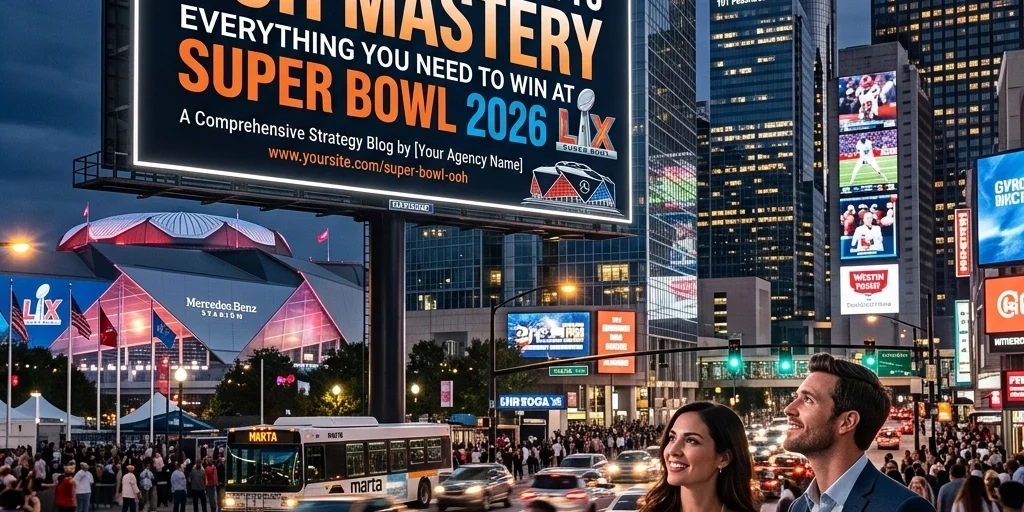
When we talk about the Super Bowl, most people immediately think about the 30-second TV spots that cost a small fortune. But at USA Entertainment Ventures LLC, we look at things a bit differently. As we move through 2026, the game has changed. It’s no longer just about who has the funniest commercial during the second quarter; it’s about who owns the city, the streets, and the entire fan experience from the moment they step off the plane.
I’m Dan Kost, and I’ve spent years watching brands dump millions into "blink-and-you-miss-it" digital ads. If you want to win at an event of this magnitude, you need to think bigger. You need to think about Out-of-Home (OOH) mastery. We’re talking about creating an environment where your brand isn’t just seen: it’s experienced.

Why OOH Still Dominates the Big Game
Let’s be real: TV is great, but it’s crowded. During the Super Bowl, the noise level on social media and television is deafening. Out-of-Home advertising, however, offers something that digital and broadcast media can’t: physical presence. You can’t swipe past a building wrap. You can’t ad-block a digital billboard on the way to the stadium.
OOH works because it follows the fan journey. Statistics show that fans attending major sporting events follow predictable, repeatable routes over a period of three to five days. This creates a "stacking effect." Every time a fan sees your brand: at the airport, on the highway, outside their hotel, and finally at the stadium: the recall value triples. It’s about building a narrative that lasts longer than a 30-second snack break.
Mapping the Complete Fan Journey
Winning at the Super Bowl requires a sequenced approach. You can't just throw up one billboard and call it a day. You have to map out where the fans are going and be there before they even realize they’re looking for you.
1. City Entry and High-Net-Worth Touchpoints
The journey starts at the airport. This is where you reach the high-movers, the corporate sponsors, and the die-hard fans who have traveled across the country. Airport corridors and transportation hubs are prime real estate. According to industry experts, these first impressions set the "halo effect" for the rest of the trip. If your brand greets them at the gate, you’ve already won the first quarter.
2. The Transit Transition
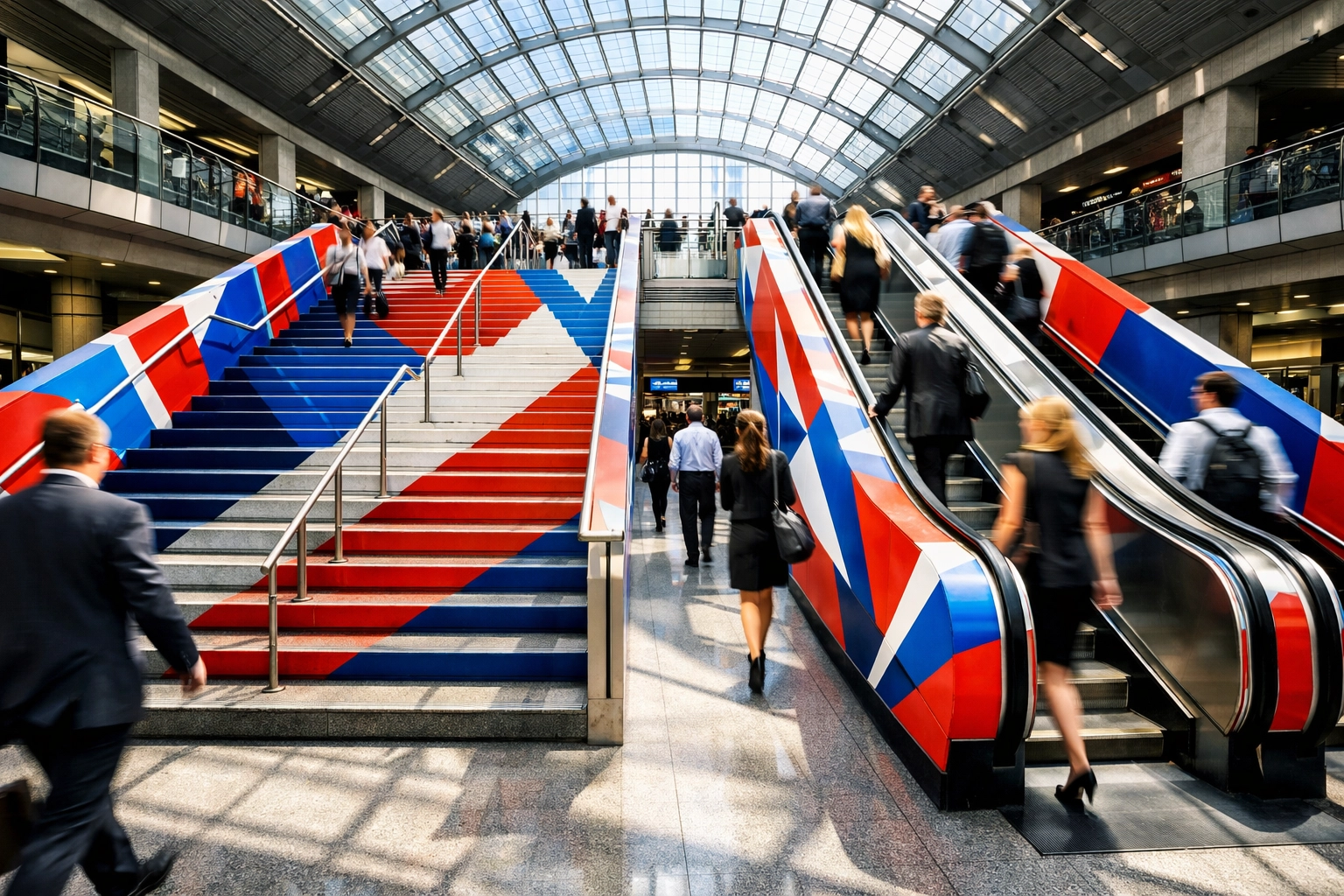
Once they leave the airport, fans are in motion. They are taking Ubers, shuttles, and light rails. This is where vertical integration comes into play. Think vinyl wraps on stairs, escalators, and even floor graphics at the main entrances of popular fan zones. These placements ensure your message follows fans between levels of the city, creating a sense of brand omnipresence.
3. The Stadium Perimeter and Game Day Chokepoints
On game day, the focus narrows to the stadium. The perimeter, entry gates, and concourses are unavoidable chokepoints. This is where dwell time is at its highest. When people are waiting in line for food or navigating to their seats, they aren't looking at their phones: they’re looking at their surroundings. This is the prime time for high-impact visuals that demand attention.
Owning the Environment: The Sporttron Digital Network
If you want to take your OOH game to the next level, you have to look at digital networks. This is where we at USA Entertainment Ventures LLC really see the future of event marketing. Our work with the Sporttron Digital Network is a prime example of how to dominate a physical space using cutting-edge technology.
Digital OOH (DOOH) allows for real-time adaptation. If a star player makes a record-breaking play, a static billboard stays the same. But a digital network? It can reflect that play within minutes. That kind of emotional connection with a live audience is priceless.
Check out how we visualize this environmental ownership in action:
https://www.youtube.com/watch?v=l6J-0zileKE
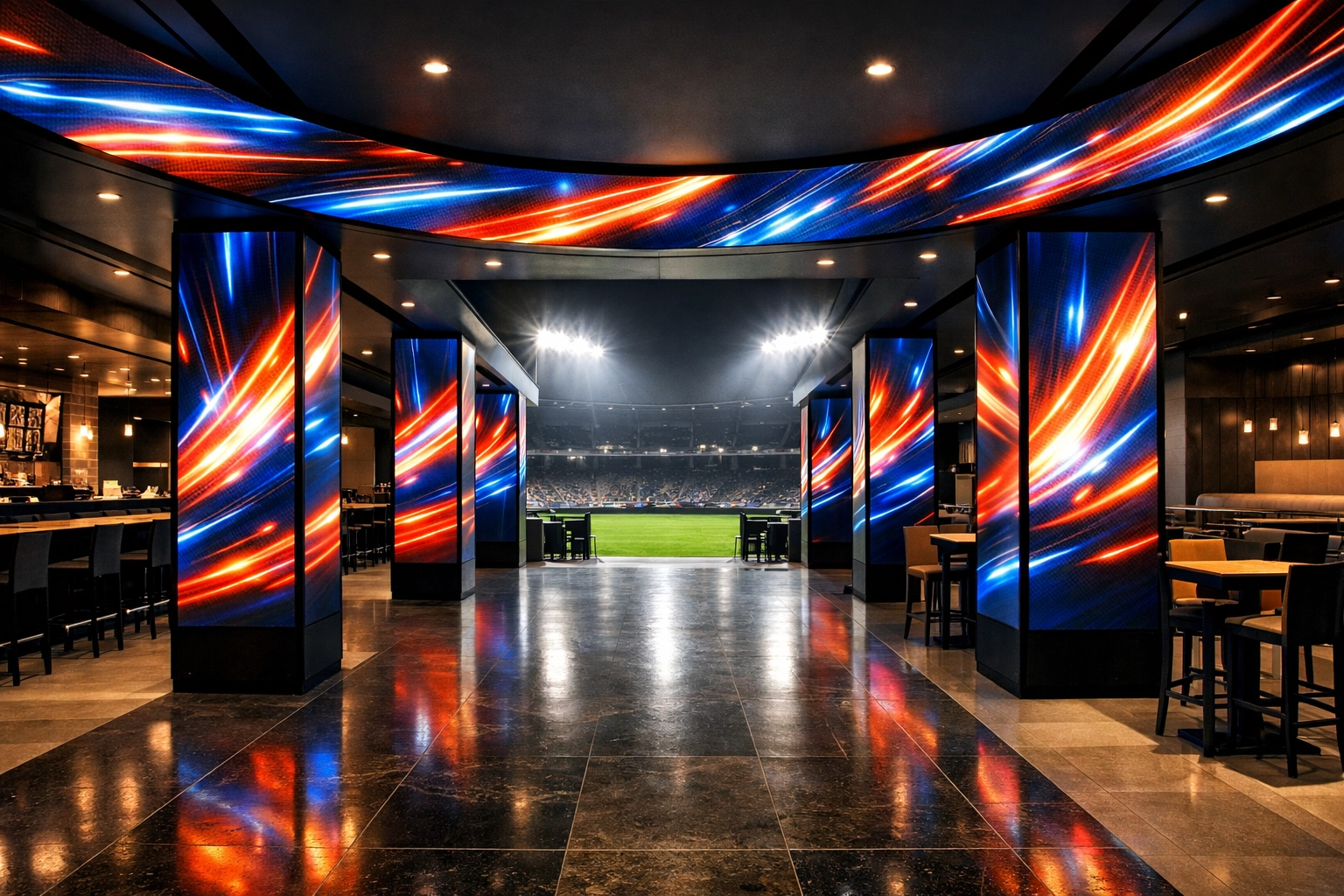
The Sporttron network isn't just about showing an ad; it's about owning the atmosphere. Whether it's through massive LED boards or synchronized screens across a venue, the goal is to make the brand part of the event's DNA. For more details on how we integrate these technologies, you can check out our services page.
Creative Execution: Design for the Streets, Not the Screen
A common mistake brands make is taking their TV creative and simply slapping it onto an outdoor board. That’s a recipe for failure. Super Bowl OOH is consumed in motion. People are walking, laughing, and scanning crowds.
Here are the golden rules for Super Bowl OOH creative:
- High Contrast is King: Use bold colors that pop against a city skyline or a concrete stadium.
- The 5-Second Rule: If a driver or a pedestrian can’t understand your message in five seconds, it’s too complicated. Keep the copy short and the imagery massive.
- Scale for Distance: A floor graphic needs a different design philosophy than a 50-foot LED board. Design for the specific viewing distance of each placement.
- Be Landmark-Worthy: Aim to create something so iconic that fans use it as a meeting spot. "Meet me by the giant [Your Brand] mural" is the ultimate win.
The Social Media Multiplier Effect
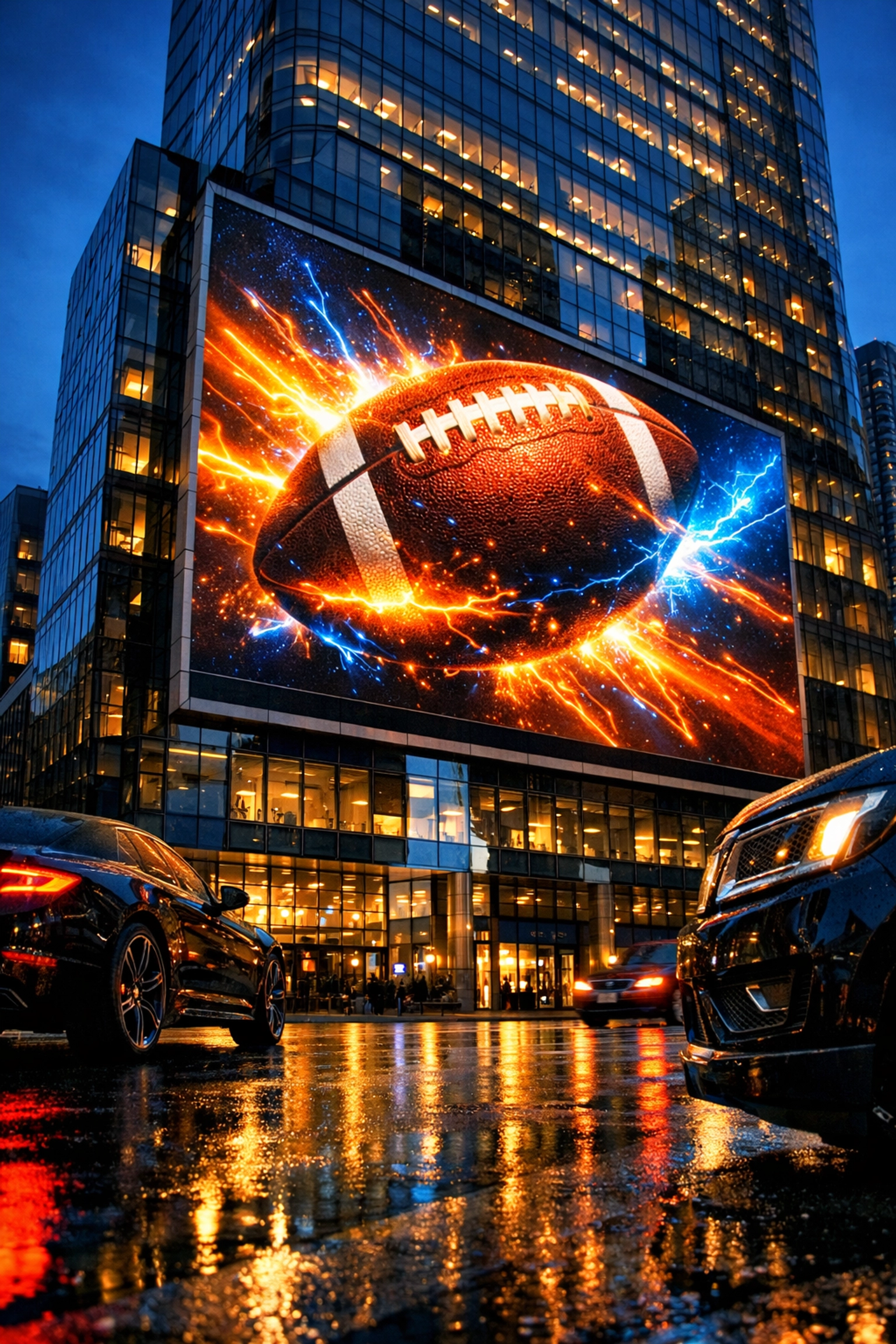
In 2026, OOH is the ultimate "top of funnel" for social media. When you design a placement to be "Instagrammable," your reach extends far beyond the people physically present in the city.
When a fan takes a selfie in front of a massive, well-designed brand mural and posts it to their 5,000 followers, they’ve just become a mini-influencer for your brand. This creates a multiplier effect where a single physical placement can reach hundreds of thousands of people online without any additional media spend. We call this "earned reach," and it’s the secret sauce of modern Super Bowl marketing.
Imagine a digital billboard that displays live social feeds or poll results. It bridges the gap between the physical and digital worlds, making the fan feel like they are part of the conversation. If you’re interested in seeing how we’ve executed this in the past, take a look at our showcase.
Strategic Coordination: Moving from Ads to Environments
The brands that "win" the Super Bowl aren't necessarily the ones with the biggest budget; they’re the ones with the best coordination. It’s about moving from isolated ads to an orchestrated presence.
If your brand is at the airport, on the transit route, and then dominates the Sporttron Digital Network inside the venue, you haven't just bought advertising space: you’ve owned the environment. You’ve created a world where the fan is constantly interacting with your brand at every high-emotion moment of their trip.
As a business consulting firm, USA Entertainment Ventures LLC focuses on these high-level strategies to ensure our clients aren't just spending money, but are actually building equity. You can learn more about our approach on our about page.
Final Thoughts: The Path to 2026 Dominance
The road to Super Bowl 2026 is paved with opportunity for those willing to look beyond the television screen. By leveraging the power of OOH mastery and the real-time capabilities of digital networks, brands can achieve a level of dominance that was previously impossible.
Remember, the goal isn't just to be seen: it's to be unavoidable. It's about being the first thing they see when they arrive and the last thing they remember when they leave. That’s how you win at the Big Game.
If you’re ready to start planning your takeover, or if you have questions about how to integrate digital networks into your strategy, don’t hesitate to reach out. We’re always here to talk shop and help you navigate the complex world of entertainment ventures. Drop us a line on our contact page.
Let's make 2026 the year your brand takes over the environment. It’s going to be a wild ride, and the best time to start planning is right now. Stick to the basics, focus on the fan journey, and don’t be afraid to go big. That’s the Dan Kost way.





