
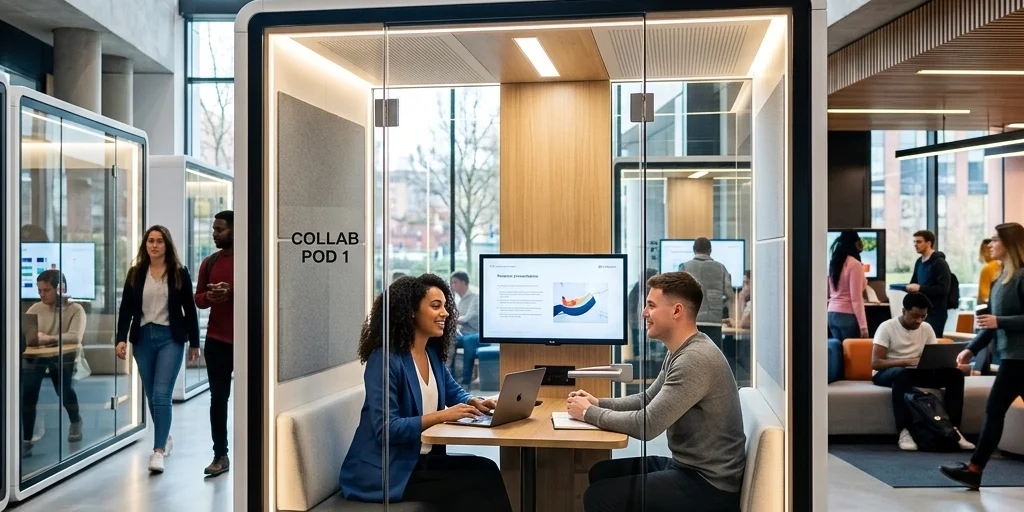
If you grew up anytime between the mid-90s and the early 2010s, you likely have a very specific sensory memory of the "computer lab." It was a room that smelled faintly of ozone and dust, filled with rows of beige (then black) towers, tangles of VGA cables, and those suspiciously sticky keyboards. It was a place where we learned to type "The quick brown fox" and, if we were lucky, play a bit of Oregon Trail before the bell rang.
Fast forward to April 2026, and the traditional computer lab is looking more like a museum exhibit than a modern educational or professional hub. The rows of static desks are being dismantled, and in their place, something far more efficient, sleek, and, frankly: cool is appearing: The High-Tech Pod.
At USA Entertainment Ventures LLC, we spend a lot of time looking at how physical infrastructure intersects with business growth. What we’re seeing right now isn’t just a change in furniture; it’s a fundamental shift in how we prepare people for the workforce. High-tech pods are the new computer labs, but instead of teaching general "computer literacy," they are hyper-specialized engines for career pathways in logistics, cybersecurity, and content creation.
The Death of the "One-Size-Fits-All" Lab
The fundamental problem with the traditional computer lab was its rigidity. If you wanted to teach a class on cybersecurity and then a class on video editing in the same room, you were essentially making a massive compromise. The cybersecurity students needed networking isolation and multiple monitors, while the editors needed high-end GPUs and soundproofing. You ended up with a room that was "okay" at everything but "great" at nothing.
Plus, let’s talk about the overhead. Maintaining a traditional lab is a logistical nightmare. You have to cool the entire room (HVAC costs are no joke), manage the square footage of a full classroom, and deal with the "cascading failure" problem: where one faulty wire or a cooling outage can take down thirty machines at once.
According to recent industry data, organizations that switch from centralized labs to modular, pod-based systems see cost savings between 50 and 75 percent. Those aren't just "nice to have" numbers; those are "reinvest in the business" numbers. Pods are modular, purpose-built, and require a fraction of the footprint.
Cybersecurity: The Mini-SOC Revolution
In 2026, cybersecurity isn't just a job; it’s a necessity. But you can't learn to defend a network on a generic laptop sitting in a noisy cafeteria. True cybersecurity training requires an environment that mimics reality.
This is where the high-tech pod becomes a "mini-SOC" (Security Operations Center). Instead of a generic desk, a pod can be outfitted with specialized hardware, triple-monitor arrays for real-time threat monitoring, and an isolated network environment where students can safely "detonate" malware without risking the entire building’s Wi-Fi.
These pods provide a "plug-and-play" command center. For educational institutions or businesses looking to upskill their workforce, it means you can drop a cybersecurity pod into a hallway or a corner of an office and instantly have a professional-grade training facility. It’s about creating a career pathway that feels like the actual job from day one. If you’re curious about how these specialized environments look in practice, checking out projects like the E-Sports Pod gives a glimpse into the high-performance hardware and focused environments we’re talking about.
Content Creation: From "Lab" to "Studio"
If you’ve tried to record a podcast or a high-quality video in a traditional computer lab, you know the pain. You’re fighting the hum of twenty other computers, the echo of the room, and the guy three rows over who is eating chips.
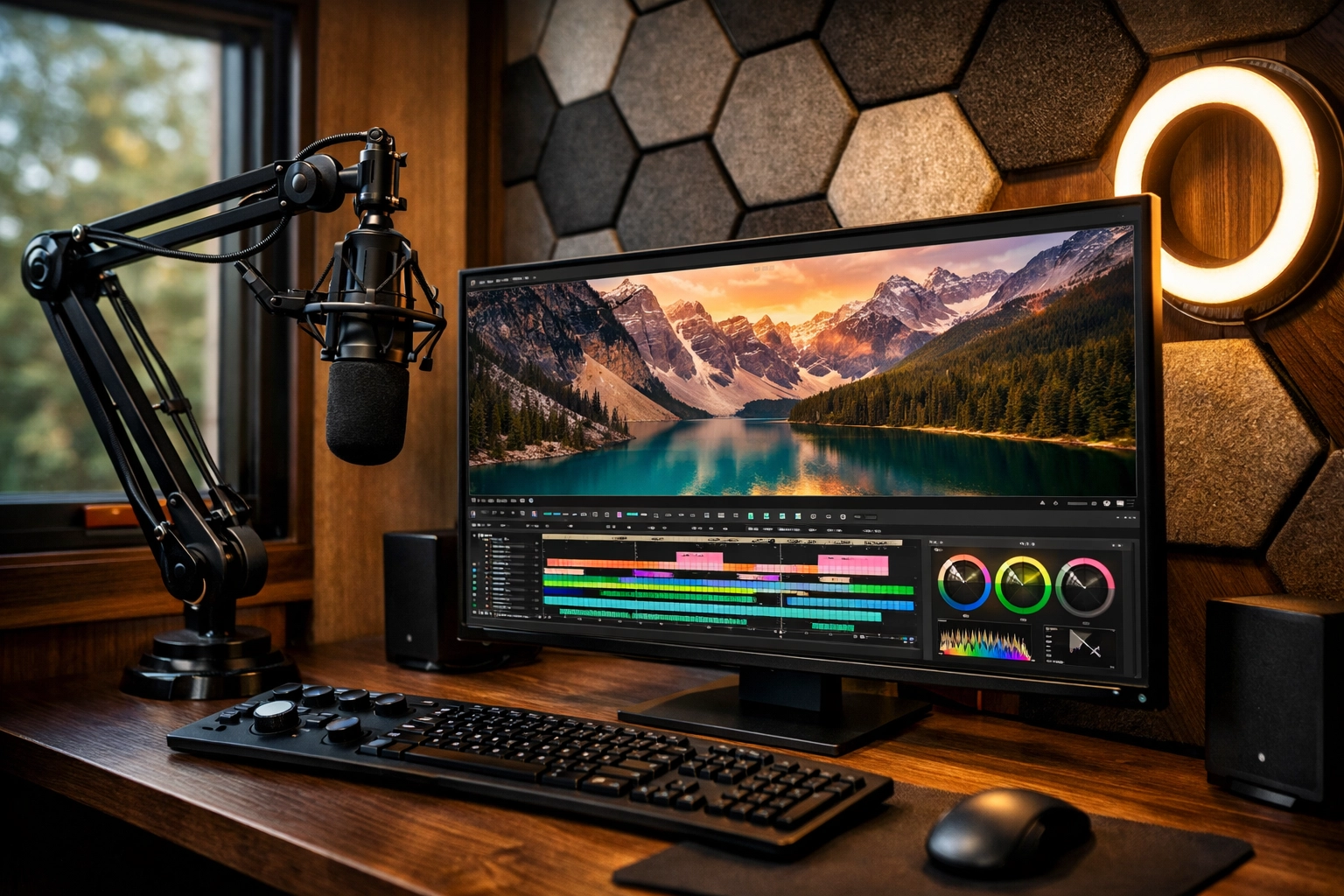
The new "computer lab" for content creators is an acoustically treated, self-contained pod. These units are designed with the creator in mind:
- Built-in Acoustics: No more "bathroom echo" on your professional voiceovers.
- High-End GPUs: Dedicated power for 8K video rendering and 3D modeling.
- Controlled Lighting: Because nobody looks good under the flickering fluorescent lights of a 1980s office building.
The content creation pathway is one of the fastest-growing sectors in the modern economy. By providing a pod-based infrastructure, businesses and schools are essentially saying, "We aren't just giving you a computer; we're giving you a professional studio." This shift is reflected in the work being done at ZooMediaUS, where the focus is on high-impact visual delivery.

Logistics and the Physical Infrastructure of the Future
You might wonder how "logistics" fits into a conversation about high-tech pods. It’s simple: the pod is a logistics solution.
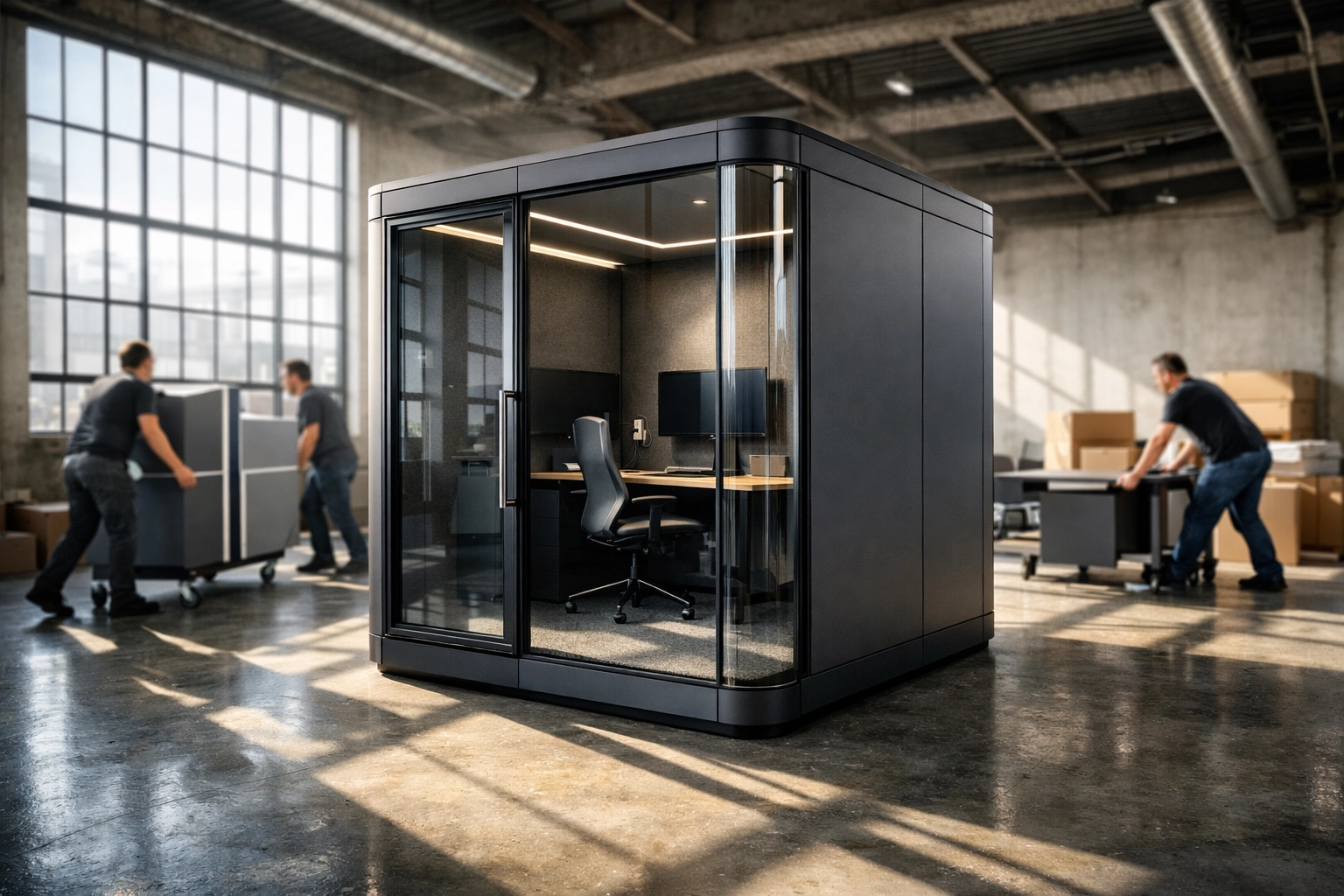
Think about the traditional way of building a tech lab. You need architects, contractors, electricians, and IT specialists to spend months wiring a room. With a high-tech pod, you have a "Product as a Service." You order the pod, it arrives on a pallet, you plug it in, and you’re operational.
This is the "Logistics Pathway" in action. Professionals in this field are now focusing on the deployment of modular infrastructure. Whether it’s setting up remote command centers for EV Across America or managing the hardware for Mobile HWY Ads, the future is modular.
Pods allow for "hub-and-spoke" deployment. You can have a central office and send specialized pods to satellite locations, ensuring that every employee: no matter where they are: has access to the exact same high-tech environment.
The "BYOD" Hybrid Model
We can’t talk about the new computer lab without mentioning the "Bring Your Own Device" (BYOD) trend. In 2026, most people have a smartphone or a laptop that is more powerful than the supercomputers of twenty years ago. We don’t need the computer lab to provide the computer as much as we need it to provide the infrastructure.
The modern pod serves as a dock for your digital life. You bring your laptop, plug it into the pod’s "brain," and suddenly you have access to the triple-monitor setup, the high-speed fiber connection, the professional microphone, and the soundproof privacy. It’s the ultimate upgrade to your personal device.
This flexibility is why everyone is talking about them. It removes the barrier to entry for high-level work. You don’t need to own a $10,000 workstation if you have access to a pod that provides the "heavy lifting" hardware and connectivity.
Why Organizations are Making the Switch
If you’re a CEO like Dan Kost, or an administrator at a university, you’re looking at the bottom line. Traditional labs are "sunken costs." They lose value the moment you finish the construction. Pods, however, are assets.
- Portability: If you move offices, you take the pods with you. You don’t leave $50,000 worth of electrical work and built-in desks behind.
- Scalability: Need five more cybersecurity stations? You don’t need a new wing on the building. You just need five more pods.
- Targeted Upgrades: Instead of replacing 30 computers because five of them are slow, you can upgrade specific pods for specific career paths. You can see how we manage various ventures and projects by browsing our full project list.
Final Thoughts: The Pod as a Destination
We’re moving away from the idea that a "lab" is just a room with computers. In 2026, the lab is a destination. It’s a place you go to escape the distractions of the open office or the chaos of the home environment. It’s a place where the physical space is as smart as the software you’re running.
High-tech pods represent the democratization of professional-grade work. Whether you’re diving into the complexities of cybersecurity, producing the next viral media campaign, or managing the global logistics of a fleet, the pod provides the environment you need to succeed.
The beige towers are gone. The tangles of VGA cables are in the recycling bin. The future of work is self-contained, modular, and incredibly high-tech. It’s time to step into the pod.
If you’re interested in learning more about how USA Entertainment Ventures LLC is navigating this shift in business consulting and infrastructure, feel free to explore our sitemap or check out our specialized work in Sports Media. The future is being built one pod at a time( don't get left in the old lab.)





