

As of April 16, 2026, the landscape of the American workforce has shifted dramatically. What worked for a Fortune 100 company five years ago is now a liability. We aren't just looking for "workers" anymore; we are looking for a generation of talent that is media-literate, digitally fluent, and "Future Ready."
At USA Entertainment Ventures LLC, I often see executives clinging to outdated playbooks. They assume that if they have a strong brand and a decent salary offer, the talent will follow. But the "Future Ready" workforce: those currently in our schools and universities: values different things. They value transparency, technological integration, and a clear path toward financial independence, including Name, Image, and Likeness (NIL) literacy.
If your workforce strategy feels like it's stalling, you’re likely making one of these seven common mistakes. Here is how to fix them and position your organization as an anchor for the next generation of talent.
1. The Digital-Only Delusion
The first mistake many Fortune 100 executives make is assuming that because we live in a digital age, every strategy should be digital-only. They design cloud-based training and remote recruitment platforms, assuming everyone has equal access.
The data tells a different story. According to the FCC, approximately 19 million Americans still lack access to high-speed broadband. When you rely solely on digital delivery, you create a "participation gap." You are essentially ignoring a massive pool of talent in rural and underserved areas.
The Fix: Implement physical distribution systems. At USA Entertainment Ventures, we believe in tangible access points. Whether it’s through mobile technology centers or localized hubs, your workforce strategy must have a physical footprint. Bridging the digital divide ensures that your talent pipeline isn’t restricted to those who already have the best internet connection.
2. Treating Data as a Spreadsheet, Not a Dashboard
Many companies are swimming in data but starving for insights. HR departments often provide CEOs with massive spreadsheets that show headcount, turnover rates, and hiring costs. While this data is accurate, it is often stale by the time it reaches the C-Suite.
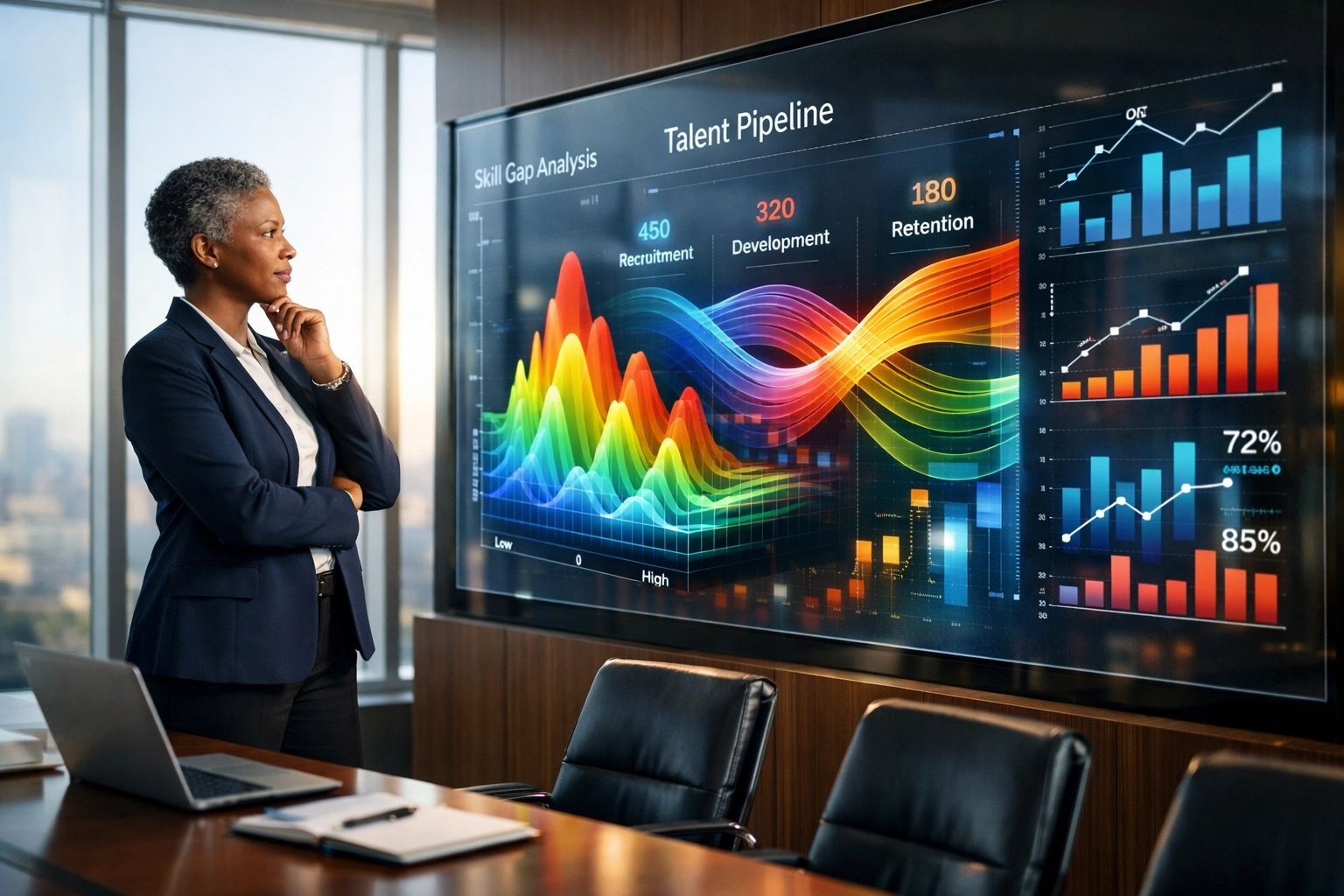
Executives in 2026 cannot make decisions based on last month's PDF report. They need real-time visualization to understand the health of their talent pipeline.
The Fix: Move toward centralized data analytics dashboards. A real-time dashboard allows you to see "skill deserts" before they become bottlenecks. It tracks media literacy outcomes and certification progress in real-time. When you can see your workforce data visualized, you can make proactive adjustments rather than reactive apologies.
3. Ignoring NIL Education for the Modern Employee
NIL (Name, Image, and Likeness) is no longer just a term for college athletes. In 2026, every "Future Ready" student is essentially their own brand. They understand how to market themselves, manage their social presence, and monetize their skills.
When Fortune 100 companies ignore NIL education, they miss a critical component of what motivates the modern worker. If your workforce strategy doesn’t acknowledge the employee's personal brand, you will struggle to retain top-tier talent who feel stifled by traditional corporate structures.
The Fix: Integrate NIL education into your corporate training. Show your employees how to manage their professional "brand" within your company’s framework. Use programs like Money Smart to teach financial literacy and brand management. When an employee feels that their company is an advocate for their personal growth and financial intelligence, their loyalty increases tenfold.
4. Overlooking Media Literacy Outcomes
We live in an era of information overload. A major mistake in modern workforce strategy is assuming that "digital native" means "media literate." Just because a new hire can navigate an app doesn't mean they can vet a source, identify misinformation, or communicate effectively in a high-stakes media environment.
Poor media literacy leads to decreased productivity, internal communication breakdowns, and even PR disasters.
The Fix: Make media literacy a core outcome of your workforce program. "Future Ready" schools are already prioritizing this, and your organization should be an anchor for these initiatives. This isn't just a "soft skill": it’s a survival skill. Training should focus on critical thinking, data verification, and digital communication tools that ensure your team can handle the complexities of the 2026 media landscape.
5. Reactive "Firefighting" vs. Proactive Pipeline Building
Most Fortune 100 companies wait until they have a vacancy to start looking for talent. This reactive "firefighting" is expensive. It leads to high recruiting fees, rushed training, and high turnover because the "fit" wasn't right.
If you are only talking to talent when you need them today, you’ve already lost the battle for tomorrow.
The Fix: Position your company as an anchor for "Future Ready" schools. Don't wait for students to graduate; engage them while they are still learning. By partnering with educational institutions, you can help shape the curriculum to match your future needs. This creates a sustainable pipeline of candidates who are already familiar with your company culture and tools before they even apply for their first role.
6. The Engagement Gap: Missing the Entertainment-to-Education Pipeline
Many executive teams overestimate how much a person is motivated by a paycheck alone. They underestimate the "Engagement Gap." If your training and recruitment feel like a chore, you won’t get the best from your people.
One of the biggest missed opportunities is failing to leverage the "Entertainment-to-Education" pipeline.
The Fix: Gamify the experience. Use platforms that young talent actually enjoys. For example, E-Sports Pods and gaming competitions aren't just for fun: they are training grounds for cloud computing, troubleshooting, and collaborative problem-solving. When you embed training within engaging, high-energy activities, the retention of information skyrockets.
7. Siloed Leadership (HR vs. C-Suite)
The final mistake is keeping workforce strategy in a silo. In many organizations, the CEO focuses on the bottom line while HR focuses on "people issues." This disconnect is fatal in a competitive market. Workforce strategy is business strategy. If the CEO isn't looking at the workforce dashboard every morning, the company isn't truly aligned.
The Fix: Elevate workforce development to a C-Suite priority. Human capital should be managed with the same rigor as financial capital. This requires specialized business consulting to ensure that your people goals are directly tied to your revenue goals. When leadership is unified, the entire organization moves faster.
Becoming an Anchor for a "Future Ready" World
At USA Entertainment Ventures LLC, we see these mistakes every day, but we also see the incredible results when they are fixed. The goal isn't just to fill seats; it’s to build a resilient, media-literate, and financially savvy workforce that can navigate the uncertainties of the future.
By shifting from spreadsheets to interactive dashboards, embracing NIL education, and bridging the digital divide with physical infrastructure like Pure Box Water initiatives or localized tech centers, you don’t just improve your company: you improve the community.
The future of the Fortune 100 isn't just about what you sell. It’s about how you empower the people who build it. Let’s stop making these seven mistakes and start building a workforce strategy that is actually ready for 2026 and beyond.

Final Thoughts from Dan Kost, CEO:
We’re in a new era. The "Future Ready" label isn't just for schools; it's for companies too. If you want to stay on top, you have to look at the data, get involved in the schools, and understand that media literacy is the new currency. We’re here to help you navigate that shift.
For more information on our workforce consulting and digital projects, visit us at USA Entertainment Ventures.





