
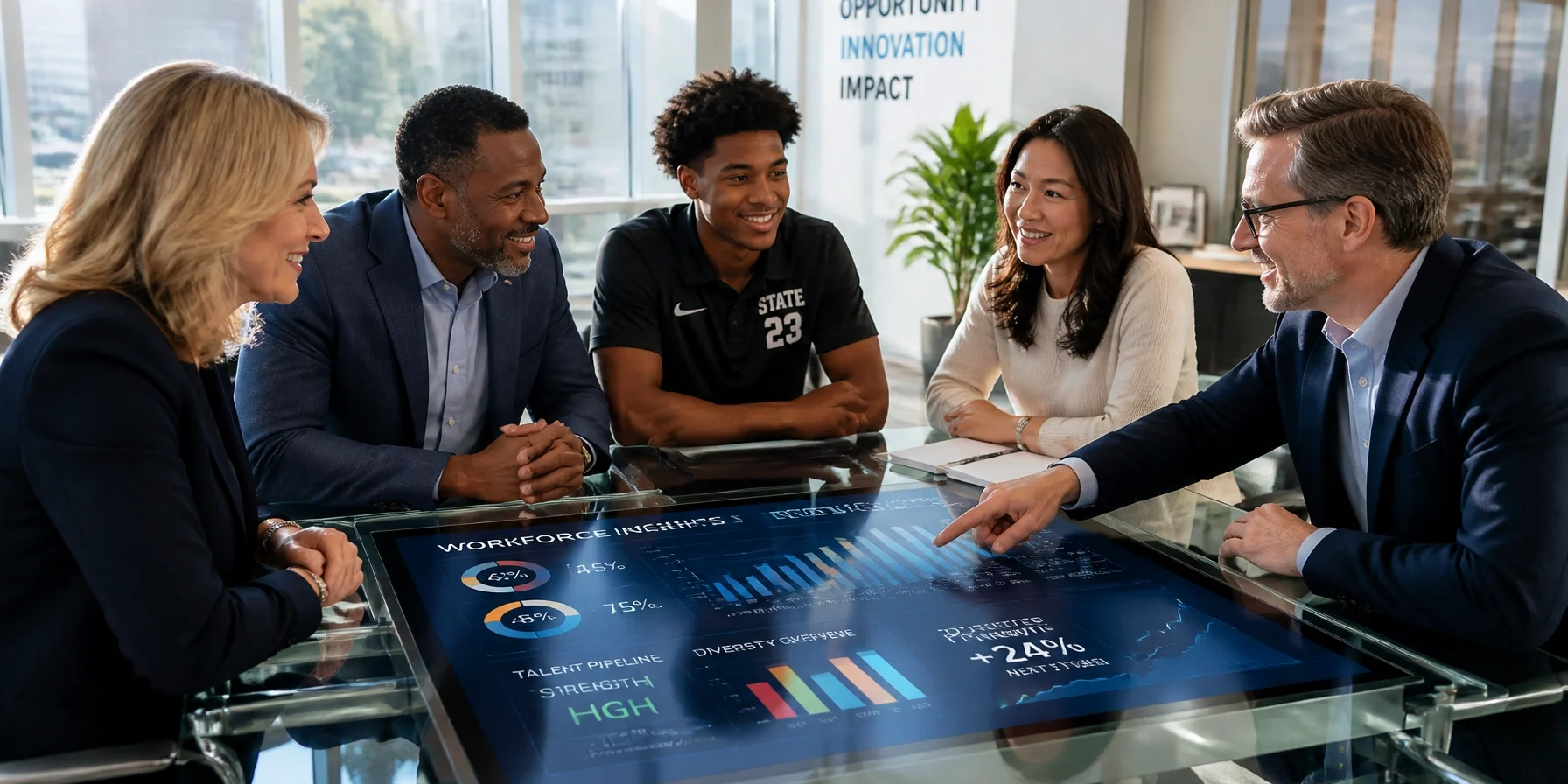
In the rapidly evolving landscape of modern education and professional recruitment, the traditional approach to workforce strategy is no longer sufficient. As institutions strive to become "Future Ready," they face a complex intersection of student-athlete Name, Image, and Likeness (NIL) regulations, digital media literacy requirements, and the necessity of tapping into diverse talent pipelines like the Department of Defense (DOD) SkillBridge program.
At USA Entertainment Ventures LLC, we observe that many executive leaders are navigating these waters using outdated maps. Strategic workforce planning is no longer a human resources function performed in a vacuum; it is a data-driven discipline that bridges the gap between today’s classroom and tomorrow’s boardroom. Research indicates that organizations leveraging advanced workforce analytics see a significant improvement in talent retention and operational efficiency. However, the path to becoming a data-anchored institution is often blocked by seven common strategic errors.
1. Relying on "Rear-View" Data Planning
The most frequent mistake in workforce strategy is the over-reliance on historical data. Many schools and organizations model their future staffing and student programs based on where they were three years ago, rather than where the market is moving.
When planning for "Future Ready" outcomes, historical headcount is a poor predictor of future competency needs. For example, the sudden emergence of NIL rights for student-athletes caught many institutions off-guard, requiring a rapid shift in administrative and educational support that historical budgets did not account for.
The Data Fix: Transition to predictive modeling. By integrating labor-market trends, NIL regulatory shifts, and enrollment projections into a centralized dashboard, leaders can anticipate needs before they become crises. Data-driven forecasting allows for proactive hiring and curriculum development, ensuring that the institution remains an anchor for student success in a shifting economy.
2. Treating NIL Education as a Side Project
NIL is often viewed strictly through the lens of athletic compliance. This is a critical strategic error. NIL is, at its core, a workforce development opportunity. It is the first real-world business experience many students encounter, involving contract law, financial management, and personal branding.
Ignoring the educational component of NIL leaves students vulnerable and the institution at risk of reputational damage. Furthermore, it misses the chance to develop highly marketable skills in students that employers: ranging from marketing agencies to corporate brands: desperately seek.
The Data Fix: Implement NIL education tracking within your student success dashboards. By quantifying engagement with financial literacy and brand management modules, institutions can demonstrate clear "Future Ready" outcomes. This data provides proof to stakeholders that the program is not just about sports, but about developing business-literate graduates.

3. The Media Literacy Gap
In an era of misinformation and digital volatility, media literacy is a fundamental workforce skill. Yet, many workforce strategies overlook it entirely. Media literacy involves the ability to analyze, evaluate, and create media in various forms: skills that are essential for any professional managing a digital presence or a corporate brand.
A lack of media literacy leads to poor decision-making and increased organizational risk. When staff and students cannot distinguish between credible data and digital noise, the entire strategic foundation of the organization is weakened.
The Data Fix: Establish "Media Literacy Outcomes" as a key performance indicator (KPI). Using assessment data to track the proficiency of students and staff in digital communication and verification ensures that your workforce is equipped to handle the complexities of the modern information ecosystem. USA Entertainment Ventures LLC specializes in creating the frameworks that measure these vital competencies.
4. Underutilizing the DOD SkillBridge Pipeline
Recruitment often suffers from a narrow focus on traditional talent pools. One of the most significant missed opportunities in modern workforce strategy is the failure to integrate the DOD SkillBridge program. This program allows transitioning service members to gain civilian work experience during their last 180 days of service.
Veterans bring unparalleled leadership, discipline, and technical skills to the table. For schools and businesses looking to fill high-impact roles, this pipeline is a goldmine of pre-vetted, highly motivated talent.
The Data Fix: Integrate veteran recruitment metrics into your HR dashboards. Tracking the success and retention of SkillBridge participants provides empirical evidence of the program's ROI. By making veteran recruitment a visible, data-tracked priority, institutions can strengthen their internal culture and operational resilience simultaneously.

5. Measuring Headcount Instead of Capabilities
A common mistake is the "body in a chair" metric. Traditional dashboards focus on how many people are employed, but they rarely measure what those people are actually capable of doing. This creates a "hidden" skills gap where an institution may be fully staffed but lack the specific digital or analytical skills required to execute a modern strategy.
The Data Fix: Shift to skills-based analytics. Modern workforce dashboards should map the specific competencies of the staff: such as data visualization, NIL advising, or media strategy: against the institution's strategic goals. This allows for targeted professional development rather than generic, low-impact training.
6. Siloed Data Ecosystems
In many institutions, the Athletics department, HR, and Academics operate on separate data islands. When data is siloed, it is impossible to get a holistic view of the organization's health or its progress toward becoming "Future Ready." For instance, student-athlete performance data might not be linked to their career outcome data, obscuring the impact of NIL education on their long-term professional success.
The Data Fix: Cross-functional data integration. By consolidating data from disparate departments into a unified analytics platform, executive leaders can see the "big picture." This transparency fosters collaboration and ensures that every department is pulling in the same direction toward institutional goals.
7. Lack of Real-Time Monitoring
The final mistake is treating workforce strategy as an annual event tied to the budget cycle. In a world where a single social media post can change an institution's reputation or a new NIL ruling can alter the recruitment landscape overnight, annual reviews are obsolete.
The Data Fix: Continuous monitoring via real-time dashboards. Decision-makers need access to live data to make informed adjustments. Whether it is tracking the immediate impact of a new media literacy curriculum or monitoring the recruitment pipeline for a critical DOD SkillBridge role, real-time data provides the agility required to lead in the 21st century.

Conclusion: The Path to a Future Ready Institution
The transition from a reactive workforce strategy to a data-anchored, proactive approach is not just a technological shift; it is a cultural one. By addressing these seven mistakes, institutions can position themselves as true leaders in the "Future Ready" movement.
At USA Entertainment Ventures LLC, we are committed to helping organizations navigate these complexities. From managing DOD SkillBridge recruitment to implementing robust NIL education frameworks and media literacy assessments, we provide the expertise and the data tools necessary for success.
The future of the workforce is data-driven, media-literate, and inclusive of diverse talent pipelines. By fixing these common strategic errors today, you ensure that your institution remains an anchor of excellence for years to come.
Explore how we can help you refine your strategy at usaentertainmentventures.com.





