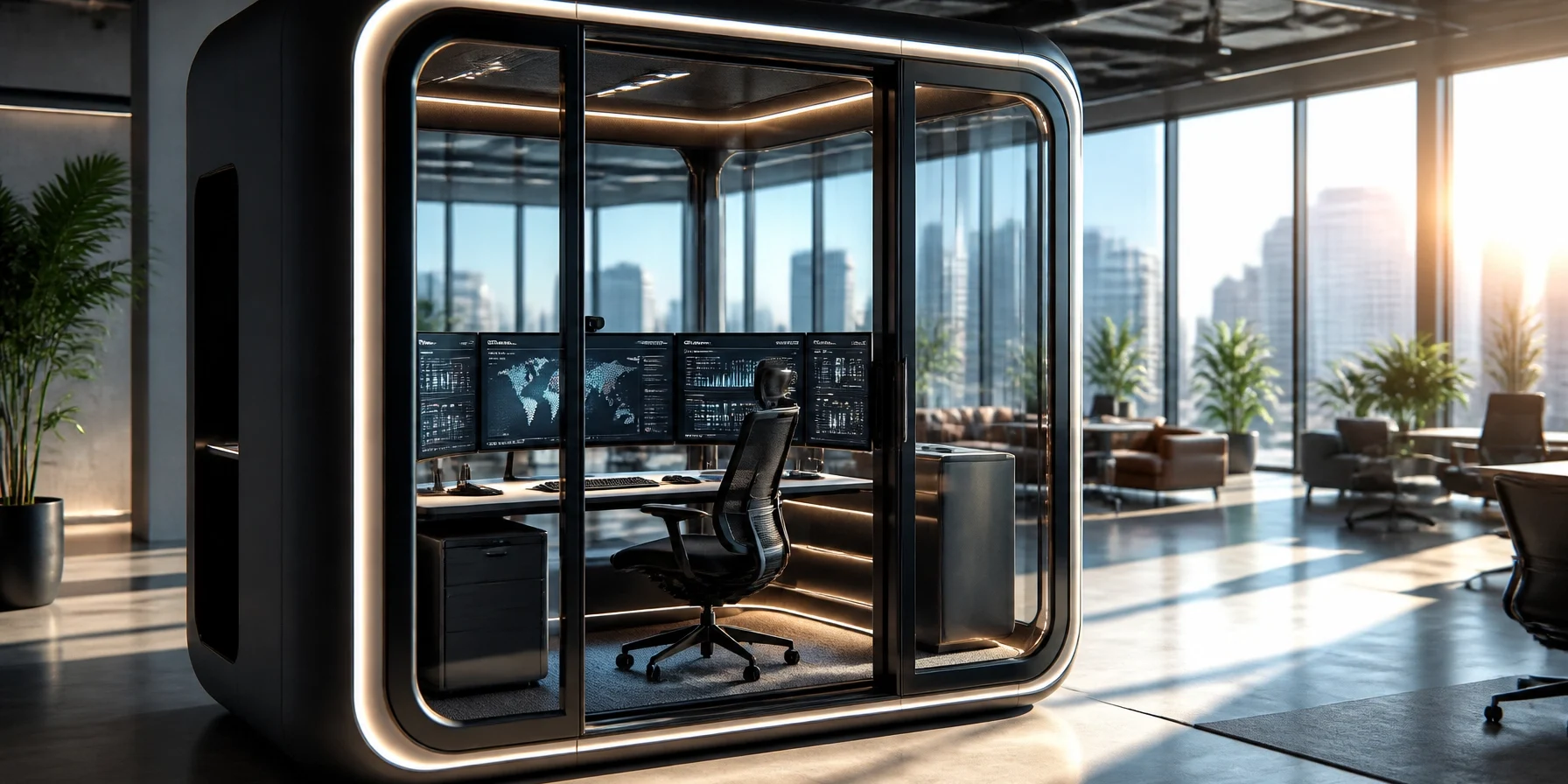
Let’s pour one out for the traditional computer lab. You know the one: rows of identical, beige towers, flickering fluorescent lights, and that unmistakable scent of ozone and stale coffee. For decades, this was the "temple of tech," where we learned to type and navigate the treacherous waters of Microsoft Excel.
But here’s the cold, hard truth: the traditional computer lab is dead. Or, at the very least, it’s on life support.
In a world where logistics experts are managing global fleets from their smartphones and cybersecurity pros are fighting off state-sponsored hacks from their living rooms, sitting in a row like a digital factory worker doesn't cut it anymore. Enter the Pod. No, not the kind you find in a sci-fi movie (though they look cool enough to be), but specialized, modular, physical infrastructure designed to bridge the gap between "learning a skill" and "doing the job."
At USA Entertainment Ventures LLC, we’ve seen the shift firsthand. Whether you’re a veteran transitioning via the DOD Skill Bridge or a career-changer looking to dominate the supply chain, physical infrastructure matters more than you think.
1. Logistics: From "Trucking" to Mission Control
If you still think logistics is just about driving a truck from Point A to Point B, you’re living in 1995. Modern logistics is a high-stakes game of data, IoT, and split-second decision-making. It’s less Smokey and the Bandit and more NASA Mission Control.
This is where the Logistics Pod comes in. Instead of a generic desk, a logistics pod is a mini-command center. We’re talking wrap-around displays, real-time supply chain tracking software, and integrated IoT hubs.

Why the Physical Pod Matters for Logistics:
- Workflow Simulation: You aren't just clicking buttons; you're managing a "live-fire" environment. These pods simulate the high-pressure atmosphere of a Fortune 500 operations room.
- Exception Handling: In a pod, you can practice what happens when a port closes in Shanghai while your cargo is in the middle of the Pacific. You can't learn that on a 13-inch laptop in a crowded library.
- Collaboration: Modern logistics is a team sport. Pod layouts encourage people to face each other, share screens, and negotiate solutions in real-time.
As our CEO Dan Kost often points out, managing these complex systems requires a different kind of environment: one that mirrors the complexity of the actual industry. If you're interested in how we're reshaping these roles, check out our services page.
2. Cybersecurity: The Digital Live-Fire Range
Cybersecurity isn't just about code; it's about context. You can learn the theory of a firewall anywhere, but you can’t truly understand a security breach until you’re sitting in a Security Operations Center (SOC).
A Cybersecurity Pod is essentially a "studio-in-a-box" for digital defense. These units are often "air-gapped," meaning they have their own dedicated server racks and isolated switches. This allows trainees to launch actual malware and run attack simulations without accidentally taking down the entire building’s Wi-Fi (which, let’s be honest, would be an awkward conversation with the IT manager).

According to recent industry data, the demand for cybersecurity professionals is skyrocketing, but employers are increasingly frustrated by candidates who have certificates but no "hand-on-tool" experience. Pods solve this by forcing learners to:
- Collaborate under pressure: Most hacks aren't solved by a lone wolf in a hoodie; they’re solved by teams who communicate effectively.
- Manage Physical Assets: Cybersecurity isn't just software. Understanding the physical server racks and switches integrated into a pod gives you a leg up on "digital-only" candidates.
3. Content Creation: Your High-Production "Cave"
Let’s talk about the creator economy. It’s not just for influencers anymore; every major corporation now needs high-end video, audio, and digital content. But have you ever tried to record a professional podcast in a standard office? Between the air conditioner hum and the guy in the next cubicle eating crunchy chips, it’s a nightmare.
The Content Creation Pod is the ultimate hack for the modern creative. It’s a sound-dampened, acoustically treated micro-studio equipped with professional lighting, boom mics, and high-resolution monitors.

In these pods, the focus shifts from "how to use the software" to "how to run a production workflow." One person manages the footage, another handles the graphics, and another mixes the audio. It’s a microcosm of a Hollywood studio, tucked into a modular corner of an office.
4. The DOD Skill Bridge & The "Military to Mission Control" Pipeline
One of the most exciting applications for these pods is in the DOD Skill Bridge recruitment space. Veterans are uniquely suited for careers in logistics and cybersecurity: they already understand mission-critical environments, chain of command, and high-stakes operations.
However, moving from a flight deck or a motor pool to a civilian office can be a jarring transition. Pods provide a "familiar" environment. They feel like the tactical operations centers (TOCs) military personnel are used to.
At USA Entertainment Ventures LLC, we focus heavily on career opportunities that leverage these skills. By training in pods, veterans can translate their military expertise into civilian roles in a way that feels natural and high-tech. It’s not just a desk job; it’s a continuation of their service in the digital and physical infrastructure of the modern economy.

5. Actionable Takeaways: How to Get "In the Pod"
So, you’re convinced. You want to ditch the rows of beige PCs and move into a high-tech command center. How do you do it?
- Look for Specialized Training: When scouting for courses or employers, ask about their physical infrastructure. Do they have dedicated labs, or are they just giving you a login to a cloud server?
- Focus on Collaborative Skills: In a pod environment, your ability to talk to the person next to you is just as important as your ability to type. Practice your communication and project management.
- Think Systemically: Don't just learn a tool (like Photoshop or a specific logistics software). Learn how that tool fits into the physical world: how it interacts with hardware, IoT sensors, and other team members.
- Explore the DOD Skill Bridge: If you are transitioning out of the military, look for programs that utilize modular training hubs. These will give you the most "bang for your buck" in terms of career readiness.
The Future is Modular
The world is moving too fast for traditional classrooms to keep up. By the time a textbook is printed, the technology is obsolete. But physical infrastructure: the Pod: is flexible. It can be upgraded, moved, and customized to fit the next big thing in logistics, cyber, or content.
We’re not just building desks; we’re building career hubs. If you're ready to see how the right environment can fast-track your career, learn more about us and join the revolution.
The computer lab is dead. Long live the Pod.