
In the current economic landscape, the search for high-tier talent has moved beyond traditional recruitment. Executives today face a dual challenge: filling immediate vacancies with qualified individuals and ensuring the long-term pipeline of talent is robust, digitally literate, and "Future Ready." As the boundaries between education and industry blur, the most successful organizations are those that act as anchors for talent development long before a candidate ever submits a resume.
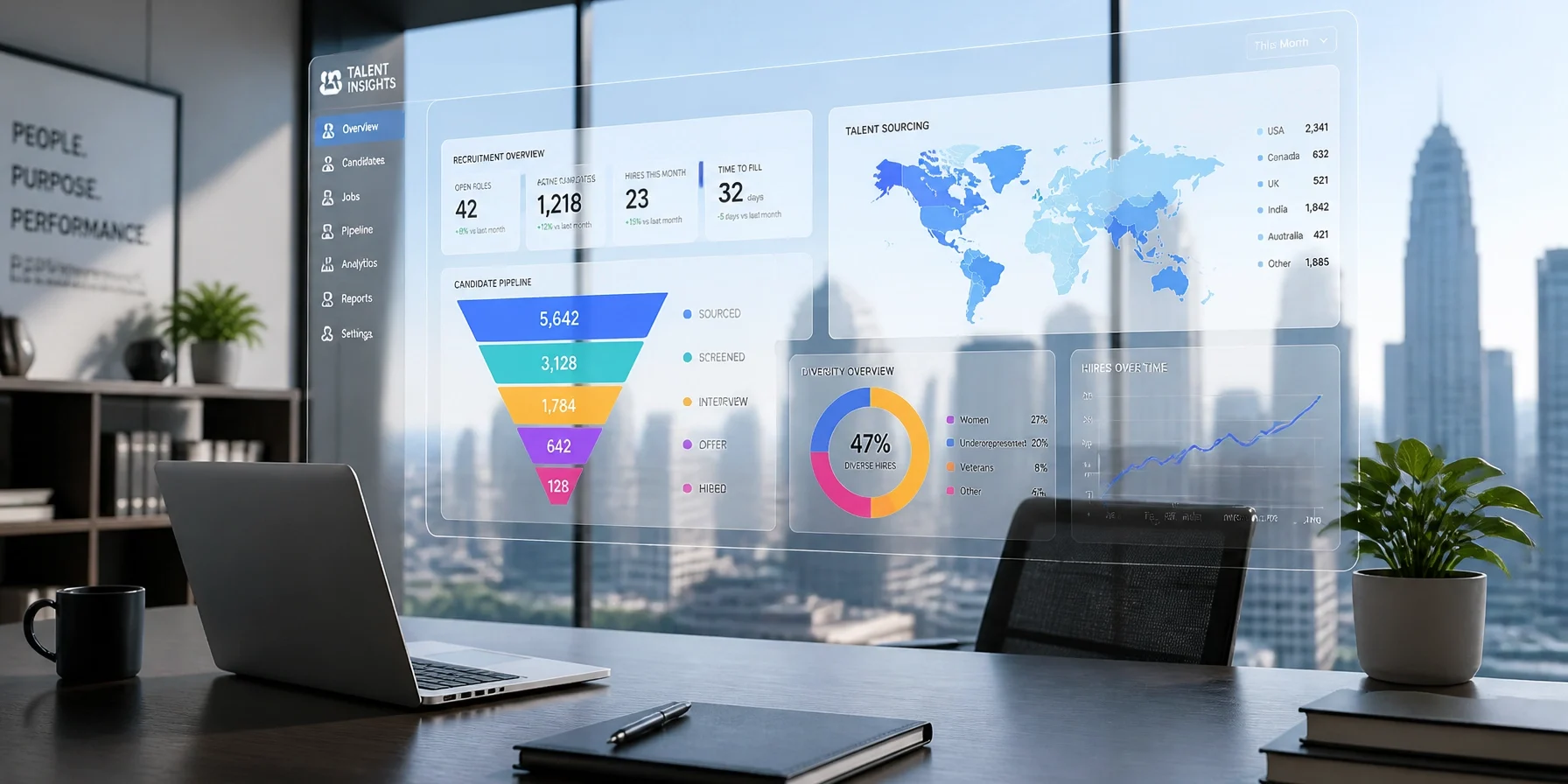
To navigate this complexity, data is no longer a luxury: it is the bedrock of strategic decision-making. However, many leaders are overwhelmed by "data noise" rather than actionable insights. The solution lies in a refined executive dashboard that tracks specific, high-impact outcomes. By focusing on five key areas: ranging from military-to-civilian transitions to student-athlete empowerment: executives can transform their talent acquisition from a reactive struggle into a proactive advantage.
1. Talent Pipeline Efficiency and the DOD Skill Bridge
The most immediate outcome an executive dashboard must measure is the efficiency of the talent pipeline. Traditional hiring metrics often focus on volume, but for organizations seeking specialized skills, the focus must shift to high-quality, vetted sources. One of the most effective, yet often underutilized, pipelines is the Department of Defense (DOD) Skill Bridge program.
By integrating DOD Skill Bridge recruitment metrics into a centralized dashboard, executives can track the transition of highly disciplined, technically trained military members into civilian human resources and management roles.
Key Metrics for the Dashboard:
- Transition Success Rate: The percentage of Skill Bridge interns who transition into full-time roles within the organization.
- Time-to-Productivity: How quickly transitioning service members reach full performance compared to traditional hires.
According to industry data, veterans often possess the soft skills: leadership, resilience, and adaptability: that are hardest to find in the general labor market. Monitoring this through a data-driven lens allows USA Entertainment Ventures LLC to position itself as a premier partner in government-aligned recruitment, ensuring that transitioning heroes find meaningful career paths while companies fill critical gaps.

2. NIL Literacy and Financial Responsibility
The landscape of Name, Image, and Likeness (NIL) has fundamentally changed how educational institutions and businesses interact with student-athletes. For an executive, understanding NIL outcomes is not just about sports; it is about the "Future Readiness" of the incoming workforce. A student who can navigate a complex NIL contract is a student who understands personal branding, financial literacy, and professional ethics.
A "Future Ready" dashboard should track NIL education outcomes to ensure that these young professionals are not just gaining capital, but building sustainable careers. "NIL is more than a paycheck; it’s a professional development laboratory," notes industry consultant Dan Kost.
Key Metrics for the Dashboard:
- Contract Literacy Scores: Pre- and post-assessment data from NIL educational modules.
- Compliance Incident Rate: Tracking the reduction in policy breaches as a result of robust consulting and education.
By fostering NIL literacy, organizations contribute to a more sophisticated talent pool that enters the corporate world with a foundational understanding of business law and personal equity.

3. Media Literacy Proficiency
In an era of rampant misinformation and rapid digital shifts, media literacy has become a core business competency. Executives need to know that their teams: and the students in their community "anchor" schools: can critically evaluate information. This is especially vital in the media and digital sectors, where the ability to distinguish between credible data and synthetic misinformation is a prerequisite for leadership.
Key Metrics for the Dashboard:
- Critical Evaluation Benchmarks: Measuring the ability of staff and students to identify source bias and verify digital claims.
- Engagement with Media Ethics: The frequency and depth of participation in media literacy training programs.
Research from the Stanford History Education Group suggests that a significant portion of digital natives struggle to identify sponsored content or fake news. By tracking media literacy as a dashboard outcome, executives can mitigate risk and ensure their organization’s communications and decision-making are grounded in reality.

4. "Future Ready" Institutional Benchmarks
USA Entertainment Ventures LLC advocates for the "Future Ready" school framework, which emphasizes that education must align with the evolving needs of the global economy. For an executive, this means looking at local schools and universities not just as community partners, but as the R&D centers for their future workforce.
A dashboard that tracks "Future Ready" outcomes provides a window into the local talent ecosystem. Are students gaining the digital skills necessary for the modern workplace? Is the infrastructure in place to support remote and hybrid learning models?
Key Metrics for the Dashboard:
- Digital Skill Attainment: The percentage of the local student population reaching benchmarks in coding, data analysis, and digital collaboration.
- Career Pathway Participation: Data on student enrollment in work-based learning, internships, and dual-credit programs.
Investing in these outcomes creates a "virtuous cycle" where the community prospers, and the business gains access to a steady stream of highly prepared talent.
5. Integrated Leadership Diversity and Quality of Hire
Finally, every executive dashboard must look at the long-term impact of hiring decisions. Diversity in leadership is not just a social goal; it is a data-driven necessity for innovation and market expansion. By integrating data from programs like the DOD Skill Bridge and NIL initiatives, executives can see a broader, more diverse picture of their leadership pipeline.
Key Metrics for the Dashboard:
- Leadership Diversity Index: Tracking the representation of diverse backgrounds (including veteran status and athletic backgrounds) in management tiers.
- Quality of Hire Index: A composite score measuring first-year performance, retention, and contribution to company culture.

Conclusion: Building the Anchor for a Future-Ready Workforce
The struggle for better talent is ultimately a struggle for better data and better alignment. By focusing on these five dashboard outcomes: Talent Pipeline Efficiency, NIL Literacy, Media Literacy, Future-Ready Benchmarks, and Leadership Diversity: executives can move beyond the chaos of the "Great Resignation" and into a period of sustainable growth.
At USA Entertainment Ventures LLC, we believe that becoming a "Future Ready" anchor is the only way for an organization to remain competitive. Whether through our specialized consulting or our commitment to bridging the gap between military service and civilian success, we provide the framework for these data-driven outcomes.
The future of your organization is hidden in your data. It is time to build the dashboard that reveals it.





