
For anyone who attended school between 1995 and 2015, the term "computer lab" likely evokes a very specific sensory memory: the faint hum of a dozen beige towers, the smell of slightly overheated plastic, and the glow of flickering CRT monitors. These spaces were the cathedrals of the digital age: sacred rooms where we went to "get on the internet" or learn the mystical arts of the spreadsheet.
But as we move deeper into 2026, the traditional computer lab is not just aging; it is undergoing a fundamental metamorphosis. The rows of generic, one-size-fits-all desktops are being dismantled. In their place, a new architecture of professional development is rising: the High-Tech Pod.
These aren’t just smaller offices; they are specialized, immersive environments designed to propel professionals into high-growth sectors like logistics, cybersecurity, and digital content creation. At USA Entertainment Ventures LLC, we see this shift not as a loss of space, but as an evolution of opportunity. The "dusty lab" is dead, and the "career launchpad" has arrived.
The Death of Generic Computing
The decline of the traditional lab is driven by a simple reality: ubiquity. When everyone carries a supercomputer in their pocket and a laptop in their bag, the need for a room full of "basic access" machines vanishes. Research indicates that by 2026, most higher-education institutions and corporate training centers have pivoted toward specialized, high-end hardware that individuals cannot easily replicate at home.
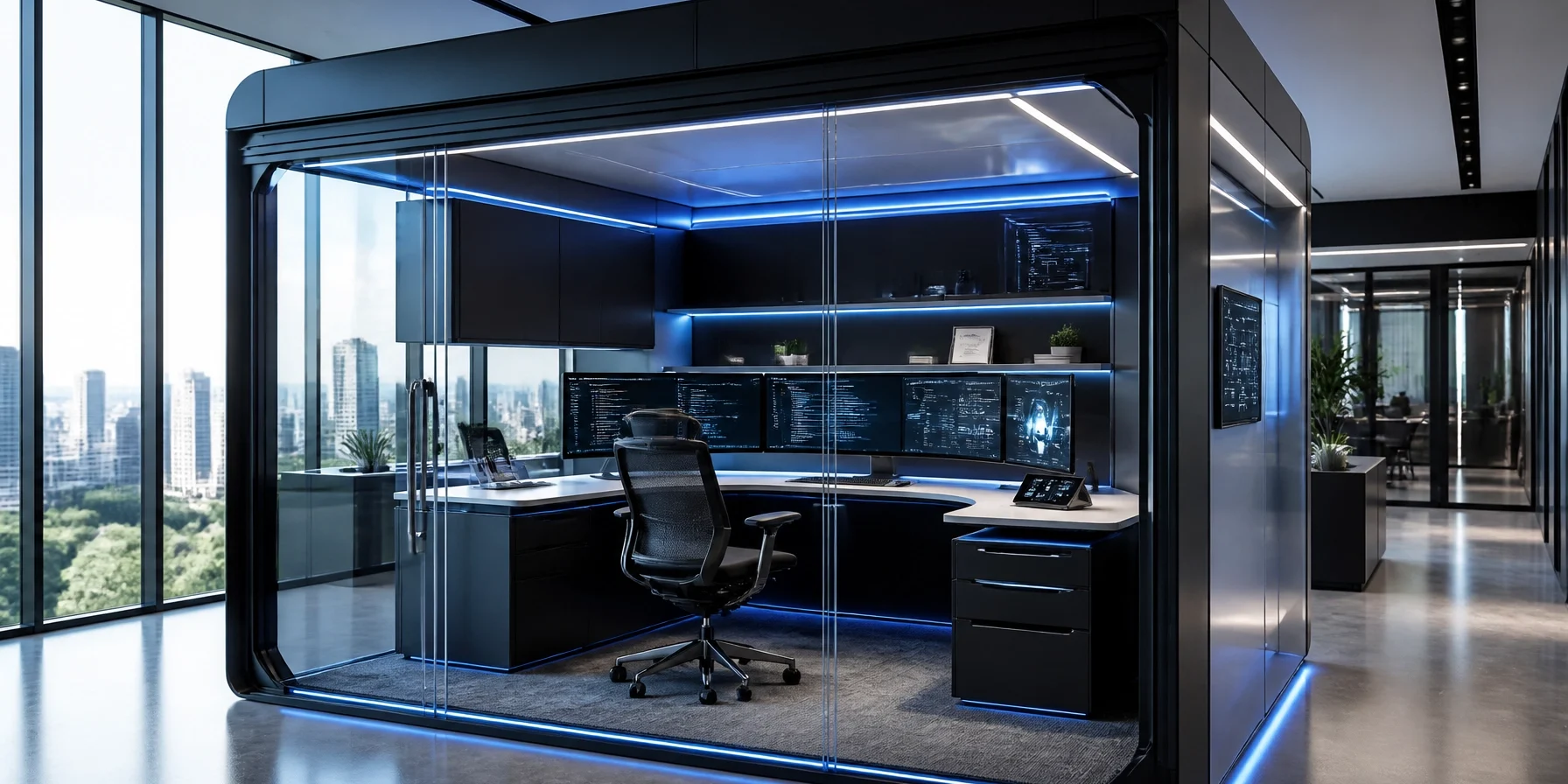
As noted in recent industry shifts, the "sea of desktops" is being replaced by pods and zones. These are flexible, modular units that provide the heavy-duty processing power, specialized peripherals, and ergonomic isolation required for deep, career-specific work. They aren't just where you work; they are where you become a specialist.
The Logistics Pod: Orchestrating the Global Economy

Logistics is no longer just about moving boxes from Point A to Point B; it is a high-stakes game of real-time data orchestration. The modern logistics professional requires an environment that can handle massive data streams, AI-driven predictive modeling, and constant communication.
Traditional computer labs fail here because they lack the collaborative and immersive layout needed for supply chain management. The "Logistics Pod" solves this by integrating:
- Multi-Monitor Dashboards: Allowing specialists to track global shipments, weather patterns, and port congestion simultaneously.
- Collaborative Interfaces: Large-scale touch surfaces where teams can "war-room" a supply chain disruption in real-time.
- Virtual Integration: Connectivity to cloud-based ERP (Enterprise Resource Planning) systems that require high-bandwidth, low-latency infrastructure.
By moving training into these specialized pods, companies can simulate the high-pressure environment of a global logistics hub. For those looking to enter this field, these pods provide the "flight simulator" experience necessary to master the complexities of modern commerce.
The Cyber Fortress: Security in a Soundproof Box

If logistics is the heart of the economy, cybersecurity is the immune system. Training for a career in cyber-defense requires more than just a textbook and a browser; it requires an isolated, secure, and intensely focused environment.
The shift toward "Cyber Pods" is a response to the need for Cyber Ranges: simulated environments where professionals can engage in red-team/blue-team exercises. These pods offer:
- Physical and Digital Isolation: Necessary for testing malware or running penetration tests without risking the broader network.
- Ergonomic Stamina: Cybersecurity often involves long hours of high-concentration monitoring. Pods are designed with "human-centric" lighting and acoustics to reduce fatigue.
- Immersive Focus: In a world of open-office distractions, the pod provides a literal barrier between the specialist and the chaos, allowing for the deep work required to hunt for vulnerabilities.
Data from recent cybersecurity trends suggests that practitioners trained in "immersion-style" environments demonstrate a 30% higher retention rate of complex protocols compared to those trained in traditional classroom settings. At USA Entertainment Ventures LLC, we recognize that providing the right physical infrastructure is just as important as the software itself.
The Content Engine: From Hobbyist to Professional

The "creator economy" has matured into a multi-billion dollar industry. However, the gap between a "hobbyist with a phone" and a "professional content producer" is wide. The modern "Content Pod" is the bridge across that gap.
These specialized units are the 2026 version of the film editing suite. They are sound-treated, light-controlled, and packed with the GPU power required for 8K video rendering and real-time 3D animation.
- Acoustic Treatment: High-tech pods provide studio-quality sound isolation, enabling professional-grade podcasting and voice-over work in the middle of a busy office or campus.
- Visual Control: Integrated ring lights and adjustable color temperatures allow for instant, high-quality video production.
- Hardware Superiority: While most laptops struggle with high-end creative software, the Content Pod is a dedicated engine designed for speed and reliability.
This transition allows institutions to offer pathways into media and marketing that were previously gated by the high cost of studio space. Now, a career launchpad is as simple as stepping into a 6×6-foot modular unit.
The DOD SkillBridge Connection: Bridging the Gap for Veterans
One of the most significant applications of these high-tech pods is in the realm of veteran transition. Through programs like the DOD SkillBridge, service members are moving from military roles into high-growth civilian careers.
The transition from a structured military environment to a fluid civilian workplace can be jarring. High-tech pods offer a "middle ground": a structured, mission-oriented workspace where veterans can focus on gaining certifications in logistics or cybersecurity. By providing a dedicated, high-tech space, we help facilitate a smoother "skill-bridge" from active duty to industry leader. Those interested in these pathways can explore our career opportunities to see how we are managing these talent pipelines.
Implementing the Future: Actionable Takeaways
If you are an educator, a business owner, or a career seeker, the message is clear: the physical environment matters. Here is how you can adapt to the "Pod" era:
- Stop Investing in General Labs: If you are planning a facility upgrade, shift your budget toward specialized modular units rather than rows of identical desks.
- Prioritize Specialization: Identify the high-growth sectors in your region (be it logistics, tech, or media) and build your infrastructure to support those specific hardware and software needs.
- Embrace Hybrid Training: Use pods for "high-stakes" or "high-concentration" tasks, while utilizing virtual labs for foundational learning.
- Focus on "Human-Centric" Design: The best pods aren't just tech-heavy; they are comfortable. Better lighting, better chairs, and better air quality lead to better career outcomes.
Conclusion: A New Horizon for Career Development
The death of the dusty computer lab isn't an end; it's a beginning. It represents a shift away from "generalized knowledge" toward "specialized mastery." As we continue to manage and develop new career pathways at USA Entertainment Ventures LLC, we remain committed to the idea that the right environment is the catalyst for success.
High-tech pods are more than just furniture; they are the physical manifestation of our commitment to the future. Whether you are a veteran transitioning through SkillBridge or a creative professional looking to level up, the pod is your new launchpad. Welcome to the future of work: it’s smaller, smarter, and much more powerful than a row of beige towers.





