
If you close your eyes and think of a "computer lab," what do you see? If you’re of a certain vintage, you probably smell it first: a mix of ionized dust, floor wax, and the faint, lingering scent of someone’s contraband Cheetos.
You see rows of massive, beige "towers" that hummed like a jet engine warming up for takeoff. You see CRT monitors that flickered just enough to give you a headache by second period, and those "No Food or Drink" signs that felt like a personal challenge. It was a cathedral of beige plastic, wired together by a bird’s nest of gray Ethernet cables that tripped anyone brave enough to walk behind the desks.
But here’s the reality: that classic lab is a ghost. The "beige box era" of Physical Infrastructure is officially dead, and honestly? We should probably stop mourning it.
The Great Laptop Migration
The death of the traditional computer lab wasn't a sudden murder; it was a slow migration. Today, roughly 95% of students and professionals carry their own "lab" in their backpack. When everyone has a MacBook or a high-powered PC, a room full of aging, general-purpose desktops becomes a very expensive museum.
However, just because we have laptops doesn't mean we don't need specialized spaces. You can't run a global supply chain or simulate a high-stakes cyber-attack from a wobbly coffee shop table. We still need Physical Infrastructure, but we need it to be smarter, smaller, and a whole lot cooler.
Enter the Pods.

So, What Is a "Pod" Anyway?
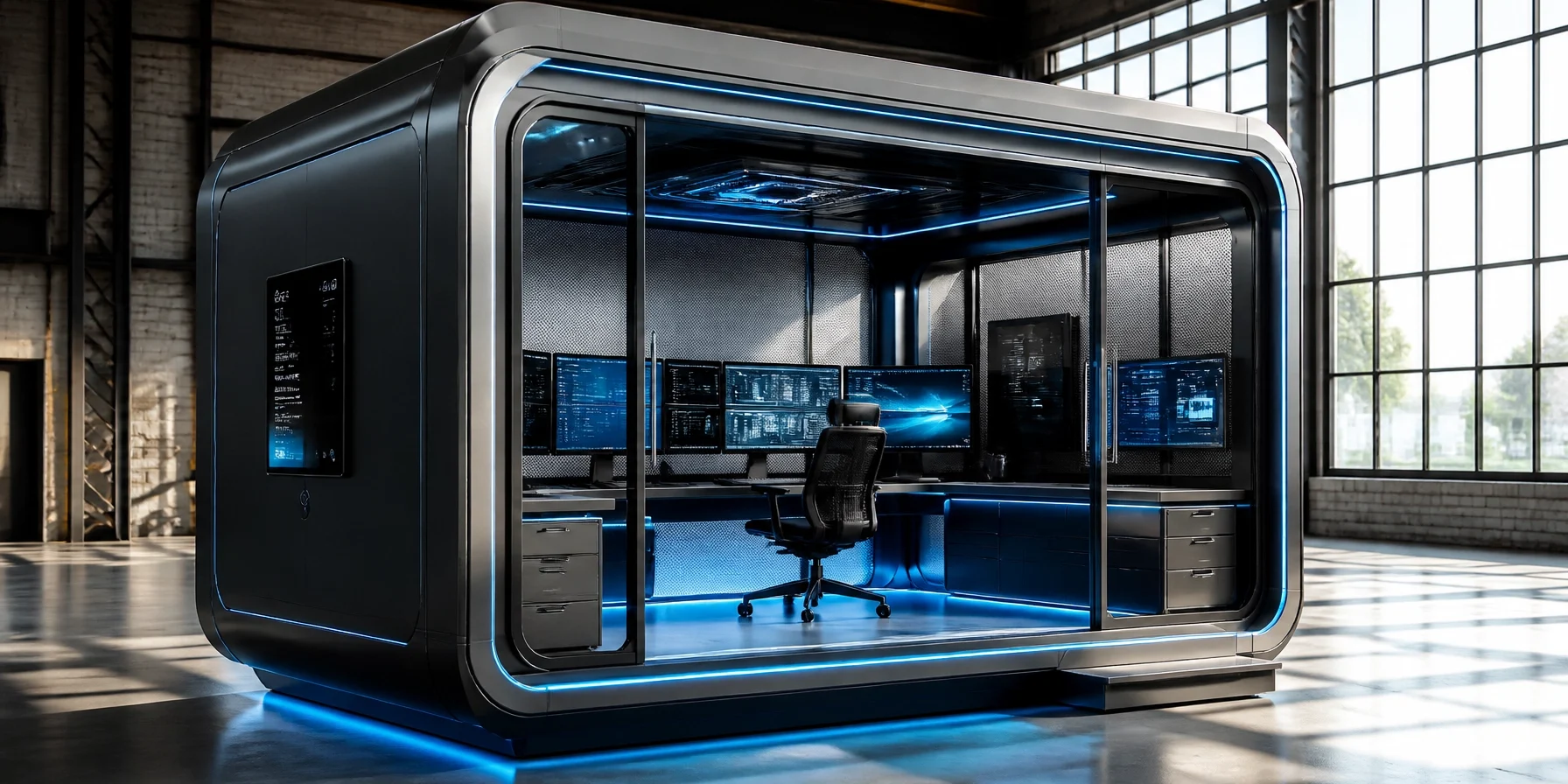
In the simplest terms, a pod is a modular, purpose-built learning environment. Think of it as a "lab-in-a-box." Instead of a whole room dedicated to generic computers, a pod is a self-contained unit designed for a specific job.
It’s not just a desk; it’s an ecosystem. It’s got the right monitors, the right lighting, the right security, and the right "vibe" for the task at hand. It’s plug-and-play infrastructure that can be dropped into a warehouse, a school hallway, or a military base.
Here are three career pathways where these pods are absolutely crushing the old-school lab model.
1. Logistics: The Command Center
Logistics isn't just about moving boxes; it’s about managing data in real-time. A Logistics pod acts like a mini command center. Instead of one tiny laptop screen, you’ve got a multi-monitor setup tracking supply chains, fleet movements, and inventory levels across the globe.
In these pods, students aren't just reading about shipping routes; they’re using "digital twins": virtual replicas of real-world warehouses: to solve problems before they happen. It’s high-fidelity training that makes a traditional Tech Education classroom look like a game of Oregon Trail.
2. Cybersecurity: The Digital Sandbox
If you’re learning Cybersecurity, the last thing you want to do is practice your "ethical hacking" on the main school network. That’s a quick way to get a call from the IT director (or the FBI).
Cyber pods are built as isolated "sandboxes." They are often air-gapped, meaning they aren't connected to the outside world, creating a safe space to deploy simulated malware and run "Red Team vs. Blue Team" exercises. It’s a digital war room where you can break things, fix things, and defend things without the risk of taking down the entire campus Wi-Fi.

3. Content Creation: The Turnkey Studio
We’ve all seen the "student media lab" of the past: a dark room with one crusty microphone and a copy of Windows Movie Maker. Modern Content Creation requires more.
A content pod is a professional-grade streaming studio. We’re talking acoustic treatment on the walls (so your podcast doesn’t sound like it was recorded in a bathroom), professional soft-box lighting, and 4K camera setups. It’s a space where a creator can walk in, hit "record," and produce something that looks like it came out of a Hollywood backlot.

Why This Matters (Everywhere)
The beauty of Pods isn't just the tech inside; it’s where they can go. Because they are portable and scalable, they can be deployed in places where building a traditional lab would be a nightmare.
This is huge for programs like DOD SkillBridge, where we need to bring high-level tech training to military bases. You don't need to build a new wing on a building; you just drop a pod in a hangar or a warehouse, and suddenly, you have a world-class training center for transitioning service members.
The Verdict
The era of the "one-size-fits-all" computer lab is over. We don't need rooms full of beige boxes anymore; we need specialized environments that move at the speed of the modern world. Whether it's for Logistics, Cybersecurity, or Content Creation, pods are providing the physical foundation for the digital future.
So, let’s pour one out for the old computer lab. It served us well. But the beige box is officially dead; and the pod is just getting started.





