
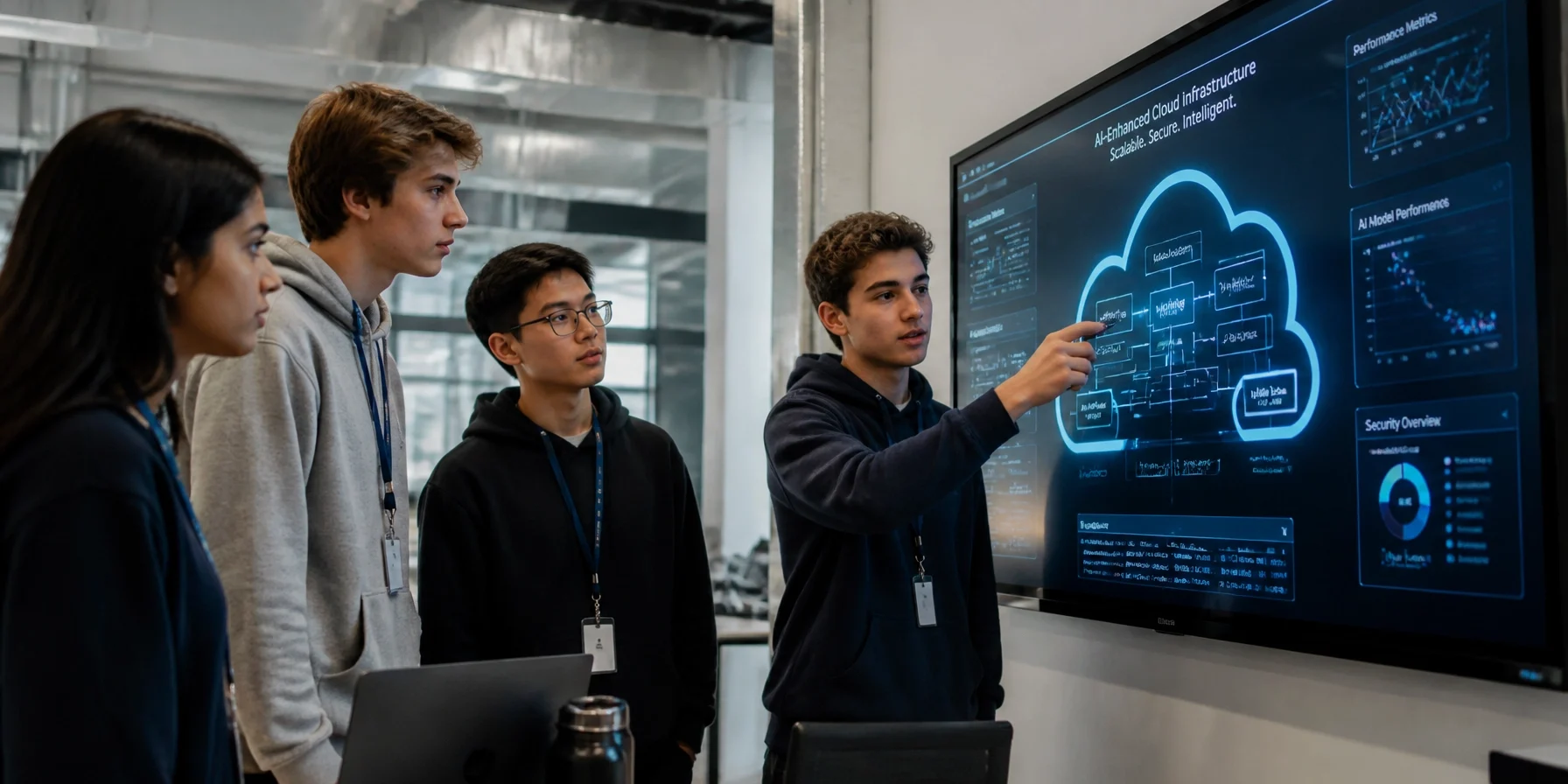
The traditional roadmap for talent acquisition has long been a linear one: graduate high school, attend a four-year university, and enter the corporate recruitment cycle during senior year. For decades, this "college-to-career" pipeline served as the primary engine for professional growth. However, as the pace of technological innovation: specifically in the realms of Cloud Computing, Artificial Intelligence (AI), and Data Analytics: accelerates beyond the capacity of traditional academic curricula, this model is beginning to show significant structural cracks.
At USA Entertainment Ventures LLC, we are observing a fundamental shift in how successful organizations approach the "Next-Gen Talent Funnel." It is no longer enough to wait for the degree; the new frontline of talent sourcing has moved to the high school level. Companies that engage with students years before they ever set foot on a college campus are not just recruiting; they are strategically managing the future of their workforce.
The Velocity Gap: Why Four Years is Too Long
The primary challenge with relying solely on university pipelines for technical roles is the "Velocity Gap." In fields like AI and Cloud architecture, the industry evolves significantly every six to twelve months. By the time a freshman enters a Computer Science program, the technology they study may be legacy software by the time they graduate.
Industry data suggests that AI-specific skills now command a 23% wage premium above standard roles, even when those skills are acquired outside of a traditional degree program. This shift toward skill-based hiring: a core focus of our human resources management strategies: highlights a growing reality: aptitude and hands-on experience often outweigh the credential.
By reaching into high schools, companies can introduce students to specific Cloud environments (such as AWS or Azure) and Data Analytics tools early. This creates a "pre-trained" workforce that enters the market with practical, applicable knowledge rather than theoretical abstractions.

Economic Efficiency in the Talent Funnel
From a management perspective, high school recruitment is an exercise in long-term ROI. The cost of acquiring a senior-level engineer or an AI specialist in a crowded market is astronomical. Competition at the university level is similarly fierce, with Fortune 500 companies often bidding for the same top 10% of graduates.
As Dan Kost, owner of USA Entertainment Ventures LLC and a leader in workforce strategy, often emphasizes, managing talent is about identifying value before the market corrects. High school engagement allows for:
- Lower Acquisition Costs: Building brand loyalty and technical familiarity before the competitive university recruitment cycle begins.
- Increased Retention: Students who feel invested in by a company from a young age exhibit higher long-term loyalty.
- Customized Skillsets: Organizations can partner with schools to influence Career and Technical Education (CTE) programs, ensuring students learn the specific tech stacks the company uses.
The SkillBridge Analogy: Managing the Transition
At USA Entertainment Ventures LLC, our work with the DoD SkillBridge recruitment program provides a unique perspective on talent management. SkillBridge is designed to bridge the gap between military service and the civilian workforce by providing service members with professional training during their final months of service.
The "High School to High-Tech" pipeline operates on a similar philosophy. It is about managing the transition. Just as we help veterans translate their military discipline into corporate success, early talent programs translate youthful curiosity into technical proficiency.
"The transition from education to employment should not be a jump over a chasm," notes the management team at USA Entertainment Ventures LLC. "It should be a managed bridge." By applying the rigorous standards of programs like SkillBridge to high school partnerships, companies can ensure a steady stream of ready-to-work talent in high-demand fields like AI and Data Analytics.

Breaking the Diversity Barrier
Traditional college pipelines are often limited by the demographics of specific universities. If a company only recruits from "Top Tier" schools, they are inherently limited by the socioeconomic barriers that prevent many talented individuals from attending those institutions.
Starting the sourcing frontline in high school democratizes access to tech careers. Data analytics in recruitment shows that identifying high-potential students in underserved communities allows organizations to build a more diverse and equitable workforce. When companies provide high schoolers with access to Cloud and AI certifications, they are removing the "pay-to-play" barrier of expensive four-year degrees. This not only fulfills a sense of social responsibility but also introduces a wider range of perspectives into the innovation cycle: a key driver of modern business success.
Actionable Steps: Building Your Next-Gen Funnel
Transitioning your recruitment strategy from a college-centric model to a high-school-inclusive one requires a structural shift. It is a management challenge that pays dividends over years, not months.
1. Adopt a Skill-First Mentality
Re-evaluate your entry-level job descriptions. Do they truly require a four-year degree, or do they require proficiency in Python, SQL, and Cloud infrastructure? By shifting to skill-based hiring, you open the door to a younger, highly capable demographic.
2. Partner with Local CTE Programs
Collaborate with high school Career and Technical Education departments. Offer your company’s internal training modules or industry certifications as part of their curriculum. This creates a direct pipeline of students who are already proficient in your specific tools.
3. Implement Managed Internships
High school internships should not be about "getting coffee." They should be structured, project-based experiences. Assign a mentor from your management team to guide them through a real-world Data Analytics or AI project.
4. Leverage Management Expertise
Utilize consulting services to design these pipelines. At USA Entertainment Ventures LLC, we specialize in managing these complex human resources and governmental transitions, ensuring that your talent funnel is both legally compliant and strategically sound.

Conclusion: The Future is Earlier Than You Think
The question is no longer "Are college pipelines bad?" but rather "Are they sufficient?" In the era of AI and rapid cloud migration, the answer is a resounding no. A singular reliance on traditional higher education leaves organizations vulnerable to the speed of the market and the rising costs of talent acquisition.
By moving the sourcing frontline to high schools, forward-thinking companies are securing their future. They are building a workforce that is technically proficient, loyal, and diverse. As we look toward the next decade of business, the companies that thrive will be those that view talent acquisition not as a seasonal event at a university career fair, but as a continuous, managed process that starts before the student even receives their high school diploma.
At USA Entertainment Ventures LLC, we remain committed to helping organizations navigate these transitions. Whether through our work with DoD SkillBridge or our broader management consulting, we believe that the best way to predict the future of your workforce is to build it yourself, starting today.





